




“A fair and just transition”
UNCTAD’s Review of Maritime Transport 2023 focuses on the costs, challenges and uncertainties around decarbonisation – and emphasises the need for a fair and just transition for all. Felicity Landon attended the launch of the report at the IMO in London
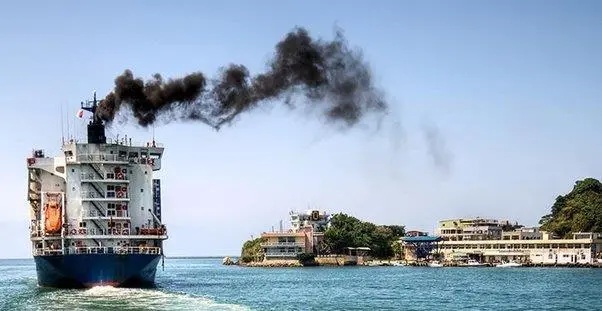
An additional US$8bn to $28bn will be required annually to decarbonise ships by 2050 – and even more substantial investments, ranging from $28 billion to $90 billion a year, will be needed to develop infrastructure for 100 per cent carbon-neutral fuels by 2050, according to the United Nations Conference on Trade and Development’s (UNCTAD) Review of Maritime Transport 2023.
UNCTAD says that full decarbonisation could increase fuel expenses by 70-100 per cent – with a disproportionate impact on small island developing states (SIDS) and least developed countries (LDCs) that rely heavily on maritime transport.
“Maritime transport needs to decarbonise as soon as possible, while ensuring economic growth,” said UNCTAD Secretary-General Rebeca Grynspan. “Balancing environmental sustainability, regulatory compliance and economic demands is vital for a prosperous, equitable and resilient future for maritime transport.”
To ensure an equitable transition, UNCTAD has called for a universal regulatory framework applicable to all ships, irrespective of their registration flags, ownership or operational areas, to avoid a “two-speed decarbonisation process” and maintain a level playing field.
Economic incentives such as levies or contributions paid according to shipping emissions may incentivise action, promote the competitiveness of alternative fuels and narrow the cost gap with conventional heavy fuels, said Shamika Sirimanne, UNCTAD’s director of technology and logistics. “These funds could also facilitate investments in ports in SIDS and LDCs, focusing on climate change adaptation, trade and transport reforms, as well as digital connectivity.”
The Review of Maritime Transport analyses shifting global trade patterns – for example, the nearshoring trend and an increase in intra-Asian container volumes – and also considers the impact of geopolitical developments. The disruption caused by the war in Ukraine led to oil cargo distances reaching an all-time high in 2022, says the review, and shipments of grain in 2023 have travelled further than in any year on record, due to grain importing countries being forced to seek alternative exporters to Russia or Ukraine, such as the US and Brazil, which require long-haul shipping.
PORT QUESTIONS
At the launch event hosted by the IMO, questions were asked about the importance of ports in decarbonisation. A worrying potential scenario is that large and more important ports will take on this role because they are strong, have the money and are in the right place to make the transformation and adaption for decarbonising, while developing country ports could be left aside and be marginal to the trend, said Grynspan.
“It will be more and more difficult for these countries to get into the mainstream of trade – so we are worried about that,” she said. “If you want major impact in terms of decarbonisation, you have to put more attention on the ports that have the most affinity. The problem I want to flag is that the distributional effect will be very important for the world, because trade is the lifeblood of many of these developing countries, especially those that have no alternative but to trade.”
Ports are keen to make the adjustments for decarbonisation “because the fear is that if they don’t, the ports will be bypassed and the ships will not go there”, said Sirimanne. “There is a fear that if the ports are not ready to adapt to the changes coming their way, for climate change – decarbonisation, bunkering, etc. – big ships won’t come their way.”
Providing bunkering is already a challenge for ports that are geographically at the very end of long distances and there will be an added challenge when they have to provide more than one fuel – perhaps ammonia, methanol and hydrogen – said Jan Hoffmann, Chief of the Trade Logistics Branch in UNCTAD’s Division on Technology and Logistics.
“These new fuels are energy dense and need more volume for the same energy – and do these countries have the fuel resources?”
Looking at the impact of ongoing uncertainty, UNCTAD notes that shipowners must decide whether to renew the fleet now while still lacking clarity about alternative fuel, green technology options and the regulatory regime. “Uncertainty about the fleet renewal timelines and constraints caused by shipbuilding yard capacity and higher building prices are also complicating investment decisions. Ports and terminals face similar challenges when considering investing in equipment or terminals.”
Shipping cannot decarbonise on its own, says the review. “Decarbonisation efforts should bring together the broader industry, including carriers, ports, manufacturers, shippers, investors, energy producers and distributors.”
The commitment to establish green shipping corridors is an example of leveraging collaboration, it says. “The objective is threefold: to provide bunkering options for vessels using low or zero-carbon fuels, facilitate testing of various solutions and support pioneering green initiatives. Experiences with green shipping corridors will vary by region and will entail both challenges and opportunities.
Related Articles
 OPERATIONS
 OPERATIONS
 OPERATIONS