![PortStrategy[GreenPort]](https://www.portstrategy.com/wp-content/uploads/2026/09/PortStrategyGreenPort.svg)


Keeping Durban competitive
The South African port of Durban needs to be more autonomous if it is to keep up with future demand, an international report from the OECD’s International Transport Forum revealed.
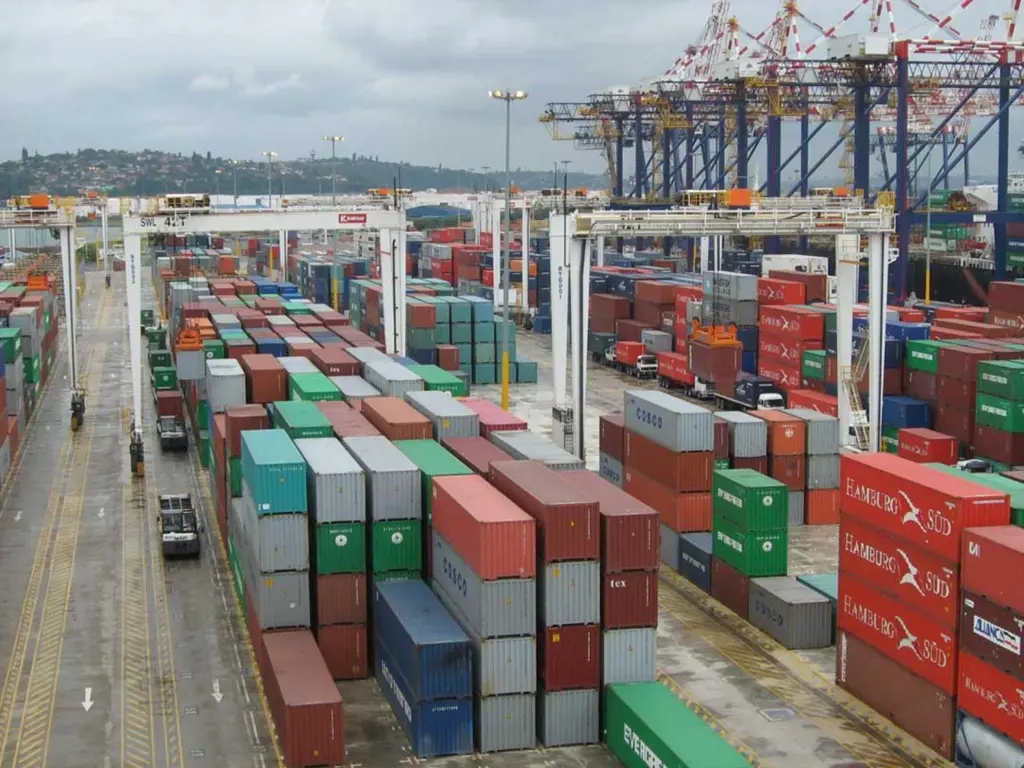
The report explained the main problems facing sub-Saharan African container port systems, which on the whole are underdeveloped compared to other port systems around the world, stating issues such as limited draft, lack of equipment, low levels of port performance, limited capital investment, political instability and regulatory impediments were named as the main contributors.
At Durban however, vessels up to 4,500 teu can be safely accommodated, whereas larger vessels can be brought in on high tide and partially laden. The Port of Durban also recently acquired tandem lift-cranes, so uses modern STS cranes, along with straddle carriers and RTGs to handle 69% of the national throughput.
But, despite being the largest port in Africa, it’s one of the most expensive in the world, mainly due to high cargo costs, although this is said to be necessary because of lacking national government funding for infrastructure and maintenance.
In addition, the report pointed out that more autonomy and streamlining of Transnet National Ports Authority’s (TPNA) decision-making processes is needed to deal with future expansion plans, including the planned Durban dig-out port.
According to the report, the project provides a window of opportunity to consider competition within the eastern ports system of South Africa and tackle some of the current “distortions”.
Estimated to be operational from 2020, “this port will most likely take the form of a private-public partnership (PPP), which would have important ramifications for the sustainability of the current institutional framework of the Port of Durban”.
The report also recommends that an inter-departmental freight unit within the city of Durban, that can act as a one-stop shop for freight-relates issues, can help alleviate congestion caused by road freight, which is also hindering the port’s performance as a result of “running close to capacity constraints”.
Related Articles
 EXPANSION & DEVELOPMENT
 CONTAINER & CARGO HANDLING
 EQUIPMENT