![PortStrategy[GreenPort]](https://www.portstrategy.com/wp-content/uploads/2026/09/PortStrategyGreenPort.svg)

Maputo
Maputo and Durban limber up for battle over lucrative southern African trade. Alex Hughes reports
Southern Africa is also having to address port modernisation. In South Africa itself, the state is providing the necessary cash for this, while in neighbouring Mozambique, DP World is now the dominant player in the Port of Maputo.
In fact, DP World recently upped its stake in Maputo port operator MIPS, paying $32m for the shareholding previously held by Portus Indico. According to Arif Al Dehail, acting head of DP World’s Africa region: “The significance of this investment is that we have a stake in one of the fastest growing corridors of the African continent. The Maputo Corridor, as it is known, links the Port of Maputo to Mpumalanga, Limpopo and Gauteng provinces, in South Africa, these being where a large proportion of the region’s mineral, agricultural and industrial commodities are produced.”
Future investment at the port will be aimed at expanding or improving infrastructure for import-export traffic to and from Southern Africa, the African East coast, the Mediterranean, the Far East and the Indian sub-continent. At present, Maputo is handling citrus, sugar, ferrous, coal, liquid bulks, cars and other break-bulk and bulk traffic, which is generated by the local market and neighbouring countries. Both road and rail are used to move this, with rehabilitation of the rail system currently being carried out by DP World’s MIPS partner CFM.
“It is very realistic to view Maputo as the natural port to serve markets in South Africa, Swaziland, Zambia and Zimbabwe. Regional growth is high, which has boosted container trade at Maputo, because most alternative port are up to capacity and experiencing congestion. Realistically, however, it will take quite major investment in infrastructure to bring the Port of Maputo up to international efficiency standards,” says Mr Al Dehail.
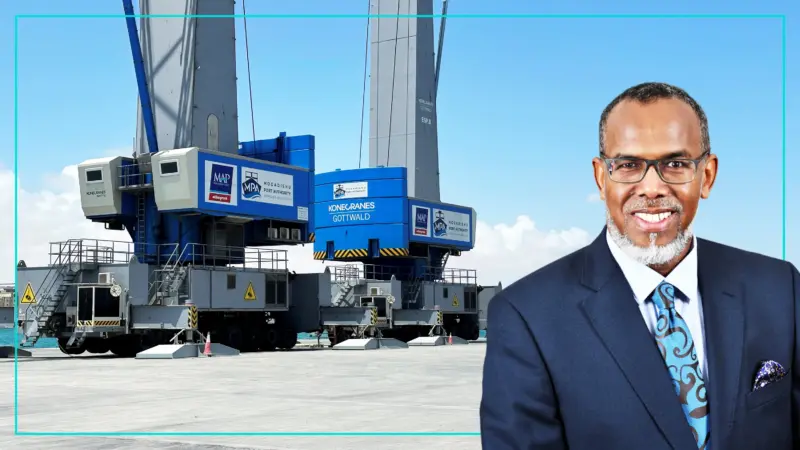
MIPS, itself, has a capacity limitation of 100,000 teu, putting pressure on the terminal. However, plans already exist to significantly increase capacity in the short term. As part of the initial phase, MIPS is to acquire two mobile handling cranes (MHCs) and respective yard support equipment to provide much needed relief to the existing two 1981 Ansaldo quayside gantry cranes. The new cranes, which will have post-panamax capability, will also be available to be deployed on quays outside the container terminal upon arrival in the second quarter of this year.
“At present, we are achieving productivity of 15 moves-per-crane-hour, which is limited by the type of vessel we receive. This should improve once we have the MHCs in place,” says Mr Al Dehail, noting the largest vessels calling are in the region of 2,600 teu.
This recent strengthening by DP World of its position in the Mozambican port of Maputo will have some impact on container handling operations at South Africa’s main gateway port of Durban. Solly Letsoalo, chief operating officer of Transnet Port terminals, is in no doubt of that. In fact, he concedes that Maputo will be targetting part of Durban’s natural hinterland. Nevertheless, as far as he is concerned, that competition has to be viewed as positive in that it will ensure that Durban’s container terminals never become complacent.
Within South Africa, there is still significant pressure on Transnet, which owns and manages national ports, to be privatised, says Mr Letsoalo. This, he stresses, will be a choice that the government has to make. Transnet, for its part, will endeavour to continue investing in both infrastructure and equipment to ensure that ports in the country do get better.
“We are way behind on our investment schedule in ports, but we are very definitely catching up,” he says.
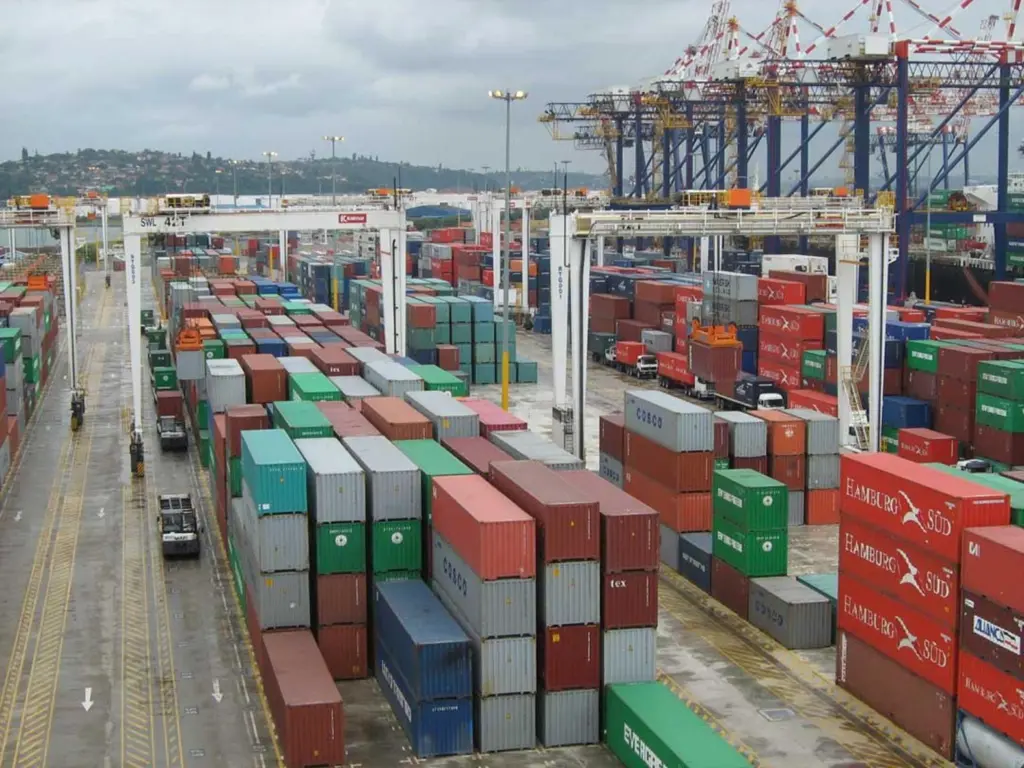
In fact, Durban, which has been dogged by a lack of capacity over the years, resulting in high profile congestion, has come a long way in recent times. According to Mr Letsoalo, congestion, while remaining a factor, is nowadays more a function of exceptional offshore winds rather than a lack of good service provided by Durban Container Terminal (DCT).
Throughput for the year ending March 31, 2008 is scheduled to reach 2.3m teu, a staggering 20% more than the previous year. In the past, this would have resulted in a veritable flotilla of vessels being forced to wait at the outer anchorage for want of berthing space. However, late last year, Durban commissioned its Pier 1 container terminal, which has space to absorb 720,000 teu. With DCT effectively now operating close to full capacity, vessels are being diverted to this new facility. At the same time, Transnet is investing heavily to boost capacity at DCT itself to 2.9m teu.
“Durban will be able to handle a combined 3.62m teu, which should be sufficient to absorb traffic growth until 2013,” says Mr Letsoalo. “In the meantime, feasibility studies are under way to see whether additional expansion possibilities remain in Durban itself, or whether we will have to look elsewhere to accommodate growth.”
Significantly, the huge increases in throughput currently being registered are the result of a number of factors. Firstly, a lot of former break bulk cargo is being containerised, prompting Mr Letsoalo to observe that eventually this process will slow down as products suitable for transport by container will dry up. Secondly, Durban has seen the return this year of a lot of cargo that it had to divert to either Cape Town or Port Elizabeth for want of available capacity at DCT. Finally, there has been organic growth from existing shipping lines.
“I don’t think we will continue to see annual growth rates of 20%. However, as trade shows no signs of slackening off, we will still be faced with having to accommodate around 10% growth per annum into the foreseeable future across South Africa as a whole. Finding somewhere to put all those containers will be a challenge,” he says.
Related Articles
 EXPANSION & DEVELOPMENT
 CONTAINER & CARGO HANDLING
 EQUIPMENT