![PortStrategy[GreenPort]](https://www.portstrategy.com/wp-content/uploads/2026/09/PortStrategyGreenPort.svg)



Busan cuts harmful dust levels
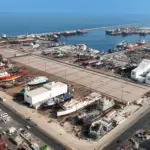
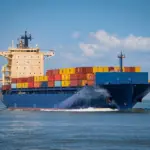
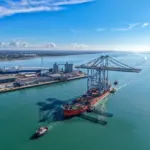
Busan Port Authority (BPA) has taken steps to cut the fine dust level resulting from its port operations by investing further in green equipment.

BPA said it has concluded a license agreement with Hyundai Materials in order to expand the supply of an exhaust gas after-treatment system that cuts exhaust gases released from (diesel) transfer cranes by 80%.
Nam Ki-chan, CEO of BPA, stated: “BPA will continue to work to improve Busan’s air quality and working environment for port workers by preemptively developing technologies so that Busan Port can be operated with green unloading equipment.”
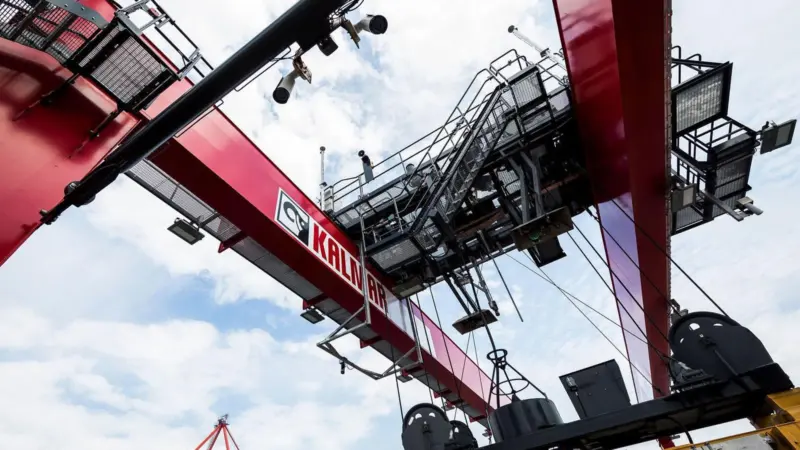
In case of Busan New Port, all 239 cranes are powered by an electrical system, however, 37 out of 122 cranes in North Port still run on a diesel system and concerns have been raised about harmful exhaust gases (PM10, PM2.5, SOx, NOx, etc.) released from the cranes.
To address this issue, BPA developed an exhaust gas after-treatment system, which collects and treats exhaust gases from diesel transfer cranes, together with the Korea Institute of Machinery & Materials and Hyundai Materials. The system was installed at Shin Gamman Pier in North Port as a pilot and was found to reduce 80% or more fine dusts and NOx.
The port authority noted it will be costly to install the system for all 37 diesel transfer cranes operating in North Port, which is currently experiencing management difficulties.
It stressed that in order to expand the pilot project and to encourage active participation of pier operators, subsidy from local government according to Article 15 of the Special Act on the Improvement of Air Quality in Port Areas, etc. is essential.
The Port of Busan consists of four ports – North Port, South Port, Gamcheon Port, and Dadaepo Port.
Related Articles
 ASIA GREENPORT
 ASIA GREENPORT
 ASIA GREENPORT