![PortStrategy[GreenPort]](https://www.portstrategy.com/wp-content/uploads/2026/09/PortStrategyGreenPort.svg)


LNG bunker licence aids market growth
An Asian port authority has awarded a bunker supply licence to help drive up its LNG offering.
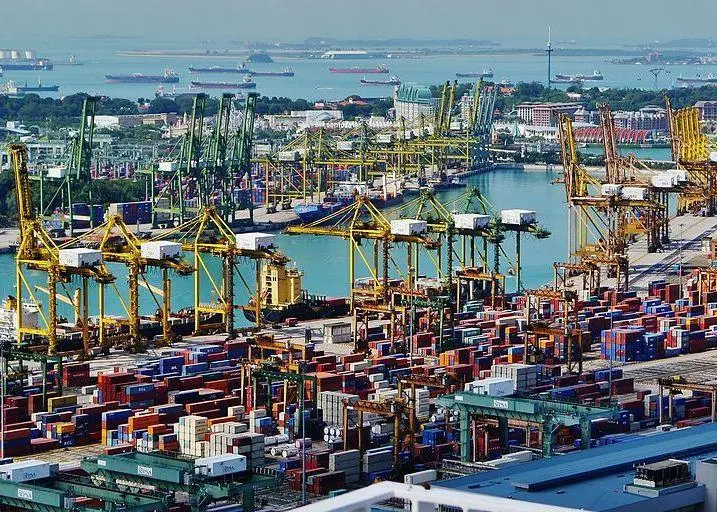
The Maritime and Port Authority of Singapore (MPA) has awarded a third LNG bunker supplier licence to Total’s subsidiary in charge of worldwide bunkering activities, Total Marine Fuels Private Limited, for a five-year term starting 1 January 2022. The licence follows a 10-year agreement signed by Total back in 2019, to develop an LNG bunker supply chain in the Port of Singapore.
“We are proud to be awarded by the Maritime and Port Authority of Singapore the licence to supply LNG. Singapore, as the world’s largest conventional bunkering hub with a market share of 20 percent, is well positioned to become a major hub for LNG as a marine fuel,” said Alexis Vovk, president, marketing & services at Total. “Asia’s demand for LNG bunkering is growing and the contribution of Singapore is of essence for the development of a global LNG bunkering market.”
LNG bunkering hub support
Total said the licence reaffirms its commitment to contribute to the country’s ambition in becoming a key LNG bunkering hub for Asia. Total said it also underscores the company’s confidence in the role of natural gas for the global maritime industry’s energy transition and in its potential to further reduce carbon emissions from ships, through the development and future introduction of carbon-neutral bioLNG.
Total has actively invested in LNG infrastructure, critical to support its shipping customers’ uptake of LNG as a marine fuel. Since November 2020, Total has been operating the world’s largest LNG bunker vessel, the Gas Agility, at the Port of Rotterdam.
By 2022, the company will launch another newly built LNG bunker vessel in Marseille (France), while serving the port of Singapore through a third one. As part of its strategy to reduce greenhouse gases emissions in maritime transportation, Total has in parallel chartered two VLCCs (Very Large Crude Carriers) and four Aframax-type vessels, all equipped with LNG propulsion, which will be delivered in 2022 and 2023 respectively.
Related Articles
 ASIA GREENPORT
 ASIA GREENPORT
 ASIA GREENPORT