![PortStrategy[GreenPort]](https://www.portstrategy.com/wp-content/uploads/2026/09/PortStrategyGreenPort.svg)



RTG conversion for Laem Chabang
Shareholders of a container terminal at Laem Chabang in Thailand have made a bold commitment to environmental sustainability with a contract to electrify its Rubber Tyred Gantry Cranes (RTGs).
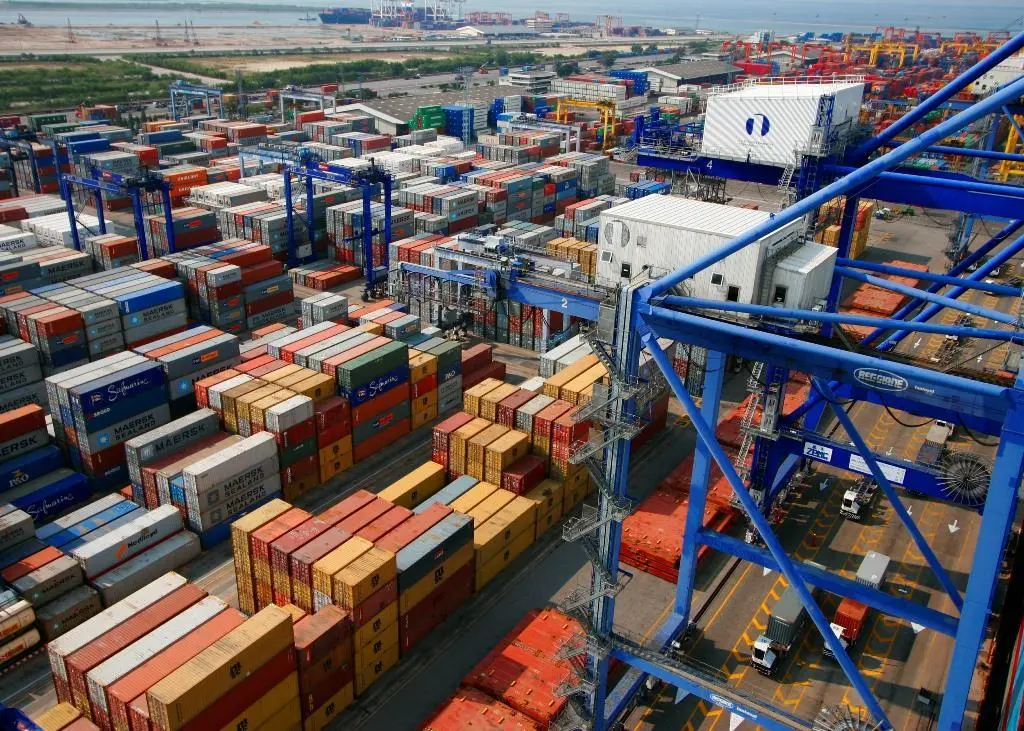
The €1m contract with German based Conductix-Wampfler, will see RTGs being retrofitted at LCB Container Terminal 1 Ltd (LCB1) – Thailand’s busiest container port.
APM Terminals holds a 35% minority share in LCB1, which opened in 1995. With the signing of the new contract, the operator’s programme to convert RTG cranes from diesel to electric power announced a year ago has taken another major step forward.
Niels T. Hansen, chief executive of LCB Container Terminal 1, said: “The electrification of the RTGs at LCB1 will enhance Port of Laem Chabang’s leadership position within environmental performance and make the port a role model for other ports in Thailand and elsewhere in the region.”
The conversion of RTG power from diesel to electricity is made possible through flexible automatic power connections linking the RTGs to a conductor rail. Conductix-Wampler will be installing more than 2.5 km of conductor rails at the terminal to accommodate the electric power link. By reducing diesel fuel consumption in the existing RTG engines, the terminal is projected to reduce CO2 emissions by 1,300 tonnes annually.
Diesel powered RTGs account for approximately 20% of all CO2 emissions from terminal operations, so if a programme like this was to be adopted nationwide, emission reduction would be considerable. According to APM, there are currently a total of 158 diesel powered RTGs in operation at Thai ports.
The conversion of LCB1’s RTGs is scheduled to be completed in 2013, with the considerably larger RTG fleet at the Malaysian Port of Tanjung Pelepas (PTP), another APM terminal member, next scheduled for a conversion.
Related Articles
 ASIA GREENPORT
 ASIA GREENPORT
 ASIA GREENPORT