![PortStrategy[GreenPort]](https://www.portstrategy.com/wp-content/uploads/2026/09/PortStrategyGreenPort.svg)





Busan port unveils port expansion plans
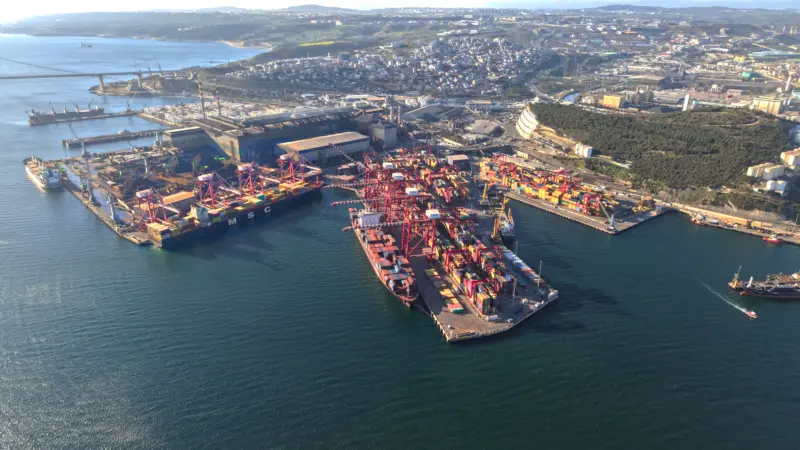
The Korean government has announced plans to add a further 15 berths to its flagship Busan New Port in the south of the country to increase container capacity by 15.8m teu.
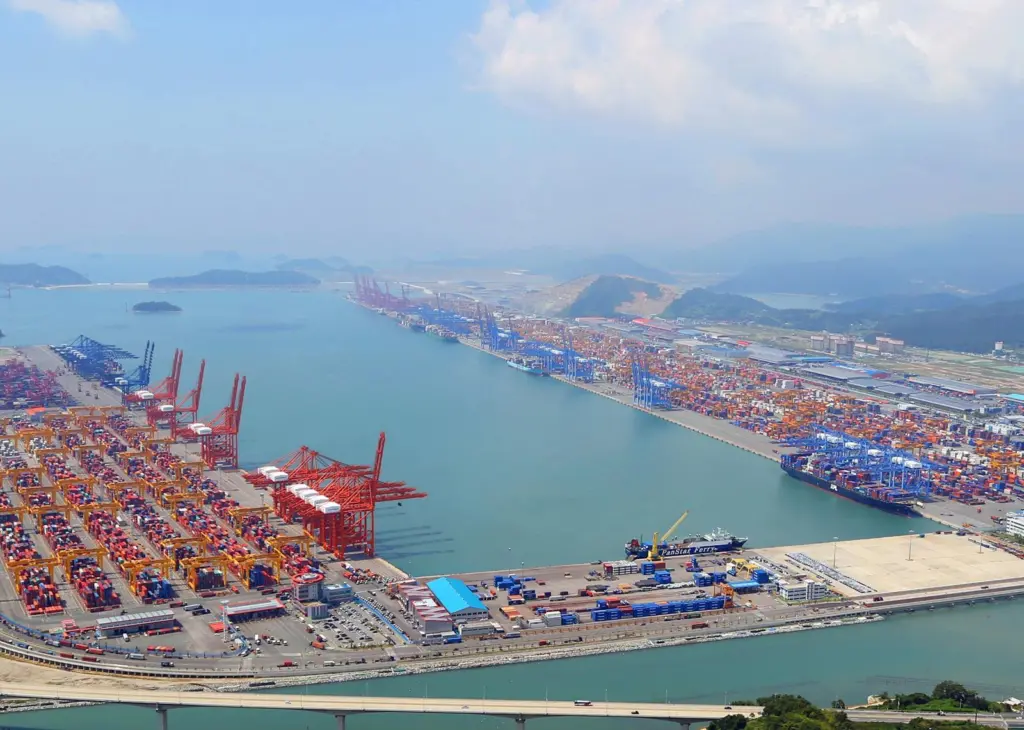
The new facilities will be a mix of container terminals, feeder terminals and multi-purpose terminals and work will begin in stages based on actual cargo demand and under the coordination of central government.
BPA President KIM Li-tack said: “We are on track to achieve a total container throughput of 20m teu by the end of this year and our additional expansion plans will build on this success to cement the position of the port of Busan as one of the very top container ports in the world as well as the leading transshipment hub in northeast Asia.”
Alongside the creation of 15 new berths, BPA has plans to develop an LNG bunkering facility by 2018 and continue to grow its logistics distripark.
To facilitate the flow of cargo between the old and new ports (a distance of 25km), BPA is working on implementing an inter-terminal transfer (ITT) platform to optimise how trucks and trucking companies operate between the two facilities and to reduce overall cost. This is a long-term strategy, but in the meantime BPA will consider subsidising ITT costs.
BPA said that container trade with northeast Asia is expected to account for around 40% of the business by 2020 so it needs to increase its capacity accordingly.
Development began at Busan New Port in 1994 and today it operates 22 berths with an additional eight currently under construction. Total container throughput at Busan Port Authority (BPA) reached 18.68m in 2014 with the New Port accounting for 64% or 11.93m teu.
Related Articles
 CONCESSIONS & INVESTMENTS
 CONTAINER & CARGO HANDLING
 TERMINAL OPERATIONS