![PortStrategy[GreenPort]](https://www.portstrategy.com/wp-content/uploads/2026/09/PortStrategyGreenPort.svg)





R&D a priority as Singapore launches NGP 2030
Research and development (R&D) gets top billing as Singapore sets its sights on being a next-generation port.
Addressing around 200 participants at the fifth Singapore Maritime Institute Forum, Andrew Tan, CEO of the Maritime and Port Authority of Singapore (MPA), highlighted the need for world-class R&D in placing the city-state at the forefront of modern port strategy.
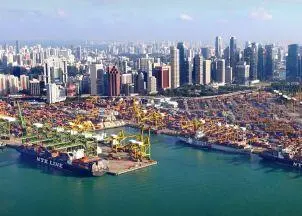
With Asia accounting for around 70% of global container throughput handled by the world’s top 30 container ports, the Port of Singapore is the busiest port in the world in terms of shipping tonnage and the largest transhipment container port in the world.
Speaking at the forum, held on 22 October and themed ‘Maritime and Offshore R&D in Singapore – 2016 and beyond’, Mr Tan shared MPA’s Next Generation Port (NGP) 2030 vision and stressed the need for smart technology in the future.
He said: “Getting from where we are today to 2030 and beyond requires more than simple conceptualisation, planning and coordination. It requires a bold vision and more importantly, the ability to integrate complex systems and deliver on the performance standards.”
Components of the NGP 2030 programme include the new Tuas Terminal which, when developed, will have the capacity to handle 65m teus, making it the largest single mega container terminal in the world.
Key to the Tuas terminal’s success are advanced port technologies, such as the use of Automated Guided Vehicles and automated yard and quay cranes. Research is being carried out into the feasibility of a two-tiered container terminal which could significantly increase yard storage capacity and quay crane productivity. Another possibility is to use an automated storage and retrieval system to further increase capacity.
Looking beyond the Tuas terminal, there are further opportunities to harness technological advances, for example, by using sense-making systems to detect suspicious or non-compliant activities. Other potential R&D areas are autonomous platforms that can be used in a variety of areas to reduce manpower requirements and, at the same time, perform the job more effectively and efficiently.
Wrapping up his sharing of the NGP 2030 vision, Mr Tan said: “By harnessing technology, by our willingness to experiment, and by learning from others, we will push the boundaries of what defines a port.”
Related Articles
 CONCESSIONS & INVESTMENTS
 CONTAINER & CARGO HANDLING
 TERMINAL OPERATIONS