![PortStrategy[GreenPort]](https://www.portstrategy.com/wp-content/uploads/2026/09/PortStrategyGreenPort.svg)





Ticking boxes at Mangalore
India’s New Mangalore Port (NMP) is building a new deep draft berth for containers and bulks,but what else does it offer, asks Gordon Feller.
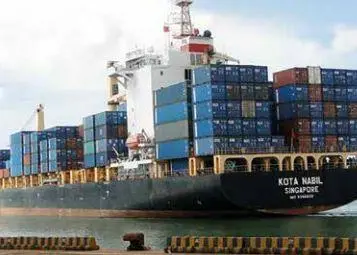
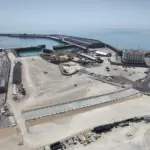
New Mangalore Port was declared as the country’s ninth “Major Port” on May 4, 1974. It is located on the West Coast of India. Of India’s 12 “Major Ports” it is the only one located in the state of Karnataka.
There are 15 berths, with the maximum draft available at some quays of 14m. The port is approached through a 7.5km-long channel, with water depths in the outer channel being 15.4m and 15.1m for the inner channels. The Port has a total land area of approximately 822 hectares and a water area of 120 hectares.
The Port’s chairman, M.T. Krishna Babu, announced that the new structure, Berth No. 17, would be built by the Port Trust at a cost of 2 billion rupees to compensate for the loss of Berth No. 14, which was for multi-purpose cargo. In his announcement, Babu said that both berths would be commissioned within three years.
Interest from five bidders claimed
Although not named, five bidders have qualified to submit request for proposal of PPP to equip Berth No. 14 – as approved by the Tariff Authority for Major Ports (TAMP), which operates under the national government’s Shipping Ministry. The winning bidder will install gantry cranes of higher capacity to speedily handle containers.
With a proposed investment of 2.8 billion rupees, mechanisation of the berth would add 6.02 million tons of capacity at the port. The total number of containers handled at the port would increase from the present 150,000 TEU to 200,000 TEU under first phase and 350,000 TEU in the second phase, Mr. Babu claimed.
Mr. Babu said the port is planning a large-scale dredging programme to maintain year-round, uniform draft of 14m inside the port’s channel. At present, the draft varies depending upon the season. Mr. Babu and his team have concluded that a uniform draft would certainly help the port to attract bulk cargo vessels throughout the year.
The port has entrusted Indian Institute of Technology, in the Indian city of Chennai, to work out the economic feasibility of increasing the draft to 16.5m in order to attract Capesize vessels. The average size of a capesize bulker is around 156,000 DWT, although larger ships (and especially those which are normally dedicated to ore transportation) have been built, with weights up to 400,000 DWT.
Engaging with Sagarmala
NMT is engaged with India’s Sagarmala Initiative, which is one key part the national government’s program, driven by strategic imperatives, to realise India’s economic aspirations. The overall objective of the project is to evolve a model of port-led development, whereby Indian ports become a major contributor to the country’s GDP. Sagarmala envisages transforming existing ports into modern world-class ports and efficiently integrate ports with industrial clusters, the hinterland and the evacuation systems, through road, rail, inland and coastal waterways.
The port is connected with three National Highways:
NH 66 from Kochi to Mumbai, is a four-lane road and part of the stretch is two lane roads which are being widened to four lanes with a provision to expand to six lanes to accommodate future expansions.
NH 75 connects directly Mangalore to Bangalore via Hassan, linking eastern and southern Karnataka. The road is being widened and upgraded to a four-lane highway.
NH 50 connects Mangalore to Sholapur, is a two-lane highway currently being to four lanes.
New Mangalore Port is also connected to the Indian Railway Network through Southern Railway, South Western Railway and Konkan Railway. The Railway Marshalling Yard at Panambur, inside the New Mangalore Port, is a part of the Southern Railway.
This is connected to the Konkan rail network at Thokur providing access to Mumbai via Coastal Karnataka and Goa and to the South Western railway at Kankanady providing access to the Karnataka heartland and Bangalore and Mysore via Hassan and to Kerala through the southern railway.
Related Articles
 CONCESSIONS & INVESTMENTS
 CONTAINER & CARGO HANDLING
 TERMINAL OPERATIONS