![PortStrategy[GreenPort]](https://www.portstrategy.com/wp-content/uploads/2026/09/PortStrategyGreenPort.svg)






Carry on improving
Continuous improvement success depends on discipline, measurement and engagement. Felicity Landon reports
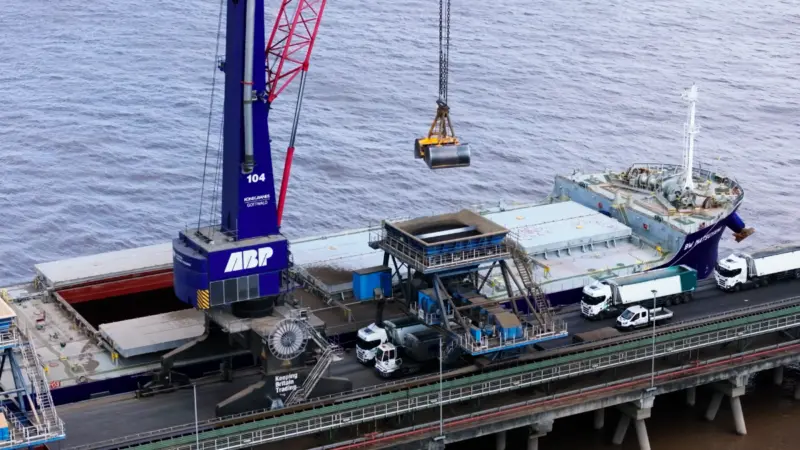
During 2013, Associated British Ports’ Humber International Terminal lost more than 200 hours of productivity and 300 engineering hours due to ‘tramp metal’ stoppages – the equivalent time that it takes to discharge 300,000 tonnes of coal.
Imported coal contaminated by scrap metal presents a risk of damage to the conveyor systems at the terminal and also at the power stations. The metal detector at the terminal was set to trip when metal was present and the conveyor could not be restarted until the conveyor had been isolated and the metal removed by the engineering team, a process that was taking about half an hour on each occasion.
What changed? “By having KPIs and measures in place, we were able to look at the historic performance and the number of hours lost and put together the business case for a sweep arm type system to keep the belts running,” says Martin Philpott, HIT’s general manager. The system was developed by the HIT team and the presence of rogue metals no longer stops the conveyor.
It’s a classic case of attention to detail and the use of KPIs to make a significant improvement in performance. Mr Philpott, who previously ran ABP’s Hams Hall inland terminal, says that whether its container or bulks, the same principles apply.
“The first step towards continuous improvement is putting KPIs in place to find out where you are and where you need to improve,” he says. “It’s important to use technology to really capture data and understand what is going on. A lot of the time you can think you know, but it isn’t until you have hard facts, something quantifiable, and correlation between two events, for example, that you can measure what effect you can make by changing a resource or the way an operation is carried out.”
Labour gains
On top of that, it really helps when the team buys in to the idea: it is really important that the workforce doesn’t view it as change for change’s sake, says Mr Philpott. “It is really focusing on staff engagement to let all the team members know where we are and where we need to get to. You need to explain to all the team members the role they have to play in that journey. When you listen to the people who are at the coalface, you can make strides forward. It is good to have numbers but also to understand what is going on behind any data.”
Productivity on HIT berth 2’s automated system increased by 15% last year compared with 2012, thanks to a number of ‘soft fixes’ resulting from increased use of KPIs and greater staff engagement to ensure all team members were aware of what was required and how they contribute to it, he says.
Downtime of plant and equipment was analysed, trends noted and more planned preventive maintenance introduced to keep plant up and running. The quality management system was extended across all aspects of operation and engineering to encourage a continuous improvement culture, including driving out waste and improving equipment uptime. Communication, information and regular reviews are all a central part of the effort.
In a fairly mature operation it is ‘more evolution than revolution’, says Mr Philpott. “It is about looking for the small things where you can make fairly quick wins. For example, we improved the tonnes per hour of our cranes by taking the crane drivers out and back by minibus – not only ticking the safety box but also improving productivity because the changeover was managed. A lot of these things tend to be incremental – you just keep chipping away and refining things. The cumulative effect of lots of small improvements has an amazing impact on the business.”
Shared opinion
Taking a wider perspective, best practice is shared across ABP’s operations, with colleagues from across the group meeting to share experience.
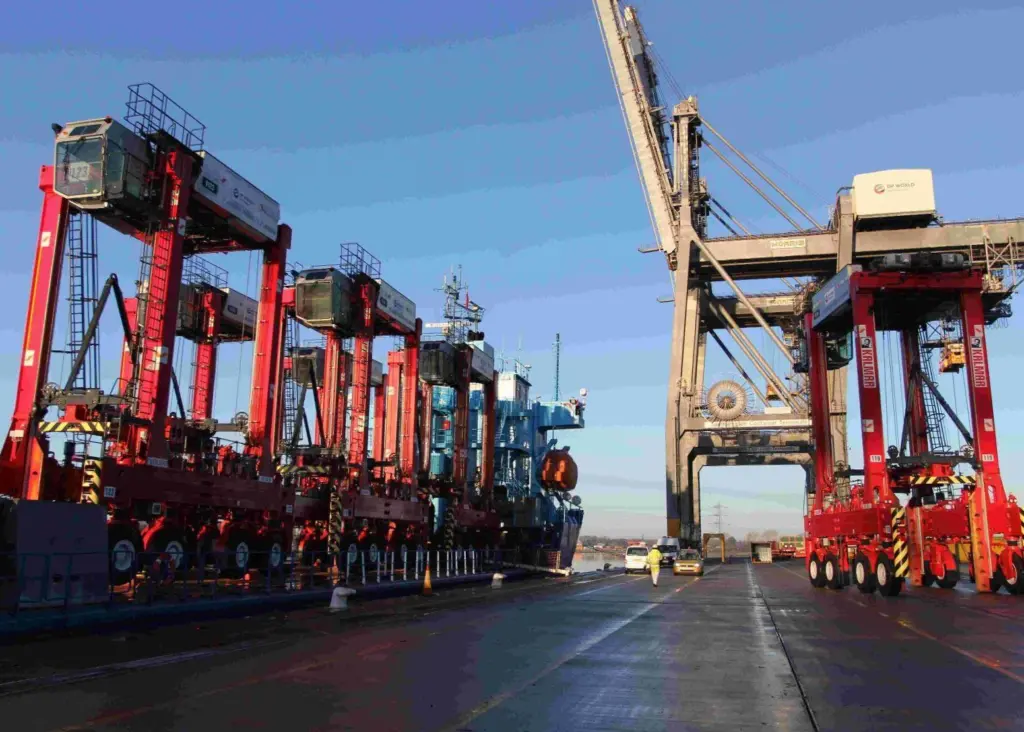
At DP World Southampton – jointly owned by DP World and ABP – a concentrated focus on improvement led to the terminal being named the most productive port in Europe by the Journal of Commerce last year, based on analysis of data from shipping lines. The terminal had moved from ‘essentially struggling to get 21 moves an hour’ before 2009 to an average 27.6 moves per hour in 2013, says Aart Hille Ris Lambers, head of commercial at DP World Southampton.
“In 2009, we had to go through some redundancies and we knew Felixstowe South was being built and London Gateway was coming – and that created a sense of urgency,” says Mr Lambers. “We couldn’t just continue as we had in the past, we had to change. Essentially, we concluded that probably we are not going to be the largest port in the UK but we could try to become the best and aim for very good service levels.”
However, he says, you can’t simply point at the workforce and tell them they need to improve – “It just doesn’t work like that.”
“We needed to work on three essential pillars: people, systems and equipment. By addressing these three pillars, we created the groundwork for improvement. One of the key things was that we involved the labour very heavily. We had performance improvement project (PIP) teams and they helped us identify key issues in several areas.”
Making progress
What changed? The terminal moved from an in-house operating system to one from NAVIS but it wasn’t a seamless win. There was a difficult period of bedding in before results began to show. There was investment in cranes and in upgrading the GPS systems and changes in labour arrangements, and everything started to come together.
In fact, the GPS upgrade came out of a suggestion from the workforce, says Mr Lambers. “The old GPS on the straddle carriers wasn’t accurate enough and required drivers to count their way to the right row so that boxes could end up two places out, taking up a slot where another box needed to go.”
The new differential GPS features software in which the drivers see on their screen and are also alerted by a ‘beep’ when they are in the right row. “Because the system was suggested by the labour, they had ‘ownership’ of it,” he says. “This GPS helped with much more accuracy, pinpointing where each and every box was – it helped both shipside and landside processes.”
Continuous improvement is just that, says Mr Lambers. “We continue to find things we can do, we continue to engage with the workforce, and nowadays if there is an issue somewhere, people will call up the head of operations or send a text and say – have you looked at this or that?
“The low-hanging fruit has probably gone now, so it will be smaller steps, but there is always room for improvement.”
Another recent change involved the straddle drivers once again. Analysis showed that stability alarms – triggered if, for example, a box is carried high or the equipment takes a corner too quickly – were not always being responded to as they should. A new reporting system delivered feedback “and we have seen a huge reduction in the number of alarms, an important safety factor”, says Mr Lambers.
Even though the terminal has continued to deliver new productivity records, analysis shows that the number of stability alarms triggered continues to head downwards.
Related Articles
 BULK HANDLING
 BULK HANDLING
 BULK HANDLING