![PortStrategy[GreenPort]](https://www.portstrategy.com/wp-content/uploads/2026/09/PortStrategyGreenPort.svg)





Cracking the code
Could a port-wide ‘code of conduct’ speed cargo flows and tighten up logistics chains? Felicity Landon reports
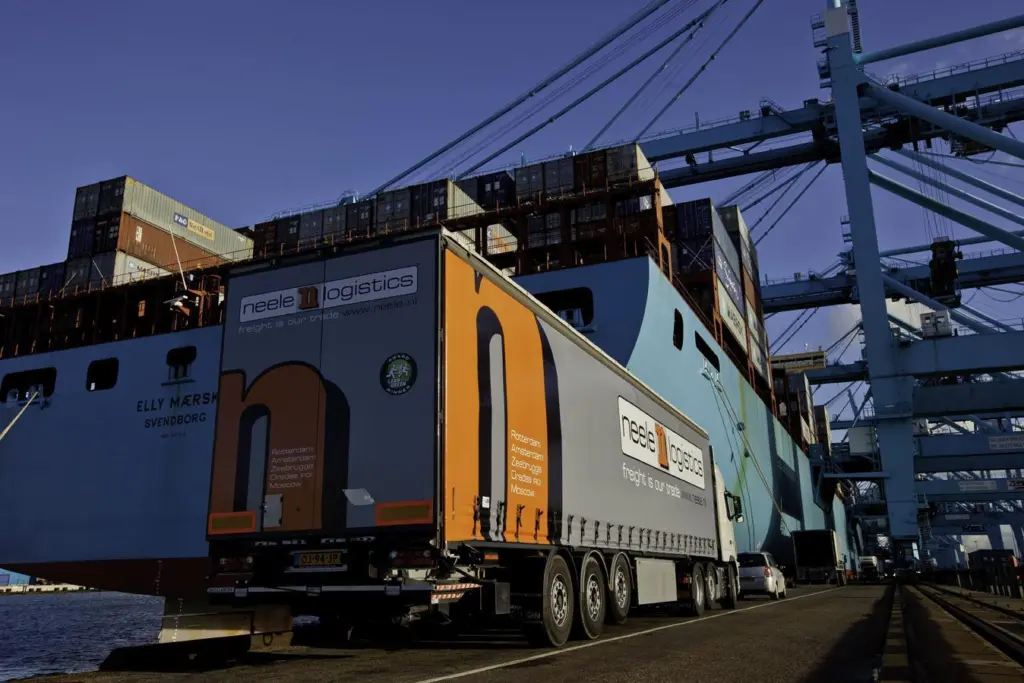
Forwarder Ron Neele is passionate about what he does: ‘born and raised’ in the family business, Rotterdam-based Neele Logistics, he says the Maas River runs through his veins.
But when the conversation runs to efficiencies and effectiveness in the supply chain, he gets even more fiery. He has launched the idea of creating a Code of Conduct for all those involved in moving containers through the Port of Rotterdam – within a year, he hopes to have an assembly up and running, bringing together all the interested parties to take container logistics to a whole new level.
“Even though we have at the Port of Rotterdam one of the fastest turnround times, there is definitely room for improvement. I can see a lot of inefficiencies that challenge me,” he says. “It could be even better and more effective. The reason is, all the parties involved, or stakeholders, look at things from their own position and consider their own interests – and who can blame them? But it damages the whole picture. We need to get all stakeholders out of their narrow position and make procedures more effective from all angles. That is the basis for my idea of a code of conduct.”
Mr Neele, who is vice-president of FENEX, the Dutch forwarders’ association, says the first step will be for the stakeholders – in essence, representatives of container terminals, stevedores, rail/barge/road transport, forwarders, shipping lines, customs, port community system, and so on – to draw up their own ‘wish lists’.
“We would then be able to see how we could put these together to create a code of conduct in which we have agreement from all parties. This would not, however, be some sort of static document – it would be ongoing, always being updated to take into account new problems or processes. The assembly, chaired by a neutral party, would meet a few times a year to continue to develop this ‘moving document’.”
First steps
The idea is in its early stages but Mr Neele is confident he can persuade other stakeholders to get positive and enthusiastic about the concept. “If we are able to get some things agreed in the general interest of smoother operations at the port, as a result containers will flow better, faster and, indeed, cheaper. There is a lot to win and if we can achieve this, it will improve the competitive position of Rotterdam and therefore, we would hope, encourage more cargo through the port.”
What sort of issues might arise? He says from the forwarders/logistics companies’ point of view, there is the speed of getting containers from the terminal. “Sometimes you have to pay a really small amount by bank transfer and the container can’t be moved for the sake of a few euros,” he says. “On the other hand, the terminals would have a lot of wishes directed at us, as collectors of import containers. For example, they would like to know in advance, what is the mode of on-transport for each container? If they have that information in advance, it reduces the number of moves they have to do.
“There are a lot of situations where joint solutions could be found, instead of everyone looking at an issue from their own perspective.”
He foresees a difficulty in working with container terminals and shipping lines that are part of large international groups – “and that means all kinds of decisions, even small ones, are taken not in Rotterdam but in Singapore, Hong Kong, New York”. But he says the most important part is establishing mutual trust and communication – winning people’s hearts.
Is this something other ports should follow? “Well, yes – but I hope they will not develop something similar!” says Mr Neele. “Maybe it sounds like an abstract idea but we are talking really about a very concrete situation where we can improve very much. We could use this code of conduct as a USP of the Port of Rotterdam.”
Wider reach
Could such a concept be broadened out to create a regional, national or even international code of conduct?
Robert Kimber, secretary of the General Stevedoring Council, thinks not. “While I could see ports coming closer together if they are in the same geographical area, because they would have some things in common, I can’t imagine the company stuffing containers on one side of the world having the same code of conduct stretching all the way to the container’s final destination on the other.
“Also, I am not sure how many companies have a code of conduct for their own operations with their customers – I think that would be a starting point. If individual links in the chain haven’t got their own codes of conduct, how would they set about trying to create one for the whole chain?”
A basic code of conduct could be, he suggests, promising to handle everything with due care – and, if there is a problem, rectifying that problem within a given time line. But bearing in mind the 80/20 rule, that 80% of your business probably comes from 20% of your customers, most companies would tend to prioritise the needs of the customers with the most leverage.
Dean Davison, principal consultant at Ocean Shipping Consultants, says: “A code of conduct is defined as an agreement or rules of behaviour for a group or the way in which an activity is managed. Isn’t that what containerisation is in its entirety, in that it is a way of moving cargo that everyone does the same?”
Different strokes
Broaden the concept out, he says, and while it might guarantee a consistent level of service, which shipowner actually wants the same level of service as everyone else?
“They want a good level of service where loading on to the ship is done in a safe manner and the goods get to their destination. But if there was this ‘optimal’ way of working, how would a terminal differentiate itself from the competition, and surely such a concept would diminish the entrepreneurial, thinking-on-your-feet approach which logistics professionals pride themselves in? In fact – there would be no competition!
“I can understand working together in an optimal way but surely that comes down to communication anyway. The whole industry and market is based on choice, but this would eat away at individuality. The various terminal operators have different strategies and different ways of standing out from the crowd.”
A code of conduct at local level makes sense but at a European or regional level would not be achievable, adds Patrick Verhoeven, secretary general of the European Community Shipowners’ Associations (ECSA) and formerly of the European Ship Ports Organisation (ESPO). He believes the concept put forward by Ron Neale could encourage more cooperation and avoid waiting times and delays, for example.
“This has been an issue in inland navigation, where there is sometimes not enough cooperation between ships’ sailing schedules and barges arriving randomly,” he says. “I do think this is an area where a port authority could play a coordinating role, bring people within the shipping and maritime community together and show added value by playing the role of match-maker and facilitator. However, even at local level this is a big step and there would be challenges – people have to trust each other to cooperate.”
Related Articles
 BULK HANDLING
 BULK HANDLING
 BULK HANDLING