![PortStrategy[GreenPort]](https://www.portstrategy.com/wp-content/uploads/2026/09/PortStrategyGreenPort.svg)





Delays abating at Rotterdam and Antwerp
Congestion at the ports of Rotterdam and Antwerp is beginning to improve for container vessels, including ultra-large vessels, according to management software solutions provider, CargoSmart’s latest newsletter.
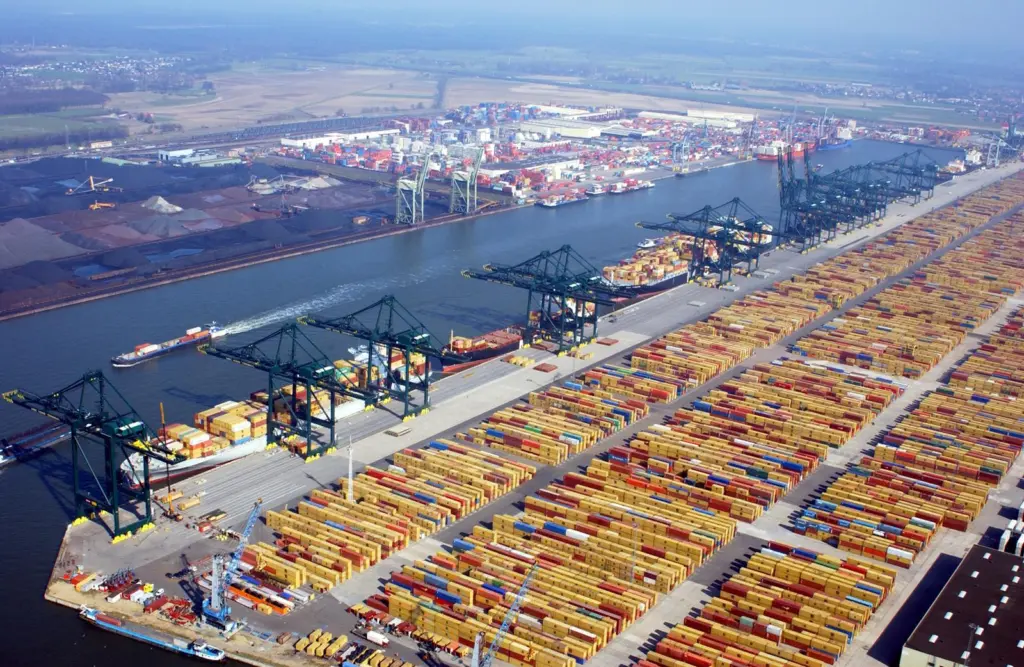
The performance of the ports over the past three months has been analysed by CargoSmart’s Global Vessel Voyage Monitoring Centre (GWMC), which looked at average vessel arrival delays, average berth times, and the performance of very large vessel compared to the overall average at the two ports.
According to CargoSmart’s data, the average vessel arrival delays at the two ports were both around 16 hours between mid-December and mid-January, followed by shorter average delays of 15.2 hours at Rotterdam and 12 hours at Antwerp between mid-January and mid-February 2015.
In March, average vessel arrival delays at Antwerp remained steady at around 12 hours, while Rotterdam continued to decrease to 13 hours. From mid-January through mid-march, the Port of Rotterdam experienced longer delays than the Port of Antwerp.
GWMC findings revealed berth times at Antwerp were longer overall than Rotterdam, and average berth times at the ports had “opposite trends”. Over the three months period, CargoSmart says Antwerp’s berth times grew slightly shorter from 26.2 hours to 25.3 hours and then increase in March to 25.8 hours, while Rotterdam’s increased slightly to 23.5 hours and then decreased to 22.7 hours.
In addition, the GWMC studied the performance of vessels of more than 10,000 teu. The analysis revealed average vessel delays of large vessels significantly improved at both ports, especially at Rotterdam from 18.4 hours to 8.3 hours. For the very large vessels, the percentage of vessel delays over 24 hours was also smaller than the overall average at both ports over the three-month period.
CargoSmart adds that future performance of the vessels and ports will depend on “actual conditions” that are affected by weather, vessel delays, and other factors.
Related Articles
 BULK HANDLING
 BULK HANDLING
 BULK HANDLING