![PortStrategy[GreenPort]](https://www.portstrategy.com/wp-content/uploads/2026/09/PortStrategyGreenPort.svg)





Go with the flow
Gates queues should be consigned to history say OEMs. John Bensalhia investigates
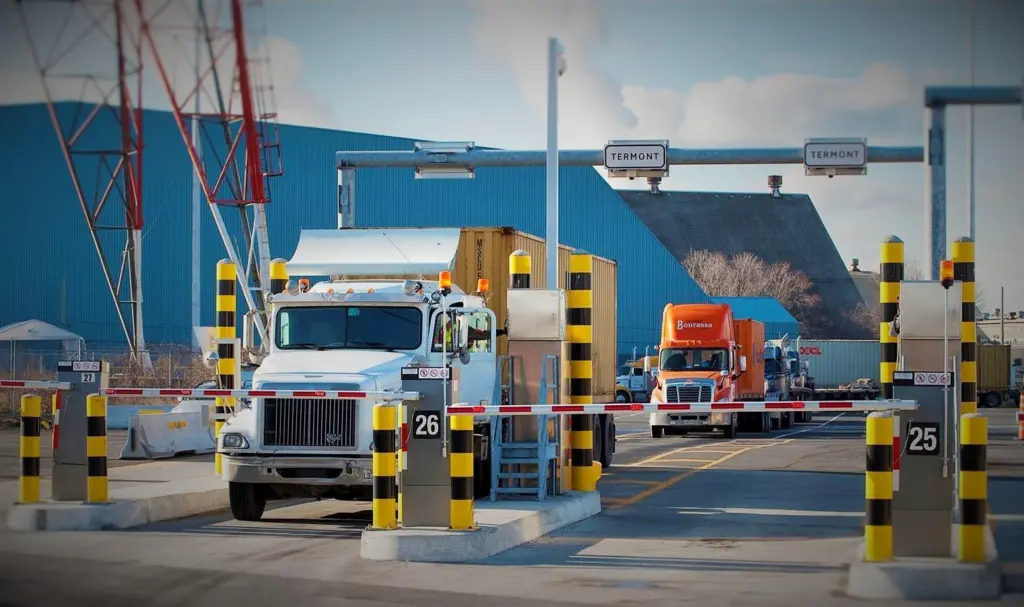
“Does everyone show up at the doctor’s office when they find it convenient or does the doctor spread out the appointments throughout the day to best utilise the asset?” John Nardi, president of the New York Shipping Association, discusses an appropriate metaphor for the issue facing ports with respect to gateway truck flow.
“Many times we see truckers queueing up for long distances in the morning and no trucks arriving in the afternoon.”
To ensure smooth, regular traffic as opposed to a backlog of congestion, port operators must ensure that truck flow is effectively managed. Mr Nardi says that truck flow at gateways is one link in the supply chain linking port gateways and the customer’s door. “Fully utilising all hours of the day for all links in the supply chain will improve truck flow though port gateways. Simply, this is a supply chain equation.”
A recent report highlighted a way to ensure smooth, hassle-free truck flow. From January 2017, truckers are now required to schedule appointments at the Port of New York and New Jersey’s GCT USA LP-operated terminal. Prior to this new requirement, trucks would queue up for hours in order to gain entry for loading and unloading. However, following an initial test of the new system, the results were favourable with a 38% decrease in turn time with appointments. The ports of Los Angeles, Oakland, Long Beach and Vancouver have also adopted truck appointment strategies.
Mr Nardi says that a truck appointment system is the way forward, ensuring advance warning for ports. “The days of a trucker just showing up and expecting to be serviced ‘on demand’ are coming to an end. Predictability is the most important aspect of the supply chain of the future and the only way to ensure this is with an appointment system.”
Process and behaviours
Daniel Dagenais, vice-president, Operations, Montreal Port Authority, says that truck gate improvements can be grouped into three key categories. “Ports and terminals can improve their gate performance by either (or a mix of) adding infrastructure; changing the process; and altering behaviours.”
“As a mid-size port we simply cannot simply add infrastructure without exploring what we believe are the most promising options: change behaviours and process reviews. Indeed, adding more gates or larger parking lots to accommodate larger daytime truck flows, only to see the same assets unused or underutilised in the evening or at night, is no longer acceptable.”
Mr Dagenais adds that terminal operators are also being encouraged to introduce paperless processes, using optical character recognition and remote inspections through CCTV. “To that effect, projects are on-going to reach higher productivity with the use of technology.”
Altering behaviours is, however, a bit trickier: “This entails communicating strategic information so that decision makers (dispatch and planners) are made aware of where and when the best time slot opportunities are located. It also informs them that in order to fill their commitments they may have to mobilise extra assets because the terminal is currently ‘under attack’ and longer waiting times are expected… less surprises. We can leverage factual data to demonstrate that costs associated to daytime queuing are more expensive than extending operating hours and promoting this model to beneficial cargo owners. Changing behaviours does make supply chains more competitive.”
A notable innovation introduced by the Montreal Port Authority in October 2016 was Trucking PORTal, a web application designed to improve goods fluidity and mobility in and around the port. “It was created for truck drivers who frequent the Port of Montreal and their dispatchers,” explains Mr Dagenais. “It posts, in real time, truck wait times on port property at each terminal so that truckers can better plan and optimise decision-making, avoid congestion and save time.”
There are several collateral benefits derived from this project, he explains. “The most important one is that we can better track improvements, and discriminate perception-based statements from fact-based information. Sensors, card readers, OCR and all the necessary hardware installed to support this system required the adoption of a single port access platform. This has greatly improved data exchange between the port authority (sole port card emitter) and the terminal operators, responsible for terminal access. The integration of all access points on a single common system has made possible end-to-end visibility of every transaction.”
Another benefit of Trucking PORTal relates to the environment as the improved truck fluidity means that trucks emit less greenhouse gas (GHG) emissions while in and around the port. “An air quality positive effect that ensures the port’s licence to operate and grow from neighbouring communities. Real-time performance awareness by all users fosters an inter-terminal operator healthy competition reflex to improve – no one wants to be last. Studies have shown that knowing service delays has a calming effect on expectations: for example, as a computer user do you prefer to know that 12 seconds are left to download a file or see a spinning hourglass?”
Hailfax tracking
Meanwhile, last year, the Halifax Port Authority launched an enhanced container tracking system for importers and exporters. It allows them to track a container by setting automated alerts that are sent back to them by email or SMS. Users can enter a single container number or upload a larger list of files and identify the specific alerts they wish to receive.
“This was created as a result of feedback received by the market,” says Lane Farguson, communications advisor, Halifax Port Authority. “Our goal was to take the original tool and make it better; simplify and automate; and to provide a faster search option. It is an example of working with industry to make it easier for shippers to do business through the Port of Halifax. Information gathering and monitoring is invaluable to us and our customers.”
Shortly after the launch of the enhanced container tracking system, a major infrastructure project in Halifax got under way. This was to replace the suspended deck structure of one of the two harbour bridges in Halifax. Additionally, the bridge was to stay open to vehicular traffic and marine traffic throughout the process. “The Halifax Port Authority IT department worked closely with the Halifax Harbour Bridges project team and developed several innovative air gap monitoring systems to help insure the safe and unencumbered transit of vessels under the bridge,” says Lane. “The air gap monitoring program has since received an award from the American Association of Port Authorities. The deck replacement project is now out of the main navigational channel, and I am happy to report there were no significant impacts on shipping schedules throughout the entire work schedule, which is pretty remarkable when you think about it.”
Lane adds that the Halifax Port Authority is still gathering data and using that information: “The next step now is to bring it all together. Our IT and Innovation team will launch a full operational dashboard in the coming months which will provide global visibility through our website covering all aspects of our container terminal operations, terminal performance KPIs, harbour traffic, security, port conditions and dangerous cargo processes.”
Montreal’s Mr Dagenais concludes that appointment technologies are promising technology applications, representing what is considered current industry best practice. He adds that the future is “most likely more exciting.
“Declining computing costs, the internet of things, wayside sensors, tracking and dematerialisation of transactions should enable ports and terminals to transition from current appointment systems to a dynamic predictive mode that would combine the advantages of an appointment system and the promises of technology.”
Dr Julian Stephens, technical development manager of MJC², adds that technology is the future when it comes to managing port truck flow: “Internet-of-Things and the connected container, coupled with advanced machine intelligent logistics optimisation algorithms, will allow real-time synchromodal optimisation.”
“Queuing at terminals should be consigned to history.”
SOFTWARE EASES TRUCK BOTTLENECKS
To help manage truck flow at ports, software technology is a notable boon. MJC², for example, has developed a number of software solutions.
“Integrated synchromodal planning of the port and terminal operations is a very effective and low cost solution,” says Dr Julian Stephens. “In many cases, currently each part of the operation (ship, berth allocation, terminal handling, truck, train) is planned using independent systems which optimise “locally”. This leads to mismatches along the supply chain, queuing being one of the negative consequences. Initiatives like SYNCHRO-NET are addressing this.”
SYNCHRO-NET combines advanced synchromodal logistics optimisation tools with smart steaming supply chain planning systems. Benefits include reduced congestion (a result of a more intelligent use of multimodal options) and optimised berth allocation (resulting in faster turnaround for ships).
MJC²’s freight planning and logistics management software aims to provide strategic, real-time optimisation functionality for container transport operations – including trucks. Port operations, haulier assignment and depot/terminal operations can be managed far more effectively as a result, MJC² claim.
It’s possible to keep an eye on the progress of truck movements with the MJC² Freight Dispatch and Shipping Software. This software allows for complete visibility for the entire operation. It can automatically reschedule truck routes if necessary and can integrate with port software systems to both deliver and receive information in real time.
Summing up the key benefits of these software solutions, Dr Stephens says: “Reduced queues, optimisation of berth utilisation, faster turnaround time for ships, and increased effective capacity.”
Related Articles
 BULK HANDLING
 BULK HANDLING
 BULK HANDLING