![PortStrategy[GreenPort]](https://www.portstrategy.com/wp-content/uploads/2026/09/PortStrategyGreenPort.svg)






Lean and mean
Can methodologies such as Six Sigma and 5S be applied in the ports environment? Felicity Landon reports
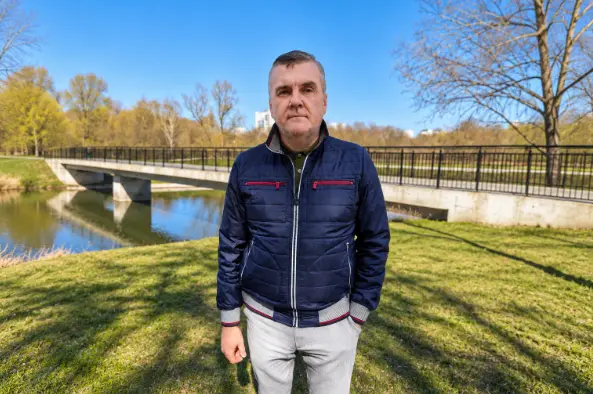
Business coach Hugo Heij was recently running a workshop, based on Six Sigma principles, on how to improve communication and training. One of the participants, a transport company manager, challenged him, saying: “That is not how it works in logistics.”
“Clearly, he didn’t know my background, says Mr Heij, whose previous career has included five years running SCA’s Interforest Terminal at Tilbury, where he championed an improvement project based on 5S and Lean elements.
“I asked him to explain his view and then told him my background sand said that actually, things can work in a different way. He was the most switched-on person for the rest of the day!”
The biggest challenge when introducing methodologies such as Six Sigma and 5S into the ports and logistics industry is tackling the established belief system, says Mr Heij. “I often see it – beliefs so deeply embedded that to break them is hard work. In the ports industry you are often still dealing with people who have been around a long time and have come into leadership positions because of their experience.
“I became an MD in my 30s, and the majority of my peers were 55. When I started talking about implementing Lean principals into the terminal, I knew they were thinking ‘it’s Hugo again with another idea’ – they saw only hassle and work, while I saw benefit. Overall, I would say the ports industry is quite hesitant about adopting these ideas.”
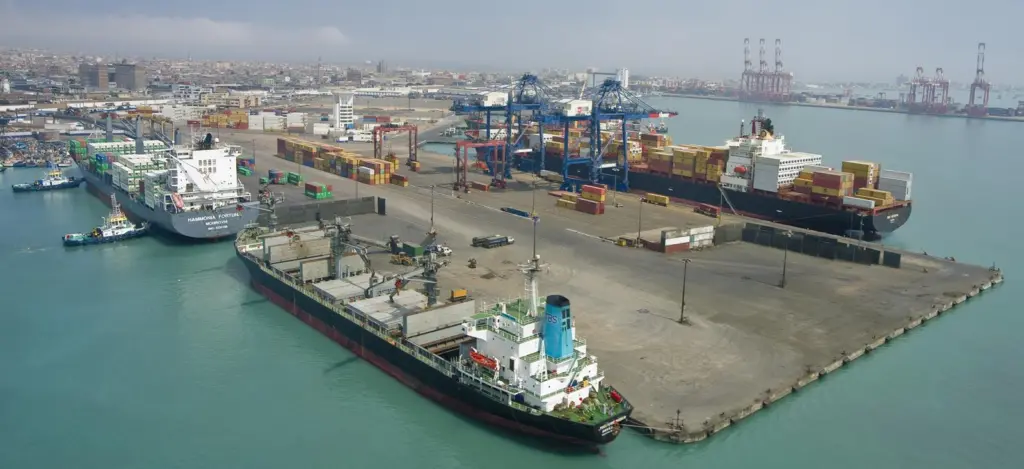
Is the ports industry so very different to a chocolate factory or car plant? The claim is often that ports are somehow ‘different’ – but that’s entirely wrong, says Henrik Kristensen. He has just handed over management of APM Terminals’ Callao operations after three-and-a-half years, where he led an improvement process based on the Appreciative Inquiry (AI) model.
Not so unique
“Each and every terminal thinks they are special – they all have arguments why they are unique,” he says. “The truth is that this is a factory or a plant like any other. I have personally seen what, for instance, Nestlé is doing in its factories – using process excellence to drive performance – and that’s a completely different attitude towards how to measure deliveries and deviations and what to do to improve daily production, etc. The devil is in the detail and standard production systems are the way forward to drive further improvements.”
You don’t need to go through a full circle of Six Sigma to make significant improvements but can embark on various methodologies, says Mr Kristensen. “All the process excellence tools are different tools you have available in your tool box – you can apply them as you see fit for what you determine is needed. Some departments may need a 5S drive, others a long process where you drive this forward in a two to three-year process.”
At Callao, the choice was for AI because of the positive engagement involved, he says. “We could combine having a three-year goal with a positive drive towards a change that was really needed, while also making large constructions in Callao – remember, we started by taking over an old publicly managed port.”
While APMT invested heavily in new berthing and equipment at Callao, Mr Kristensen says that change management was the most interesting part of his experience there.
“During 2012 we faced the same challenges as other business leaders – we were not making enough profits and something needed to be done. We decided to explore something new in Callao that I believe has never been done before in the ports business, or at least in APMT – we embarked on Appreciative Inquiry.”
Count with me
A three-year campaign was launched in November 2012 under the title ‘Cuenta Conmigo’ – count with me – and was to be based on positive comments, dialogue, engagement and sharing. The formula, he says, was easy to remember: 0 – zero fatalities, 1- one team, 100% commitment.
“The area of focus was anything that improved safety, top line or efficiency – which would all, in the end, lead to improved profitability.”
In the first week the campaign generated 800 ideas from employees working in groups. These included reducing waiting time from one process to the next, reducing waste, reducing fuel and power consumption, changing operations, buying special machines instead of renting, reviewing where money was spent, and finding new revenue streams.
The impact was dramatic – in the first full year, 2013, the programme of process excellence delivered $3.6m net result, says Mr Kristensen.
The APMT team had been providing training and smaller projects for various departments in Yellow Belt and Green Belt Six Sigma type training since start-up, to encourage staff to deliver their own process excellence projects, but it was difficult to achieve this with staff who had never learned about the concepts before.
“We may have had too high expectations to start with – which was the reason that we reviewed and changed the programmes and made various adjustments before we embarked on the Cuenta Conmigo programme.”
It is, he says, always about getting the team onboard. “The port business is a people business and it is fundamental that you get buy-in to these ideas.”
It’s never easy to get staff to agree to change, he says, but it is important that they feel involved, and that those leading the project are clear on the plans and straightforward and honest about the objectives. It wasn’t always an easy path for management to lead the way on.
“Eventually, after discussing the pros and cons – like can we afford to take the organisational time on this, can we afford not to, etc., we agreed to start the new journey.”
Baby steps
It was important to create small successes constantly and keep communicating the improvements, he says. “We shared results every six weeks with three sessions in one day, to meet as many staff as possible.”
It became clear that staff were more interested in hearing about the engagements from the various groups or teams, than learning about the money – although when good results were translated into profit sharing benefits, that obviously made a difference.
“It is all about getting engagement, creating a sense that it matters, that each one of us makes a difference every day and by working more together we can win.”
Mr Heij, who now runs his own coaching and consulting business and is a partner in Chelmsford-based Team Results, works with clients across many sectors, including logistics. A fellow partner in Team Results is lean management and business growth expert Andy Sleet, who has more or less rewritten Lean Six Sigma for small businesses, says Mr Heij. “We have replaced Lean with CSM – Common Sense Management. You can make things as complicated as you like, but everybody knows if you organise your desk, sort your tools and keep things tidy, you get a structured approach that works easier.”
Start with the hill, not the mountain
Too many people want to create very large Lean projects when they can start with the low-hanging fruit.
“Often the main reason why people resist change is because they don’t know what’s coming,” says Hugo Heij. “They need to see the benefit. If you do the project with less voice, you can probably just get a lot of things done that people will see do make sense. A Lean Champion can dazzle you with all sorts of technology, but I would say, start by reading about it. That is an easy investment – a few hours and £15 for the book.”
It isn’t difficult to be ahead of the game in the ports industry in this area, he says. So where could there be easy wins?
Mr Heij refers to the ‘seven types of waste’ in the Lean system, including waiting (or queuing) and holding too much stock.
The SCA team terminal started pre-loading lorries to avoid waiting times. Then it looked at stock. “I know terminals make money from storing, but we made most money when the turnround times of all the stock went down and average storage time went down,” he says. “Customers were using our warehouse as a holding area, especially with paper. But if you can use the space many more times a year, you can make more money.
“Another way to reduce waste is getting it right first time. How many times do we not actually know what the client wants, or we are not clear, or we do everything quickly and then get the wrong delivery to the wrong place? That costs a lot of money.
“The key thing our clients want is either to make more money or work fewer hours – or preferably both, and we think both is achievable,” he says. “Obviously to make more money you have to cut out waste. That is why it will apply so well in shipping and ports.”
Related Articles
 BULK HANDLING
 BULK HANDLING
 BULK HANDLING