![PortStrategy[GreenPort]](https://www.portstrategy.com/wp-content/uploads/2026/09/PortStrategyGreenPort.svg)






Making good use of data
A lack of data transparency can hold back port efficiency, according to consultant Peter de Langen of Ports and Logistics Advisory.
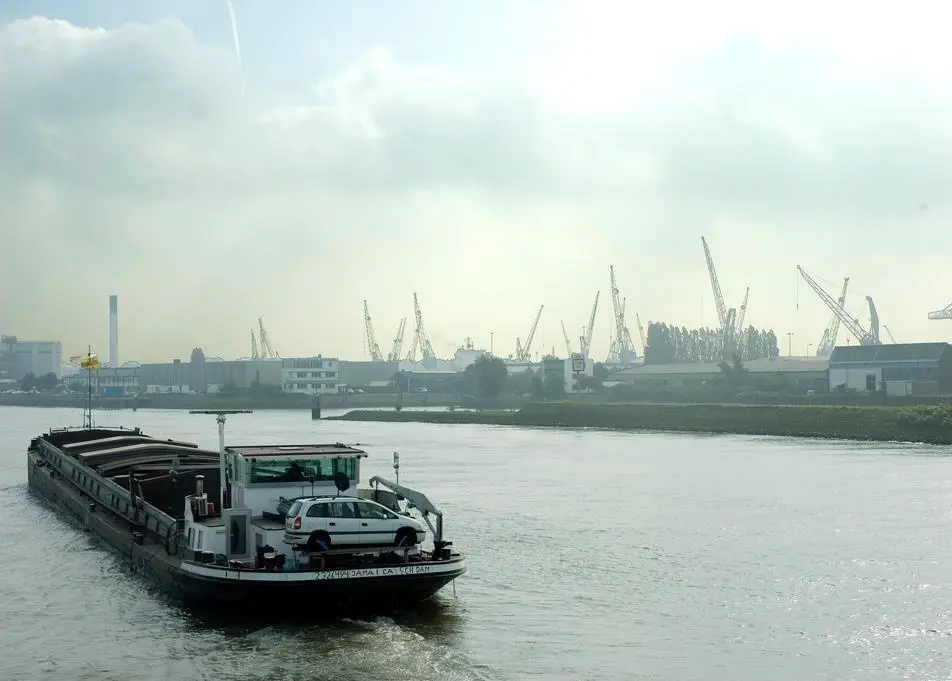
“Like the internet as we know it, the logistics internet should allow for the seamless flows of commodities between producers and consumers, driven by freely available information. Ports are one (important) element in this,” he says, adding that all kinds of information flows are required for well-functioning ports, including information flows to customs and inspection organisations, as well as information flows between various companies involved in the transport chain.
The lack of freely available data, he says, deeply constrains supply chain efficiency. Next to empty truck movements, lack of information often impedes the choice for more sustainable, albeit slower, transport modes. Furthermore, lack of information can get in the way of the efficient handling of ships and trains at terminals.
As a simple example, he says that ships can save fuel, costs and emissions, if they would know when they can be handled at the terminal (or enter a lock, or have towage and pilotage services available). They do this by reducing speed in case they cannot be handled immediately. Furthermore, feeder vessels, barges and trains often call at various terminals, where they all too often have to make sequencing choices without information, essentially turning the port into a black box. In these situations, the total time spent in the port is very unpredictable with high associated costs, not only due to inefficient use of resources but also because less value creation due to low reliability.
“So, the diagnosis that unavailable data impedes efficiency and sustainability is the easy part; the difficult part is how to find the right approach to improving the availability of accurate data as well as systems to act on that. The open data model as suggested by Port of Rotterdam is clearly attractive, but will not arise spontaneously, nor instantaneously. Instead, it is likely to require some shifts in mental maps and strong shipper involvement,” he says.
Related Articles
 BULK HANDLING
 BULK HANDLING
 BULK HANDLING