![PortStrategy[GreenPort]](https://www.portstrategy.com/wp-content/uploads/2026/09/PortStrategyGreenPort.svg)





The complete package
Productivity isnt just about fast handling; its about the bigger port and infrastructure picture, explains Alex Hughes
For ship owners, there’s no money to be made during port calls and with operational costs spiralling it’s little wonder that pressure is being piled on ports to improve turnaround times. However, easy fixes are few and far between.
Good productivity is the Holy Grail and is definitely a key factor when pitching for new customers, says Oliver Weinreich, general manager of Valparaiso box handling facility, Terminal Pacífico Sur (TPS).
“Obviously, shipping lines want to turn their vessels around as quickly as possible, so we at TPS are highly interested in what happens on the quay,” he says.
TPS therefore tries to ensure that sufficient cranes are available to minimise port dwell time, although it is constrained by factors beyond its control, such as onboard stowage and the overall size of the box exchange involved.
In addition, Mr Weinreich emphasises that the company seeks to find ways to reduce yard dwell times to ensure that there is a rapid flow of both import and export boxes and thereby give the best possible service to customers.
Labour links
The Port of Barcelona has always claimed to offer better productivity than regional rivals such as Genova, Marseilles or Valencia. TCB commercial manager Alejandro López says there are several factors that has affected this, but linking labour conditions and working practices to productivity has worked well.
“All terminals in the port of Barcelona adhere to similar practices and that makes us quite distinct in terms of regional port rivals,” he says.
The Port of Antwerp is in a similar position to Barcelona in that it, too, has always claimed to offer better productivity than rivals such as Rotterdam or Hamburg. Annik Dirkx, the official port authority spokesperson, says the reasons for this can be summed up in four words: pride (competitiveness), education, training and awareness.
“There is a saying in Antwerp: ‘proud to be a docker’. Antwerp dockers are very proud of their job and want to excel at it. They are not only competitive in respect of foreign dockers, but also compete amongst themselves.
“This pride guarantees high productivity,” she says. She adds that dockers are well trained and eager to improve the way they do their job. Most of them work on a fixed and not a casual basis, which leads to them gaining expertise and to the port getting much needed stability.
Price check
Back in Chile, there is still a lot of movement of shipping lines between Valparaiso and San Antonio in spite of TPS’ high levels of productivity. So does this imply that price is the most important factor when shipping lines choose which terminal to call at?
Not according to Mr Weinreich: “Obviously, both productivity and port charges are crucial in winning business, but there are also a number of other factors, such as whether there is gate congestion or not and if the port is able to offer stability in service provision.”
Service disruption, for example, is known to be a powerful disincentive for lines to call.
Mr Weinreich notes that MSC – after having moved all three of its weekly service from TPS to San Antonio last year – earlier this year launched a new, high season service calling uniquely at TPS. In other words, it decided not to concentrate all of its operations in a single port, thereby reducing the risk that an outbreak of sporadic labour disputes might have.
Ms Dirkx adds that neither price nor productivity can be viewed in isolation.
“It is the overall contribution to the bottom line that is key, but price and productivity are major components of that.”
Mr López notes that there was a time when neither price nor productivity were major issues, but nowadays they most definitely are.
“Both are important to shipping lines. However, low productivity involves a hidden cost, because if a vessel has to steam faster to arrive at the next port on time, this involves additional bunker costs, so it is better to maintain a good balance.”
Outside chance
But there are other factors that influence productivity that could be viewed as beyond the control of terminal management, for example trucking companies, collective bargaining agreements and the attitude of port unions. Mr Weinreich’s answer is to manage them correctly.
In the case of Valparaiso, for example, there used to be a major productivity issue: trucks serving the port had to cross the city centre, where they were subject to congestion. After a long evaluation process and taking the stakeholders’ views into consideration, a new logistics centre (ZEAL) was opened just beyond the port, thereby obviating the need for trucks to go anywhere near the city centre. Overall efficiency has since rocketed.
“As for the workers, these have to be trained properly and looked after correctly by providing them with a harmonious working environment, which ultimately results in a better service to customers,” he says.
Meanwhile, Mr López concedes that there are many external factors that do affect productivity. Indeed, when comparing productivity rates at different terminals, it is difficult to do this by just looking at raw data from contrasting geographical areas or markets.
“It’s not only a question of the road haulage element or the workforce, but also other external factors, such as vessel split, vessel size and box exchange,” he says.
Mitigation move
However, Ms Dirkx stresses that many factors seemingly beyond the control of the port authority can, nevertheless, be mitigated.
In terms of road, barge and rail operators, for example, the introduction of delivery cut off dates – which were introduced 30 years ago – has radically reduced connection issues. Moreover, with the Antwerp Port Community System in place, terminal operators can pre-plan the majority of their work without last-minute surprises.
Antwerp’s labour record is also a testament to the fact that port authorities don’t necessarily have to remain passive in respect of their workforces. “Significantly, we have had no strike by dockers now for over 50 years,” says Ms Dirkx.
In Spain, Algeciras and Valencia remain the country’s leading container ports, despite indifferent reputations for productivity. Does this mean that, in the longer term, geographical factors trump all others?
TCB’s Mr López doesn’t believe so, although location does play an important role, especially in respect of transhipment and it is this type of traffic that both Valencia and Algeciras have been able to attract in significant volumes. Nevertheless, he maintains that, for local cargo, factors such as connectivity and port facilities do count.
“Barcelona is a good example. We have been able to increase our rail quota considerably over recent years and have come closer to North European standards, leaving us on the right track to enter new markets and thereby increase connectivity,” says Mr López.
In this respect, there is a contrasting position in northwest Europe.
Amsterdam’s radical Ceres terminal was forced to close, despite offering high productivity levels. Its geographical position proved simply too challenging. However, Antwerp can still persuade vessels to sail 80km up river to access its facilities.
Many factors
“Productivity is just one factor in attracting traffic,” says Ms Dirkx. “Being a cargo generating port outbound and an attractive, ‘ecoficient’ solution in the inbound supply chain are two of many others.
“Being a pretty balanced port, with imports and exports at about the same level – to/from quite a few destinations/origins – is also key. Having a know-how and solution-oriented can-do mentality amongst both blue- and white-collar workers has also been another important asset.”
And a historic reputation for offering productivity is not enough: she says that terminals constantly strive for increased productivity, with the past providing the benchmark.
On the thorny topic of automation, Ms Dickx believes the jury is still out.
“There are both pros and cons in introducing it,” she says, adding that more automation won’t necessarily lead to better productivity.
However, at TCB, better use of existing equipment is paying dividends. The terminal is now using twin-lift equipment not only on empty containers, but also on laden ones to boost productivity, while Mr López is also proud of the new in-house terminal operating system, ‘Argos’, that is also boosting efficiency all round.
Gate gains
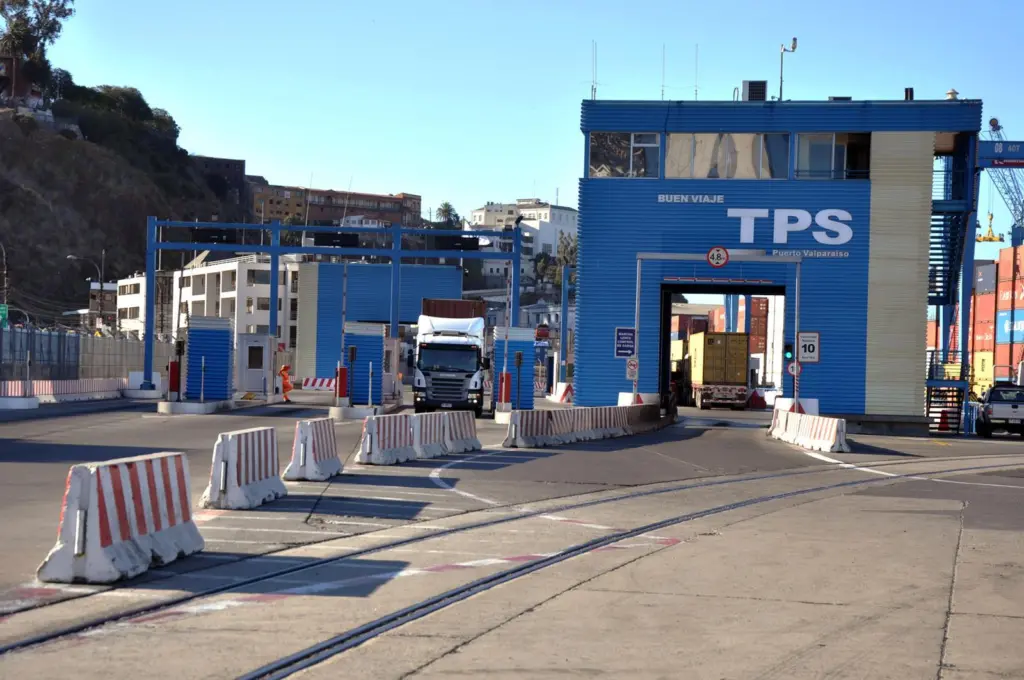
In South America, TPS was the first terminal to implement a gate OCR system for all of its container throughput in 2008. Regional rivals have looked to follow suit, but have yet to go all the way.
Mr Weinreich says that the driver behind TPS’ adoption was the decision to build the ZEAL and the concomitant need to process trucks that much faster. OCR boosted throughput fivefold, without the need for additional space at the gate.
“We are constantly evaluating new technology, but at the same time consider training, experience and the know-how of our people as being our greatest assets,” he says.
TCB’s Mr López emphasises that successful terminal management is all about team work and collective effort. Good ideas emerge, but it can often be different people that develop and implement them.
“We are the longest-established, privately-managed container terminal in Spain and we would not have survived, if we hadn’t got things about right. All our new managers learn from the know-how of the older ones and we circulate this knowledge and experience internally so we can tackle new situations better,” he says.
Indeed, Mr Weinreich agrees that terminal efficiency is not simply a question of having the best equipment, but is really the result of organisation and planning, making sure everybody has a clear and common purpose, which means having the assets needed to achieve this at their disposal.
“So, individuals can make a difference,” he says.
For her part, Ms Dickx adds: “Individual managers can influence productivity, with some foremen getting more out of the same dock labourers than others,” she says.
Related Articles
 BULK HANDLING
 BULK HANDLING
 BULK HANDLING