![PortStrategy[GreenPort]](https://www.portstrategy.com/wp-content/uploads/2026/09/PortStrategyGreenPort.svg)





Vessel calls up but rail sees delays
The share of ports facing a significant drop in container vessels calls has dropped but there has been an increase in barge and rail delays.
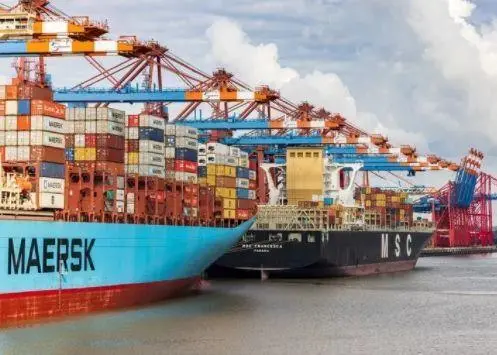
Findings of the 16th WPSP- IAPH COVID19 Port Economic Impact Barometer report show the share of ports facing a significant drop in container vessels calls (i.e. in excess of 25%) dropped further to 2%. Some three quarters of ports are reporting that vessel calls are similar or even higher compared to the same period the year before. These positive reports come as there has been a surge of container volumes on some trade routes (e.g., trans-pacific) combined with a sharp decrease in idle container vessel capacity since July/August 2020.
Co-author, Professor Theo Notteboom, commented: “Containerized cargo and other cargoes are on a par with, if not above, the expected levels for this period of the year. Cargo vessel traffic is now getting back to normal. There has been a recovery in goods related to several industries – such as exporting/importing for the steel industry or the movement of automotive units.”
Not all good news
The situation in hinterland transport slightly deteriorated compared to November and December 2020. November seemed to present a turning point, found the Barometer report. While in October, none of the ports were reporting delays (6-24 hours) or heavy delays (> 24 hours) in cross-border road transportation, this figure bounced up to 16.3% in November (week 45) and increased further to 20% in February 2021. While this percentage is far below the figures of more than 40% in weeks 15 and 16, it shows that fewer ports are experiencing normal cross-border trucking operations.
Whilst trucking availability remains unaffected, some 18.6% of ports face disruptions in rail services, up from the record low figure of 4.9% in October (week 41) and 11.1% in December 2020. The situation for barge services has significantly deteriorated, with 30% of ports now reporting delays.
Co-author, Professor Thanos Pallis, commented: “The sudden recent surge in volumes on several big trade routes is testing the capacity limits of some ports/terminals and their inland transport systems, leading to disruptions in hinterland transport connectivity in some ports.”
Related Articles
 BULK HANDLING
 BULK HANDLING
 BULK HANDLING