![PortStrategy[GreenPort]](https://www.portstrategy.com/wp-content/uploads/2026/09/PortStrategyGreenPort.svg)




Regional ports listen up
Short sea shipping and regional ports will benefit from improved supply chain efficiency.

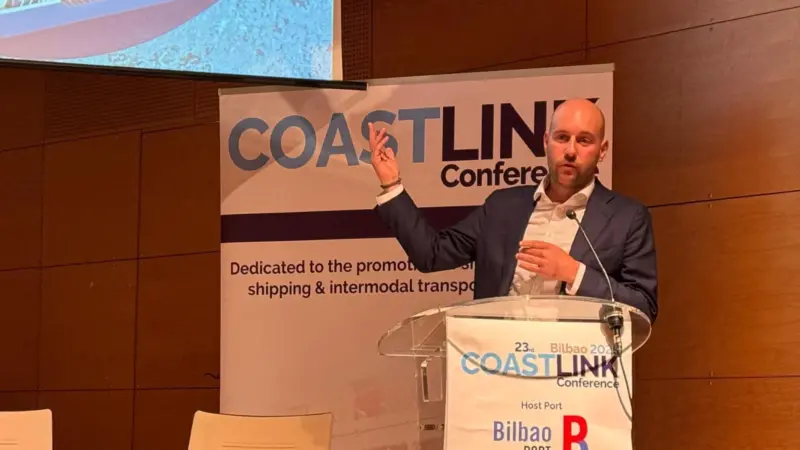
That is the view of the panel of shipping professionals that came together to debate the economic, political and environmental considerations affecting the sector at Coastlink LIVE.
“Shipping is often beaten by a big stick, but the pandemic, Brexit and the recent example of the Suez ship blockage have served to remind the world of the significance of the global supply chain,” said Nick Lambert, co-founder and director of NLA International Ltd.
Bounce back
Alex Veitch from Logistics UK gave an overview on the trends seen in short sea shipping over the last year.
In all, he said, when it came to Brexit, there has been very little disruption to the sector due to a ‘monumental effort’ of the supply chain to get ready.
But challenges he said would come with the introduction of stricter border controls in January 2022.
Overall, he said, shipping and exports were bouncing back but we need to wait until later in the year to look at how the industry may have changed.
He pointed to how Ireland has moved to sailing to Europe directly rather than through the UK but said: “It’s too early to say with clarity if there is any modal shift to these types of sailings.”
Modal shift?
Alan Platt, CEO, John Good Group, said that the recent challenges have come with both positives and negatives.
In a negative sense, stock piling, administrative burden and the negative effect on the labour market post-Brexit have been very real challenges.
But in a positive sense, the industry has been forced to move from a “Just in time model to a just in case model” improving supply chain resilience and embracing technology and digitisation, which has improved efficiency greatly.
Both Brexit and the pandemic have led to move to more unaccompanied short sea freight cross-channel. There has been an increase in road freight prices which have benefitted the sector, as well as an uplift in container volumes.
It’s a picture reiterated by Stephen Carr, group commercial director, Peel Ports, who talked about the growth in unaccompanied RoRo routes, plus new and existing LoLo routes and a growth in feeders.
The future
The biggest discussion point revolved around what’s next for the sector and here regional ports should listen up.
The biggest take home was that regional ports could have plenty of opportunities borne out of Brext and the pandemic.
There was a general consensus that there will be a move to less congested ports and a switch to unaccompanied cargo over the next few years.
Smaller ports will need to find their niche and get ready to take advantage of opportunities that may come their way.
GreenPort asked the panel to comment how the increase in EU road freight costs and the subsequent uplift in SSS container volumes will help suppliers, transporters, operators and ports reduce their carbon footprints in future.
“Transporters want to move cargo as close as they can to their origin and destination and will use regional ports to minimise road freight,” says Mr Carr.
“The marketplace is now in favour of regional ports, this will make supply chains more efficient and help drive down emissions.”
Regional ports can look no further than to the big international players for tips on how to do this.
Justin Atkin, port rep for the UK and Ireland at the Port of Antwerp, said: “In Antwerp we have exceptional intermodal connectivity with the wider European market via short sea, barge and rail. All of these modes of transport will help reduce road miles and improve supply chain sustainability.”
Final word
There was an overwhelming sense that the future is bright for both short sea shipping and regional ports, which traditionally have always struggled to carve their niche of the business away from the big players.
Perhaps there is a silver lining to come out of the struggles of the last few years after all.
Coastlink LIVE was sponsored by NAVTEK, the naval engineering, design and shipbuilding company, responsible for the world’s first fully electric tugboat – ZEETUG.