




Competition builds
APMT Callao has been resourceful and navigated through a difficult year by capturing transshipment cargo. But does this just portend the shape of things to come as competition for cargo hots up? Rob Ward investigates
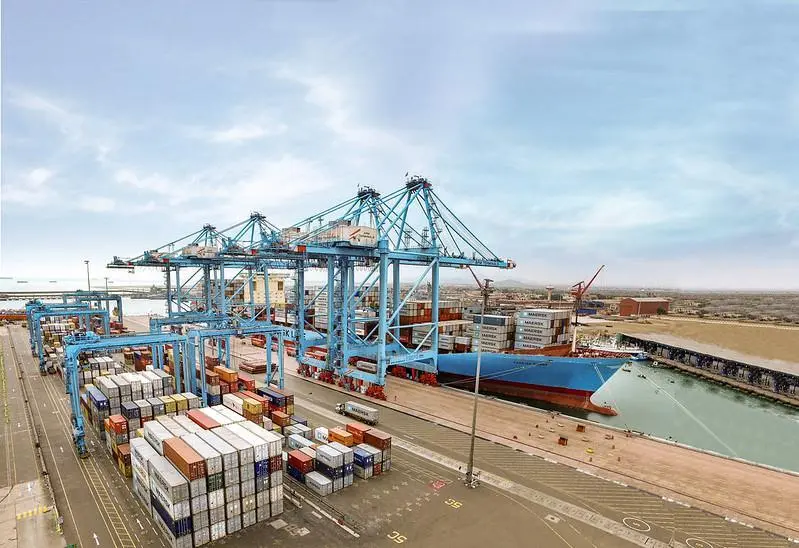
Seeing an opportunity to balance out what was always going to be a difficult year throughput wise and with one eye on the opening of the Chancay Super Port at the end of this year, APMT Callao, has targeted transshipment cargo for the entire West Coast of South America, as being its salvation.
Fernando Fauche, Commercial Director, APMT Callao, and his commercial team saw early on that last year was not going to be a good one for Peru in terms of the economy and therefore the general cargo and bulk cargoes that are usually its staple diet.
“We knew it would be a bad year for the Peruvian economy and it was, with a -2% contraction, but instead of just accepting it we took the situation in hand, agreed to bring forward our planned future investments into 2023 and we went for as much transshipment cargo as possible,” Fauche tells PS. “And it worked out very well!”
Indeed it did, with APMT Callao increasing its transshipment handling by an astonishing 62%, up to 302,000TEU out of a total of 1.106MTEU, a figure up 14% from the 971,000TEU throughput in 2022. As well as ports in the south of Peru, the main targets were the north Chilean ports, including Iquique, but even those in the central belt of Chile – San Antonio and Valparaiso – also bled cargoes to APMT Callao. Thanks to this transshipment booster APMT Callao topped one million TEU throughput in 2023 for the first time.
Although a significant player in boxes, APMT Callao’s traditional strength is in general cargo where it handles 100% of the cars that are imported/exported into Peru, 70% of general cargo as a whole, as well as 70% of the corn and wheat that Peru imports. Cargo volumes across these sectors were significantly down, by 10%, with 9.6 million tons handled in 2023, compared to 10.7 million tons in 2022. However, they are starting to bounce back, with the first three months of 2024 registering 2.6 million tons, up 2%.
Fauche says the vast majority of car imports are from China, so that sector might come under pressure once Chancay is fully up and running given that Chancay will be operated by Chinese shipping company Cosco; although there are some vehicles that come from Brazil, Mexico and the US.
In terms of containers, APMT Callao, operating out of the Multipurpose North Terminal (TNM) competes in Peru’s Gateway port with DP World, which operates out of the South Terminal, and so invested heavily last year to be more competitive.
“We invested in an extra Ship to Shore Gantry Cane [from ZPMC] and to bring our berthing moves per hour up to 130, which may not seem that high in terms of Asian productivity but is the highest in all of WCSA today,” claims Fauche.
DP World Callao remains the bigger terminal for boxes, handling 1.64MTEU in 2023, up 11% on the previous year and also including some increases in transhipment but nowhere near as much as its rivals. Last year DPW Callao completed its latest investment spree, of US$350 million, so it can better compete with the new US$3.6 billion port of Chancay being developed by China’s COSCO 60 kilometres north of the capital city of Lima. DPW has now invested US$1 billion in Callao since its start up in 2006.
FURTHER INVESTMENT
APMT Callao is also prepping for Chancay competition in the bulk sector.
Fauche says that by July this year various June to June throughput figures will trigger a clause in the concession contract that will prompt the start of Phase 3 b, of the facility’s Investment Plan. Phases One and Two saw US$600M invested in the terminal, Phase 3 A, last year, saw $95M [mainly on grain and general cargo terminals], and 3 B will see another $450M invested.
“Once this key phase is triggered,” explained Fauche, “we will build another deepwater berth for containers, purchase four more STSGs, 12 more RTGs and 14 more Terminal Tractors, and utilise an extra four hectares of land [to be reclaimed from the bay].
“I envisage, in a few years time, that we will be talking about the Callao-Chancay port cluster and it will serve more than just Peru, it will be a hub for the entire WCSA.”
APMT Callao is 51% owned by APMT, 20% by Peru’s Unimar Group will with the remaining 29% share owned by Terminal Investment Limited.
One Lima-based port consultant, who did not wish to be named, said that APMT Callao was “getting ahead of the game”, in terms of realising there probably won’t be enough Peru/Lima cargo for all three operators and that the best way to maintain profitability, now that Chancay is about to open, is to start attracting lots of transshipment cargo.
“Clearly the two Callao incumbents are working out their strategies to compete with Chancay’s opening,” said the veteran consultant. “Touting for extra cargoes outside of the Lima-Callao conurbation, and targeting transshipment, especially from Chile, is a very clever manoeuvre.”
Related Articles
 OPERATIONS
 OPERATIONS
 OPERATIONS