

FROM DESTRUCTION TO RECONSTRUCTION
Whatever your views on how contracts for the reconstruction of war-damaged port facilities are awarded, there is an undeniable need for such work to be carried out – usually in double-quick time. Furthermore, such emergency installation, repair, rehabilitation or reconstruction of critical elements of a countrys infrastructure must often be conducted in difficult and dangerous circumstances. Nick Elliott reports.
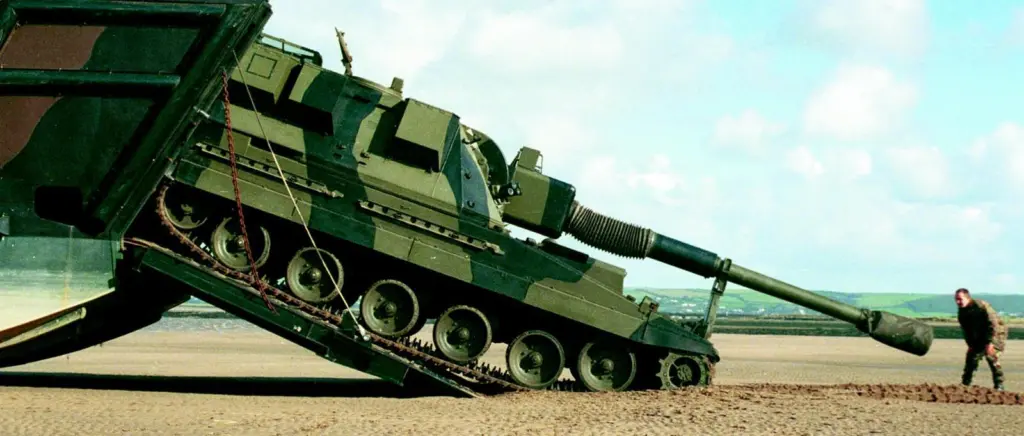
In 1917 Winston Churchill drafted detailed plans for the capture of two islands off the Dutch and Danish coasts using flatbottomed barges or caissons which would form the basis of an artificial harbour when lowered to the seabed and filled with sand.
His proposal was filed away but in 1941 Hugh Iorys Hughes and others had similar ideas which coalesced into the concept of the Mulberry Harbour.
With characteristic reasoning Churchill wrote to Lord Mountbatten: “They must float up and down with the tide. The anchor problem must be mastered. Let me have the best solution worked out. Don’t argue the matter. The difficulties will argue for themselves.”
The project involved laying 146 caissons, 600,000 tons of concrete with 33 jetties, and ten miles of floating roadways – all of it towed across the English Channel in readiness for D-Day. Two such harbours were built and around 9,000 tons of material was landed daily at Mulberry B until the end of August 1944, by which time the ports of Antwerp and Cherbourg had been secured by the Allies, and had begun to return to service.
Times change but conflicts persist. After the Falklands War there was an urgent need to land materials. David Byrne, then of MacGregor Navire (which through a management buy-out to form Transmarine 1992 and a merger with Burness Corlett has just become Maritime Sector Specialists) was directly involved in finding a solution: “They bought six big offshore-sized pontoons – 300×100 ft – and towed them down there. They were all linked together and eventually constrained by piles. We designed a semi-submersible roadway system – a tank with an adjustable bridge that we ran into place, sank it and then elevated it a bit like the old Mulberry Harbour idea. It was a tank with four vertical legs and a bridge. In effect we’d built an instant causeway. And it’s still there.”
Prior to the Iraq invasion in 2003, the British Ministry of Defence found that although they had chartered a large number of ro-ro ships and loaded tanks and other rolling kit, they couldn’t discharge at Shuaiba, which was the safest port in Kuwait at the time, due to the port’s configuration. Again Byrne was involved: “What we eventually did in a very short time was to procure, design and build a floating linkspan to go into an angled corner in the port. We bought a pontoon in Abu Dhabi, manufactured a link-bridge, a new superstructure and a mooring system with sponsons – all in 27 days, which was really going some, working night and day. Literally, as we finished the first ship put its ramp down and tanks started rolling over it.”
The linkspan consists of a pontoon 28×14 metres with two additional flotation sponsons, each 4×7 metres, newly fabricated and permanently attached to the pontoon. A steel superstructure and roadway weighing 110 tonnes was fabricated and installed on the pontoon together with a hinged shore link bridge 17 metres in length, set at an angle to suit the quay configuration. The whole floating structure is held in position by a system of tensioned rope moorings.
The unit, which was assembled in Dubai and towed north, was designed to accept the heaviest of rolling military cargoes (the main battle tank or tank recovery vehicle); the longest military cargoes ( the HET transporter); and difficult cargoes such as the Chinook CH4 which requires very small angular transitions in the roadway.
START WITH BUOYANCY Byrne stresses that very often there isn’t time to build complicated civil engineering structures. “You immediately start with the concept of something that is floating. And if you want to buy buoyancy and you have to get it quickly, the answer is you buy second-hand barges.
“Then you think how do we land the ship’s ramp, is there enough water, how far do we have to push this structure out so that a ship with a decent draught can get to it, and that defines the length of your bridge and other such secondary design elements.
“The last fundamental is how you keep it in place. Have you got time to drive piles? The answer is probably no. So you have to think of more interesting ways of doing it such as tension ropes or chains for moorings.”
Byrne has mooted the idea of a standby system and indeed the Americans have something similar in Diego Garcia: a complete base of tanks, pontoons, cranes and other gear. “So why not have, in effect, a small self-propelled floating port that can carry landing craft and be mobilised to these places quickly for disaster relief and postconflict work, where normal military vessels are not quite geared up for that kind of job?” he asks. In relative terms Byrne reckons such a unit would not be very expensive.
In the case of natural disasters, the logistical process is no less complicated. Inchcape Shipping Services, through its local Indonesian sub-agents ISS-Equinox, has been faced with these complexities in the wake of the Asian tsunami. The agent has worked with nongovernmental organisations and foreign navies in helping to coordinate relief operations and the logistics of bringing relief supplies into stricken areas. From an initial search and rescue phase, followed by the provision of urgent supplies, the relief process has now turned from emergency operations to reconstruction.
ESTABLISH A STAGING POST As aid poured in bottlenecks arose and vessels had difficulty berthing at ports such as Banda Aceh and Meulaboh, which were both heavily damaged. Discharge at anchorage created a shortage of local lightering craft. At other ports where berths were still operational, the facilities open for the discharge of aid were designed to handle fertiliser, not food and heavy equipment. Inchcape’s man on the scene recommended using Penang as a staging post.
“Instead of vessels waiting days for a berth and then taking 10 days to discharge, the cargo can be unloaded at Penang and barged over to Indonesia, ” he told Lloyd’s List. Improvisation is the name of the game.
As relief turns towards the longer-term reconstruction effort, huge quantities of building materials such as cement, steel and timber have to be shipped in and the bottlenecks will not be alleviated until the infrastructure can be rebuilt, he warned.
The question has to be asked then. Whether Banda Aceh or Umm Qasr, conflict or natural disaster, in the immediate aftermath, can the coastline and the ingenuity of the marine engineers be better utilised to speed up urgent relief?
In cases where adequate port facilities already exist, the relief process can be optimised. Post-conflict Kosovo in the late nineties was a case in point. Some 500 donor governments and agencies, international financial institutions, NGOs and the military were involved. Hundreds of thousands of tons of cargo were on the move organised by everyone from Mother Teresa to Nato’s K-FOR – all coordinated by the UN. Everything from flour and jam to school packs and generators. Then came the project cargoes associated with rebuilding a country’s civil, industrial and commercial infrastructure from scratch. Thessaloniki alone saw 17,000 troops, 14,000 military vehicles, 3067 containers, 214 tanks and 1,710 armoured personnel carriers transit the port on 91 ships over just a few weeks.
Needless to say, in any such situation opportunities abound for those supplying cargo handling equipment, engineering and consulting services. But a keen understanding and sensitivity as to what’s going on is needed. Steve Osborn of Haskoning UK gives a Balkan example:
“In Croatia you have facilities that were not actually destroyed but as a result of the war much of the professional engineering capability of the country has been severely degraded. A country that was in the big league in civil engineering terms, is now struggling and western consultants are finding there is work to be done (upgrading Dubrovnik’s cruise terminal on behalf of the EBRD in this instance).
OFFICE WITH TECHNICAL DRAWINGS BOMBARDED “So you’ve had 10 years suspension of developments and you end up with a whole pile of facilities that don’t meet modern requirements now.
Anywhere else would have been gradually increasing its facilities in incremental stages but because of the war and lack of funding immediately after the war, they are only now beginning to pull themselves out of the hole.” In Dubrovnik’s case the port was bombarded and the offices containing all the technical drawings was destroyed. Furthermore some of the engineers were killed during the conflict.
“Had the drawings survived, ” says Osborn, “sensible calculations could have been made from them but they don’t exist so you end up doing vast amounts of calculations just to work out what you’ve got.”
Referring to another job in Durres, Albania, Osborn continues: “The cardinal problem is not fixing the hardware but getting the management systems set up so they become operationally effective. One of the frustrations is that everyone has got used to doing nothing until someone in central government tells them to move. They are not used to taking decisions or using their initiative. So a lot of good quality people are very inhibited and it takes exceptional personalities to break that culture down.” And it takes time for such characters to emerge he adds.
So much for immediate requirements but what of the longer term?
“Countries emerging from war or prolonged periods of civil conflict face a bitter paradox.” So says The Private Sector’s Role in the Provision of Infrastructure in Post-Conflict Countries: Patterns and Policy Options, a report by Jordan Schwartz, Shelly Hahn and Ian Bannon of the World Bank. “They urgently need basic infrastructure services, but they lack the adequate public revenues, government capacity and investor interest to provide those services. Although donors often provide significant amounts of aid for reconstruction and rehabilitation, countries struggle in the early years after a conflict to absorb this aid due to a wide range of capacity constraints.
“Within transport, ” say Schwartz and his co-authors, “seaports receive the majority of PPI (Private Participation in Infrastructure) investment, probably due to the hard currency earning potential of container terminals and the ability of bulk facilities-such as coal or iron ore-to be incorporated into vertically integrated logistics systems?. . A port, as a single location investment, can be secured more easily than investments in network assets such as railways and roads which remain vulnerable to sabotage and interruptions in isolated corridors.”
The report cites Mozambique in its post-conflict phase and singles out the Maputo Corridor as the most successful growth initiative in the process. “The anchor project of the Maputo Corridor is a US$1.3 billion aluminum plant, MOZAL. Part of the project was a dedicated port terminal for import of raw materials and export of aluminum which started operating even before the port master concession was in place.”
A master concession for Maputo port, including dredging and other port services, commenced in 2003 after a five-year bidding process and negotiations. Four smaller terminal concessions, concluded in the mid1990s, were absorbed into this master concession.
Related Articles
 CONCESSIONS & INVESTMENTS
 CONCESSIONS & INVESTMENTS
 CONCESSIONS & INVESTMENTS