


QUAY CONSTRUCTION ISSUES
The varied nature of construction works for port developments gives rise to a number of specific issues of which port developers and financiers need to be aware, writes Patrick Leece .
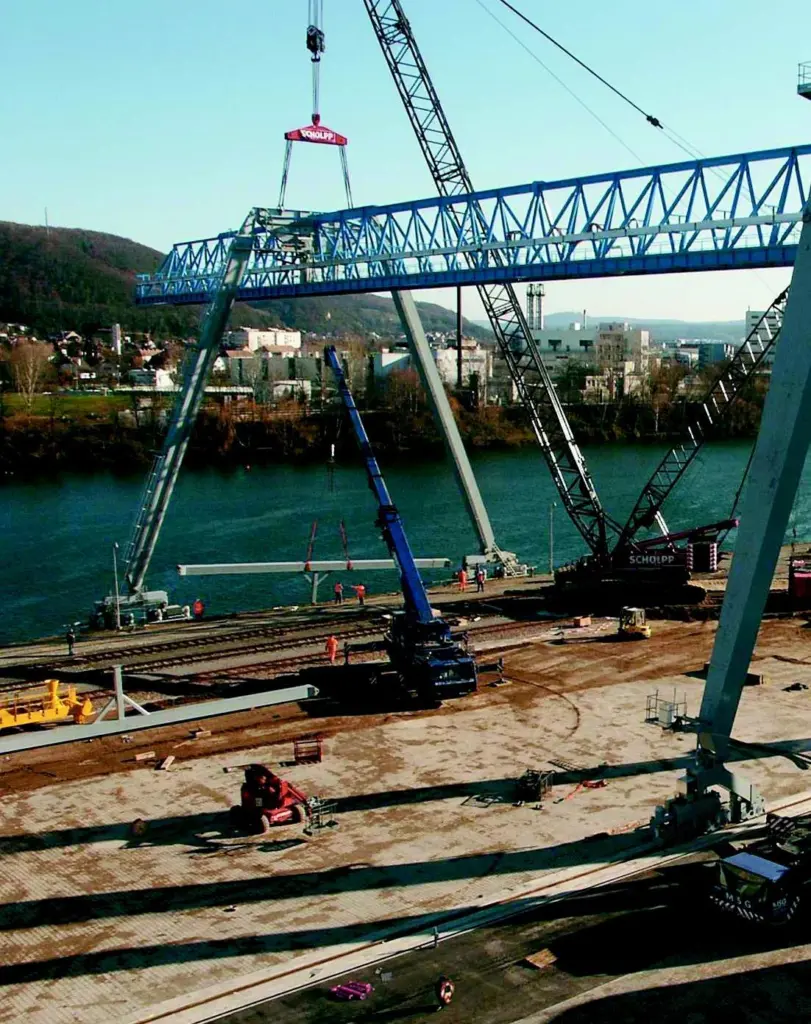
The scope of works for the construction contractor might include quay construction works, general civil engineering works, accommodation construction and fit out, equipment supply and the installation of IT systems. This article considers a few of the construction related port development issues.
FINANCE RELATED ISSUES If the port development is to be undertaken utilising project finance underpinned by a concession agreement from a governmental authority, the requirements of the lenders to the transaction will have a strong bearing upon the risk profile provided in the construction contract. Project finance techniques are increasingly being used by port developers such as CSX World Terminals, P&O Ports, APM Terminals and ICTSI, to ensure the maximum utilisation of their investment capital around the world.
The essential feature of this form of finance is the reliance of the lenders on the revenues generated by the project to enable the project vehicle to honour its debt service obligations. In the absence of contingent equity from the project sponsors to meet any cost overruns incurred during the construction phase, lenders will push for the contractor to assume all of the major construction related risks.
This means the contractor assuming completion risks, delays risks, ground conditions risks and other major construction related risks in a manner that might be considered by the sponsors and the contractor as being out of step with the risk allocation provided in construction industry standard form contracts such as the FIDIC forms. There is always a tension between the commercial imperatives of the project sponsors to achieve the maximum return possible on their investment, and the requirements of the lenders that the contracting structure of the project is robust. The key is to find the optimum balance between the genuine concerns of the lenders to ensure that the project revenues materialise in the quantities and at the time assumed, with the need to avoid legally gold plating contracts to an extent that renders the construction price uneconomic.
Our experience proves that the earlier these issues are confronted in a project, the greater the likelihood of acceptable solutions being found. All too often, contract documentation is issued to potential construction contractors (and in some cases signed) well in advance of the views of lenders being sought. Lenders’ requirements can be addressed in the construction documentation at an early stage provided that those involved are aware of the key financing risks. In other words, no-one should be surprised by the lenders’ demands.
GROUND CONDITIONS The risk of unforeseen ground conditions arising at the location of the port development is possibly one of the most problematic issues in port development works. The nature of the underground and underwater conditions can affect the amount of work required and will dictate the chosen design solution for the quay wall and berth. The added difficulty in port projects of obtaining access to and assessing risks associated with underwater areas generally means that employers take a proportion of the risk of unforeseen (i. e. not foreseeable on the basis of available data and surveys) ground and underwater conditions arising during the construction phase. The alternative is to place the risk on the contractor, and if this is the preferred option (perhaps as a result of the requirements of the lenders to the project) then the contractor should be afforded every opportunity to verify information relating to the nature of the site and underwater conditions. If necessary, the contractor should be permitted to undertake its own studies and analyses in order to satisfy itself of the adequacy of its tender. If this is not permitted, then there will be a danger that bidding contractors will either refuse to submit compliant tenders or incorporate a large risk premium within their pricing.
INTERFACE WITH EXISTING INFRASTRUCTURE Productivity improvements by means of the expansion of existing facilities, has become a common feature of the port terminal development market. Many of the older terminal facilities were originally constructed close to cities and this has often restricted the possible expansion plans, although even here plans to intensify operations through the introduction of improved facilities and equipment have been introduced. The expansion of port operations gives rise to a number of issues. Firstly, there may be a number of physical and operational interfaces to be addressed. If the expansion works are to connect directly into existing systems then the issue of liability for any damage caused to the existing systems and vice versa needs to be defined. Often this will depend on the insurance arrangements in place over the existing facilities. Secondly, the adequacy of the existing facilities to support the expanded facilities should be considered. It might be the case that the achievement of certain specifications for the new works is impossible given the nature of the existing facilities to which the new works are connected. Equally, if a defect in the original facilities is discovered during the expansion works (for example in the quay wall) this might have an effect upon the performance of the new works and give rise to some expensive arguments between the contractor and the employer unless the issue is specifically addressed in the construction contract.
Operational considerations also need to be taken into account. The building contract needs to be clear that the contractor should not interfere with the existing operations at the port and should clearly define the areas to which the contractor’s operations need to be limited.
If it is inevitable that some disruption to on-going port operations will arise from the construction works then procedures should be provided in the contract to give the port operator notice of when disruption is likely to occur and how long it will continue. Off-site disruption to port operations should also be taken into account. Increased traffic to the construction site might require dedicated and strengthened access routes to the port area. In addition, the responsibility of the parties for dealing with customs authorities and the port authority also needs to be addressed within the construction documentation.
As a port forms one piece in the jigsaw required to import and export goods, the interface of the port with road and rail is critical. Depending on the nature of the leased area, the construction agreement (and indeed the concession agreement) should allow not only access to and over adjoining land but also the right to connect road and rail facilities within the port to the existing infrastructure. The question of liability at the interface point can prove to be a thorny one particularly if the existing infrastructure is government owned and controlled.
PROCUREMENT OPTIONS Traditionally, for project finance transactions, lenders seek to make a single party responsible for the delivery of the completed functioning asset. This limits the risk of multiparty litigation in the event of a defect arising and means that important security for the lenders, such as the payment of liquidated damages for an unexcused delay to completion of the facility can be claimed from a single contractor. While it is possible to structure the construction procurement strategy for port works in a manner that achieves this position, the reality of terminal development means that it will rarely make practical sense. Our experience indicates that while elements of the overall project works may well be packaged into single contracts (such as, for example, the civil engineering works) it is unlikely that the whole working facility will be procured under a single contract. The sponsors will often wish to procure equipment vital for the operation of the facility from their own preferred suppliers to ensure that they, rather than the contractor, retain the benefit of any preferential supply rates and that they get the exact equipment they require.
INTERACTION WITH PORT AUTHORITY The role of the port authority in the construction process should not be overlooked or underestimated. The contractor will need to comply with all of the relevant port regulations and requirements and this may impact upon the construction schedule and the costs involved.
Furthermore, port authorities may need to be consulted in relation to various specific aspects of the design and specifications. In the classic concession model the role of the public authorities in the design and operation of the facility should be limited to the enforcement of generally applicable legislation. Nevertheless, in our experience, port authorities attempt to dictate the nature of the infrastructure to be provided by the private partner. This often stems from a reluctance of the public sector to let go of the investment decisions and is a common reaction of public authorities in many different infrastructure sectors.
Outside of a broad definition of the nature of the infrastructure to be provided, we would normally seek the removal of detailed design approval rights in favour of the port authority. It should be for the private sector partner to produce the layout and specifications it thinks will best suit the likely throughputs to be achieved at the terminal. It is after all, the private sector’s equity that is at risk if mistakes are made. Moreover, the achievement of developmental and operating efficiencies is an often stated objective of public private partnerships which is defeated if unnecessary investments are specified by the public authorities.
If design approval rights must be conceded, then any such rights need to be tightly controlled to ensure that they are not abused. In particular, there need to be clear and specific grounds upon which an objection to a particular submission can be made and a process providing a maximum length of time for the port authority’s review. The construction contract will contain a provision forbidding the contractor from commencing construction of a particular element of the works until the approval is given, therefore the approval needs to be obtained in as short a timeframe as possible in order to avoid unnecessary delays to the construction process.
CONCLUSIONS The construction related issues described in this article are only some of the issues that need to be considered when preparing construction documentation for port development works. The increased use of non or limited recourse debt financing to fund these works will inevitably shape the risk profile in order to achieve a “bankable” proposition for project lenders. This will require all parties to be imaginative and creative in finding solutions to particular issues as they arise and a willingness to move away from traditional standard positions. Hopefully, the parties will focus on the opportunities that this approach will create rather than the dangers involved in moving outside of established comfort zones.
P atrick Leece is a lawyer at Cadwalader, Wickersham & Taft’s Projects Group in London. He can be contacted at Patrick.Leece@cwt-uk. com
Related Articles
 CONCESSIONS & INVESTMENTS
 CONCESSIONS & INVESTMENTS
 CONCESSIONS & INVESTMENTS