![PortStrategy[GreenPort]](https://www.portstrategy.com/wp-content/uploads/2026/09/PortStrategyGreenPort.svg)






A change of pace
Slower speeds are prompting a re-think of port operations, says Martin Rushmere
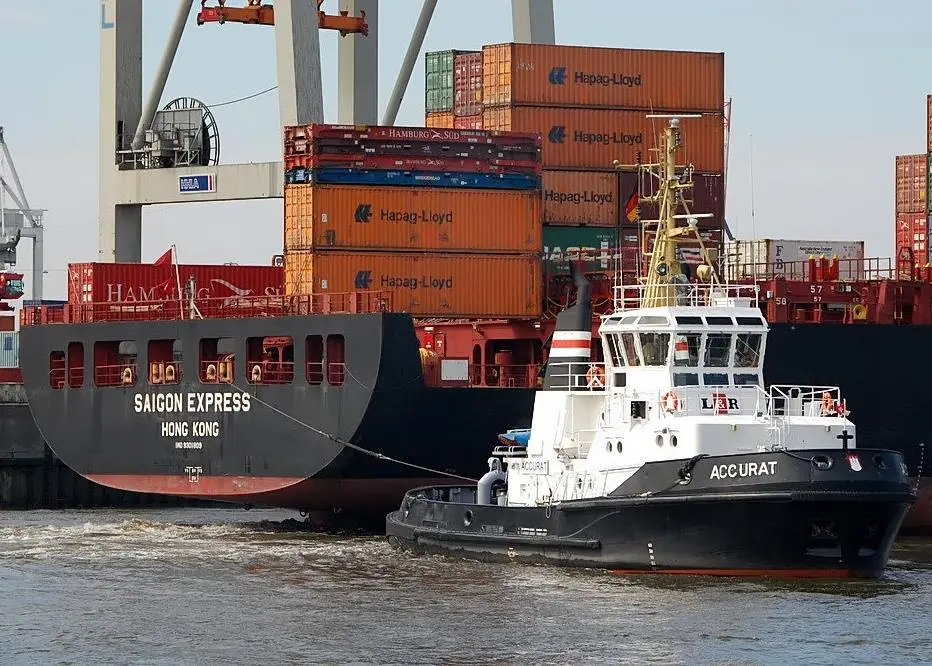
Once a temporary innovation to mitigate the impact of extreme fuel costs, slow steaming has become a key operational tool to protect what little profits are left in ship owning. For shipowners, slower speeds are no longer a matter of choice: the 16 knots of yesterday has become 12 knots today.
Without any consultation, ports have to cope with the demands of slow steaming: while draft depths will not be a big problem, berths/quays will need new designs, tug operations and usage will need addressing and higher reaches need to be added to dockside cranes.
Erik Rabjerg Nielsen, head of Scheduling and Deployment at Maersk – one the the main protagonists of slow steaming – says: ”We have said it before. Slow steaming is here to stay.” At the same time, the symbiosis between port, carrier and customer needs to continue.
The biggest challenge that ports and terminal operators, sometimes unwillingly, have to grapple with is the need to maintain profitability, which means box throughput has to stay at least the same (and probably increase to match rising costs). “The same applies to the liner operators,” says an analyst, “and the reality is either even bigger ships or more ships. My feeling is that there will be a bit of both – the larger ships on their own will not produce that much of an extra throughout and there will have to be more ships.” Which means longer quays and taller cranes, all carrying a higher price tag, in a perpetual game of the industry chasing its own tail.
It also means that smoke and gas emissions at ports will not drop as much as was originally predicted. The rule of thumb still holds that emissions when docked at port are about 30% of the total sent out on a voyage.
Second look
Christopher Pålsson managing director of Maritime-Insight consultancy in Göteborg, says: “For many ports the needs to invest in fairways, approaches, quays etc. are mounting in order to be able to receive larger vessels and larger cargo batches.”
Those needs could well be greater than expected. Says Mr Nielsen: “With our newest generation of vessels, we can go as slow as 11.5 to 12 knots.” He confirms that 20 of the 18,000 teu vessels are on order, and none in the 16,000 teu range.
Ports and terminal operators are serenely confident that not only has there been no need to change operations but even with the new (16,000+ teu) ships they can carry on as before. One operation they might have to change is tug usage.
Carriers are installing more stern thrusters, although they are looking at the cost-benefit matrix closely. “More are being installed on our bigger, newer ships (such as the Emma Maersk),” says Mr Nielsen, “but we are looking at the issue carefully and not all vessels are getting them. The costs are very high, as we all know, and you have got to choose wisely.” Mechanical problems with the Emma Maersk in the Suez Canal led to water getting in through a stern thruster and the carrier has stopped its fleet from using the thrusters until the cause is identified.
Analysts say that technology is improving and within five years almost all new, large vessels will use stern thrusters. Some ports are reported to have cut down on the number of tugs needed, although safety regulations in some regions specify a minimum number no matter what vessel is involved.
Horses for courses
Carriers are also finding that matching up slow steaming to port requirements varies in different regions. In general, developing countries are more accommodating. Maersk’s experience bears this out: “Africa is one area where ports have been able to accept slow steaming with no real problems. It is difficult to operate there with a fixed berthing window. Previously, vessels would get to African ports as fast as possible and have to anchor outside to wait their turn. Now they can time their arrival so that the waiting time is as short as possible. The customers see no difference.”
“In industrial countries we have to be more careful to make sure that customers and ports are aligned with schedules. Obviously we also have to take care with specialist trades and products such as reefers.”
One factor that has long been worrying port planners, draft depths, will probably become progressively less critical because of the improvements in ship design. The draft for 18,000 teu types will be about 15 metres, compared with the 12-13 metres needed when 6,500 teu ships hit the waves. At the time there were ominous warnings from analysts that draft depths could become uneconomical to dredge but ports are now hopeful that new designs and materials will mean that there will not have to be a continual race to the harbour bottom.
Where a decided shift in thinking will be needed is in a possible shift away from the sea to the land because of the unavoidable rise in capital costs of equipment and facilities to match the changes in vessel types and design. Says Mr Pålsson: “There may also be modal shifts as a result of the increased costs, leading to shifts towards cheaper and/or more efficient options. There are fears that this may even lead to so called modal back shifts; i.e. cargo will move away from sea to land transport, which would be much against the political ambitions.”
That is more likely in Europe, where short distances are involved and greater competition prevails for specific destinations. In the Americas the distances are so much greater that shipping is often the best method.
Carriers will need to work with the ports to forestall this, as savings on the ocean are undeniable. According to Drewry’s Container Forecast, in 2011 a 10-ship loop (70 day round trip) with 12,000 teu vessels and fuel at that time priced at $550 per tonne, would result in savings of about $28m per string per year compared with running a nine ship loop on a 63-day round voyage basis.
Related Articles
 CONTAINER & CARGO HANDLING
 CONTAINER & CARGO HANDLING
 BULK HANDLING