![PortStrategy[GreenPort]](https://www.portstrategy.com/wp-content/uploads/2026/09/PortStrategyGreenPort.svg)





A good record
Its all about the maintenance records in the second-hand equipment game, as Alex Hughes discovers
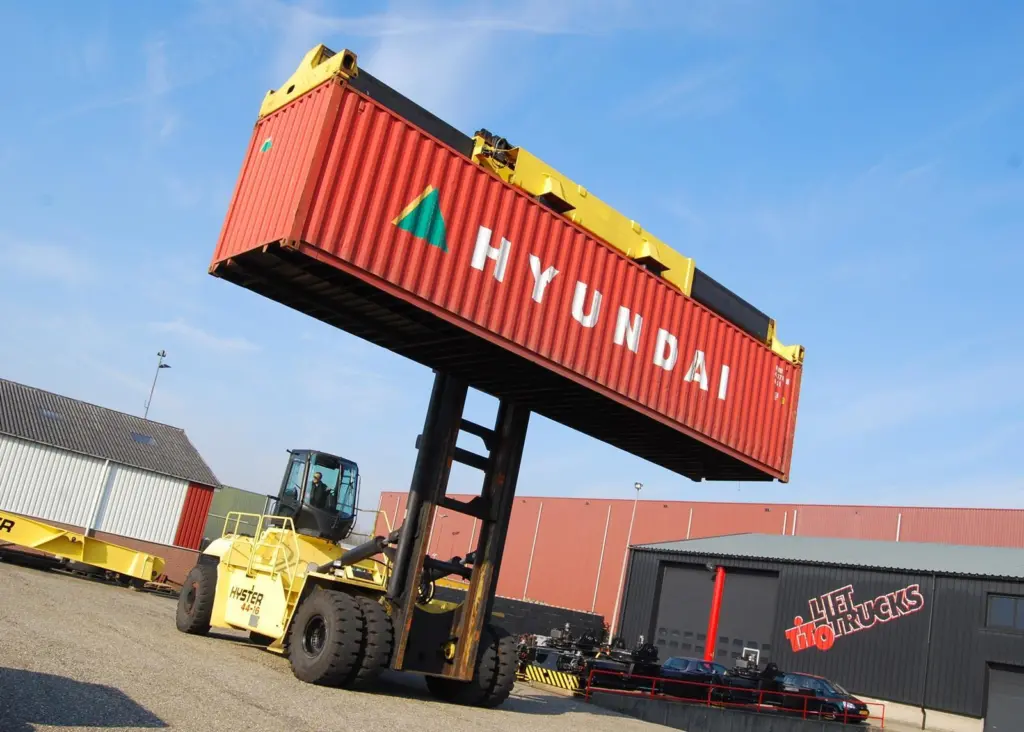
If you fancy a foray into the second-hand equipment market, be sure to demand access to maintenance records before parting with big bucks. That’s the warning from established second-hand traders.
Port International Equipment’s chief executive Terry Troutman says that access to the maintenance history will allow a prospective buyer to see what work has already been done on the machine and anticipate what may need to be done in the future. This holds true whether you are buying from a terminal or from a rental company.
This, he says, makes it easier to identify which components will need replacing and in what time frame and, to a certain extent, historical records can also help determine future downtime.
Port International, a major US trader based in Illinois, does buy some second hand units from terminal operators for resale, although the bulk of its sales tend to be surplus material from rental fleets. Typically, these machines, which are mainly terminal tractors, reachstackers and full/empty container handlers, are five to seven years old.
“The difficult part is when we have to sell a machine that doesn’t have a service history, because it’s impossible to identify whether it has an inherent fault or not.” For this reason, he says buyers tend to go back to sources they are familiar with and have confidence in.
“If I’m dealing with a new source, I tend to make more conservative offers,” he says, adding that anybody buying second hand should only do business with somebody who comes recommended.
Nevertheless, the number of operational hours displayed on the meter can tell you a lot about a machine, he claims. He cites an example of a five-year-old machine that had clocked up 15,000-20,000 hours, which indicates heavy usage. This prompts the question of when the engine or transmission was last rebuilt.
“Machines that have been that intensively used have probably had less maintenance done on them and that could produce problems in the future,” he says.
Interestingly, Port International will not normally carry out a visual inspection before acquiring a machine for resale. Instead, Mr Troutman says he likes to ask the maintenance engineers about frequency of service and any recent major repairs and this can be done over the phone.
At Turkish dealer Portunus, sales director Önder Türker takes a different stance. “Customers are better off undertaking a pre-purchase inspection of their own, or making use of a specialist. An inspection immediately brings to light any major issues. It’s useful to see the machine’s operating history as well, since it allows you to better predict what might happen in the future,” he says.
He warns prospective buyers not to necessarily view a machine that has run up just a few working hours as a bargain. A reachstacker with 7,500 working hours on the clock, but with no reconditioning of either the engine or transmission could well turn out to be a worse buy than a similar machine with 10,500 hours on the clock that has been comprehensively reconditioned.
“Reachstackers are equipped with Volvo, Scania, Cat or Cummins diesel engines whose average overhaul period is around 8,000 working hours (depending on working conditions and region). So, if you buy a unit with 7,500 working hours the possibility is that you will shortly experience a break down, because that machine is due an extensive overhaul,” says Mr Türker.
Paradoxically, while sourcing a second-hand machine from a reputable company should mean that it has been well maintained, this could also imply that the machine has also probably been used to its full capacity when in front line service. The purchaser therefore has to decide whether that extra work might eventually result in premature metal fatigue.
Managing director, Roy Tito, of Tito Lifttrucks (TLT) also warns that “a prospective client can never be 100% sure that the meter reading is correct, because there really is no way of knowing. The clock goes to 9,999 hours and then it starts again from zero. So, on a lot of older units, it can appear that they have only run 3,000 hours, but that’s because the clock has already gone all the way round once already.”
When buying from TLT, this isn’t a problem, because all the machines it sells are ex-rental from its own fleet and the company is therefore sure how many hours they will have run, especially because it undertakes all maintenance itself and can guarantee the meter reading.
Mr Tito’s advice for prospective purchasers is to look at individual machines to see whether a lot of parts, particularly in the engine and transmission, have been changed over the years, because that gives a good indication of age. But he agrees that it is not always that easy.
“In terms of bigger units – such as empty container handlers, heavy duty forklifts, laden container handlers and reachstackers – which is where we specialise, there are only a few global traders and the market is not that big anyway, so abuse is limited. However, the market for smaller forklifts is much bigger and therefore much more open to abuse and does attract cowboy traders,” he says.
When challenged to say how a customer can know whether they are buying a machine with an inherent fault or not, Mr Tito again stresses the need of knowing where the machine has come from, who previously operated it and what sort of operations it undertook.
“If it previously had a major accident, unless somebody tells you, you’ll probably never know,” he concedes.
Related Articles
 CONTAINER & CARGO HANDLING
 CONTAINER & CARGO HANDLING
 BULK HANDLING