![PortStrategy[GreenPort]](https://www.portstrategy.com/wp-content/uploads/2026/09/PortStrategyGreenPort.svg)





A Shot in the Arm
Resist the temptation to swap old cranes for new as there are plenty of refreshmentoptions available.Alex Hughes got the lowdown from three companies offering upgrades
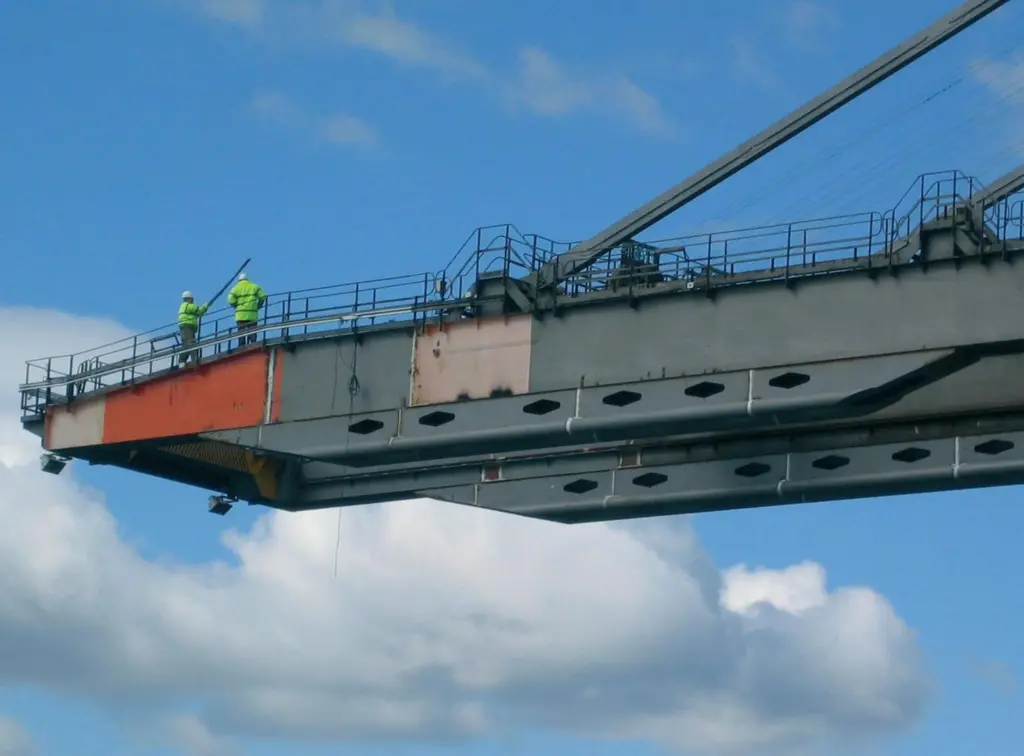
Cranes of all types have a limited frontline service life. However, with a lead time of up to 18 months to get new equipment, many terminals are now looking at refurbishing existing units using state-of-the-art technology. Kalmar has undertaken a number of crane upgrades aimed not only at extending effective working life, but also improving overall performance. Work has encompassed increasing the outreach and raising the height of ship-to-shore cranes, providing lighterweight trolleys, as well as renewing complete upperassemblies, ties and booms. “We can also change the rail-span of existing cranes and have even reengineered straddle carriers so that they can stack four, rather than three high,”explains the company.
Occasionally Kalmar encounters cranes that have inherent design flaws, which can be overcome to enable them to continue operation. Other cranes benefit from having extended booms fitted so that they can handle bigger vessels.
“We also refurbish electrical installations, varying from partial renewal to complete overhaul. Quite often the need for this is driven by an inability on the part of the operator to source spare parts for ageing DC installations,”notes Kalmar.
In terms of ROI, the company says this depends on the scope of the re-engineering involved.However, the benefits are clear in that many crane refurbishments can be undertaken in significantly less time than it takes to buy in brand new equipment. “It’s also economically more interesting to extend the working life of established equipment vis-à-vis replacing it with expensive new units.”
Siemens specialises in the electrical refurbishment of terminal lifting. According to Laurens Franken, equipment upgrades can involve either improving the PLC or even retrofitting such a system, renewing the electric drives and motors and replacing cabling and cabin apertures.
“Calculating a return on investment is quite difficult, since it is really an issue of whether an operator can continue to work with their present crane, whether spare parts for that crane are still available and if the availability of the crane is up to the level required.There
Resist the temptation to swap old cranes for new as there are plenty of ‘refreshment’options available.Alex Hughes got the lowdown from three companies offering upgrades is also the question of whether its existing dimensions are sufficient for the current generation of vessels in respect of both height and width,” observes Mr Franken.
He nevertheless stresses that the cost of upgrading an existing crane is significantly lower than buying an entirely new unit if that crane still has a further 10 years of active service remaining.”You also have to consider delivery times.An operator may have to wait 12 months for the arrival of a new crane, while a refurbishment can be accomplished within two months.”
The independent UK-based company Seward Wyon has also undertaken crane re-engineering projects around the world,involving the repair,refurbishment and modification to the structure and mechanical design of quayside gantry cranes. Indeed, Seward Wyon has developed techniques for jacking cranes and increasing lift heights by as much as five metres to upgrade existing equipment to cope with ever larger containerships.
“Re-engineering older cranes does have real benefits in terms of cost and lead-time when compared to new equipment. Indeed, increasing the working height of a crane can be undertaken in weeks. Furthermore, being able to change the specification of existing equipment in just a few months in order to meet the needs of the clients is a major operational consideration,”states a spokesman unequivocally.
The company’s most emblematic project was that for Southampton Container Terminal, where in 2004 the lift height on five existing Morris cranes was increased by five metres; the booms are now in the process of being lengthened by four metres. However, the company has also undertaken design modification on equipment in other ports in order to increase the SWL and cycle times. In concert with OEMs, it has also worked with the ports of Liverpool and Felixstowe undertaking DC-to-AC conversion trials on existing RTGs and also on a Paceco quayside gantry crane.
Related Articles
 CONTAINER & CARGO HANDLING
 CONTAINER & CARGO HANDLING
 BULK HANDLING