![PortStrategy[GreenPort]](https://www.portstrategy.com/wp-content/uploads/2026/09/PortStrategyGreenPort.svg)






Chemical reactions
Handling chemicals may be lucrative, but operations need careful management. John Bensalhia reports
Bunsen burners, lab coats, protective goggles, the vague whiff of chemical aroma floating around the air in the laboratory… science lessons taught us all about the properties of chemicals, their uses and their risks. But chemistry education is not just confined to the classroom: for ports and harbours, chemical handling training is an essential element.
The chemical sector is one that needs to be managed with great care and precision for safe and trouble-free cargo transportation. In addition to the obvious safety risks, port staff must be aware of other factors such as segregation, contamination and reactions. To that end, significant advances have been made in technological and training fields to ensure that all quarters have the necessary knowledge and equipment at their fingertips to ensure that chemical handling operations are a complete success.
Annik Dirkx and Nick Van bosch of the Port of Antwerp say that ports must have knowledge of the risks of all handled chemicals in the port. “Port authorities need to know the quantity, specifications and location of every chemical in the port area. Additionally, every company handling dangerous goods in the port should be aware of the warning procedures in case of an incident. A good co-operation is needed between the private and public sector.”
Transport of chemicals in containers is covered by different regulations to those carried in bulk. “For sea transport the container has to comply with IMDG code,” say the Antwerp spokespeople. “IMDG is also the base regulation we use in the PoA. Incompatible chemicals should be segregated on terminals as prescribed by the IMDG.”
Trial separation
“A key factor when handling chemicals is that you have to treat each chemical individually,” says Alan Rymer, operations engineer at BP Chemicals. “Each chemical has different properties, so you need to take into account separate elements such as temperature, toxicity and flammability.”
One key factor to remember is that handling chemicals is a two-way street. Staff must be careful that they don’t accidentally affect the chemicals during the handling process. “While you have to take care with respect to safety, you also have to be careful with respect to cleanliness,” says Mr Rymer. “Cleanliness is very important. You have to be careful that you don’t put anything in the chemicals that are about to be transported (for example, chemicals going to pharmaceutical companies).”
Mr Rymer adds that chemicals should be segregated rather than loaded all together. “The risk is that if chemicals are accidentally mixed, they can cause reactions. It’s also important to bear in mind that there are some chemicals that cannot be stored next to each other. For example, chemicals that should be kept at low temperatures cannot be stored next to chemicals that require heating during the transportation to maintain the required storage temperature for that product.”
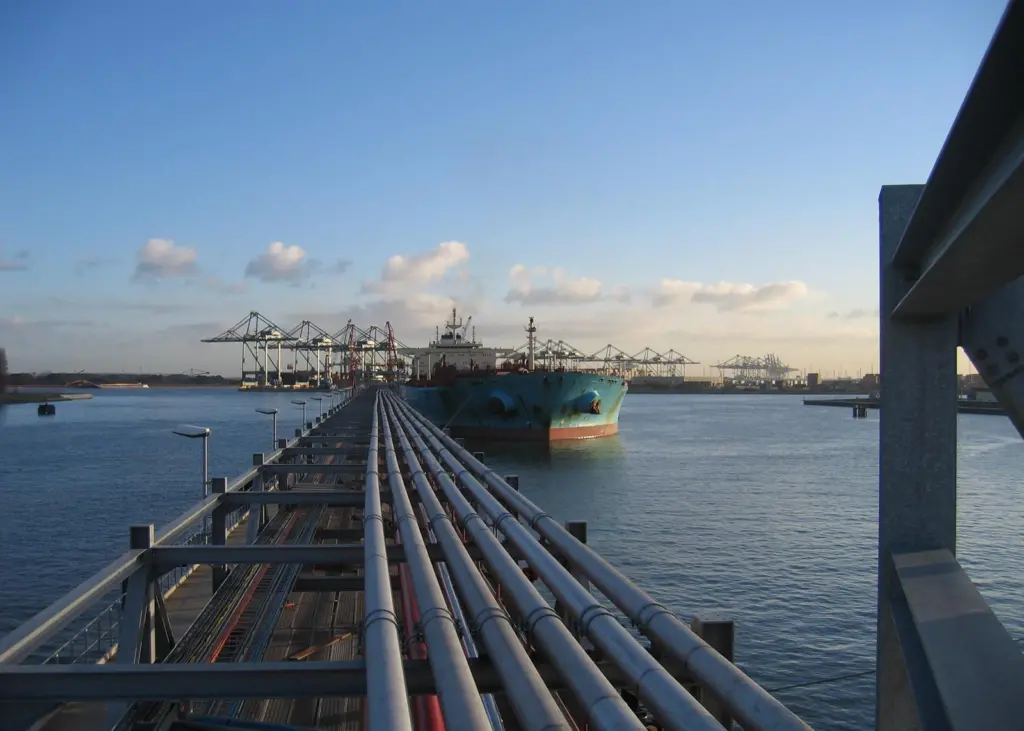
When it comes to chemical handling, a top priority for ports is that of safety. To accomplish safe, risk-free handling, ports need to take a number of issues into account: for example, facilities and equipment. “Port facilities handling chemicals in bulk should have safe berths and jetties for the tankers and the necessary safety equipment,” say Annik Dirkx and Nick Van bosch. “They should have the necessary means for dealing with overflows.” Ms Dirkx and Mr Van bosch add that another important point to note is that ports should avoid conflicting activities such as container handling in the immediate vicinity of a liquid bulk storage plant or refinery. In the unlikely event of an accident, it’s vital that ports have the right emergency response plans to effectively and swiftly deal with the crisis.
When it comes to dealing with chemicals, thanks to advances in technology, manual chemical handling should be kept to a minimum. “With the rise in automation and technology, this means that there is less risk of danger and also contamination to the chemicals,” says Alan Rymer. “On the few occasions that require chemical contact, ports need to protect workers with PPE (Personal Protective Equipment) and RPE (Respiratory Protective Equipment) which enable safe operations (an example of chemical contact operations could be in sampling the product).”
Press the button
Technological innovations have progressed to the point where it’s possible to warn port operators of any danger at the press of a button. “One of the most important safety systems is the emergency stop button,” says Alan Rymer. “If there are any issues with the loading process, a member of the jetty team can hit the stop button at any time. There is also an emergency stop button on board the ship, which allows the ship’s crew to stop the process if needed.”
Other innovative safety features have also been introduced, such as high/low flow/pressure alarms and trips. “For example, in the event of high pressure, an automated trip will stop the loading operation,” explains Mr Rymer. “We also have sensors which monitor emissions around the jetty which go back to the control room. If there are any problems, the sensors can pick these up and warn us by sounding associated alarms.
“In addition to the sensors, emergency stop buttons, flow/pressure alarms and trips, we also have analysers and cameras that can detect any released chemicals in an area and warn of a release by sounding associated alarms.”
While it’s necessary to push technology and equipment forward, it’s also crucial to spur on manpower. That’s where a good training programme comes in, and because of this need, there is a myriad of courses available around the globe – whether they are comprehensive courses for beginners or refresher courses for established workers. The Singapore Logistics Association, for example, runs a course in chemical logistics management, covering areas such as legislation, storage, packing, marking and emergency responses. GigaMare also offers a liquid cargo handling simulator for a chemical tanker that allows participants to learn the required operational skills for dealing with chemicals. Skills covered on this course include correct practices for loading and discharging, and relevant methods for washing, ventilating and cooling.
Training trigger
Mr Rymer says that BP Chemicals provides a large training programme which ensures maximum safety and awareness of chemical handling. “The programme covers an introduction to the terminal, how to assess the environmental risks of the product, and emergency procedures (to respond to situations such as a loss of containment or fire).
“We also look at product hazard data sheets for each chemical. Each chemical has a set of properties (for example, it may be highly flammable or toxic), and also individual safety requirements are provided for each product. Additionally, the training programme looks at the safety aspects of jetty operations and transfers, such as the potential risks of some products being prone to static electricity, etc.”
Mr Rymer says that the larger number of training programmes has ensured that chemical handling at ports is more efficient than ever before. The ongoing training for established members of staff means that they are kept up to date with the latest trends and rules. “Refresher training takes place every three to five years for staff. Even people who have been in the industry for 20 years require refresher training as we continue to make continuous improvements – there are still new procedures, technological innovations and safety rules that need to be learned on a regular basis.”
“Recent developments and advancements have allowed smoother and more efficient chemical handling operations. Technology has improved and has allowed us to manage a tight, careful chemical handling process.”
Related Articles
 CONTAINER & CARGO HANDLING
 CONTAINER & CARGO HANDLING
 BULK HANDLING