![PortStrategy[GreenPort]](https://www.portstrategy.com/wp-content/uploads/2026/09/PortStrategyGreenPort.svg)





Creature comfort
As one of the more controversial types of cargo, livestock challenges can catch ports of the hoof, John Bensalhia reports
It’s rare that a cargo can be described as ‘contentious’. Metal, wood, grain, sugar, salt … these kinds of bulk cargoes do not tend to polarise public opinion. However, one type of cargo that does buck that trend is livestock.
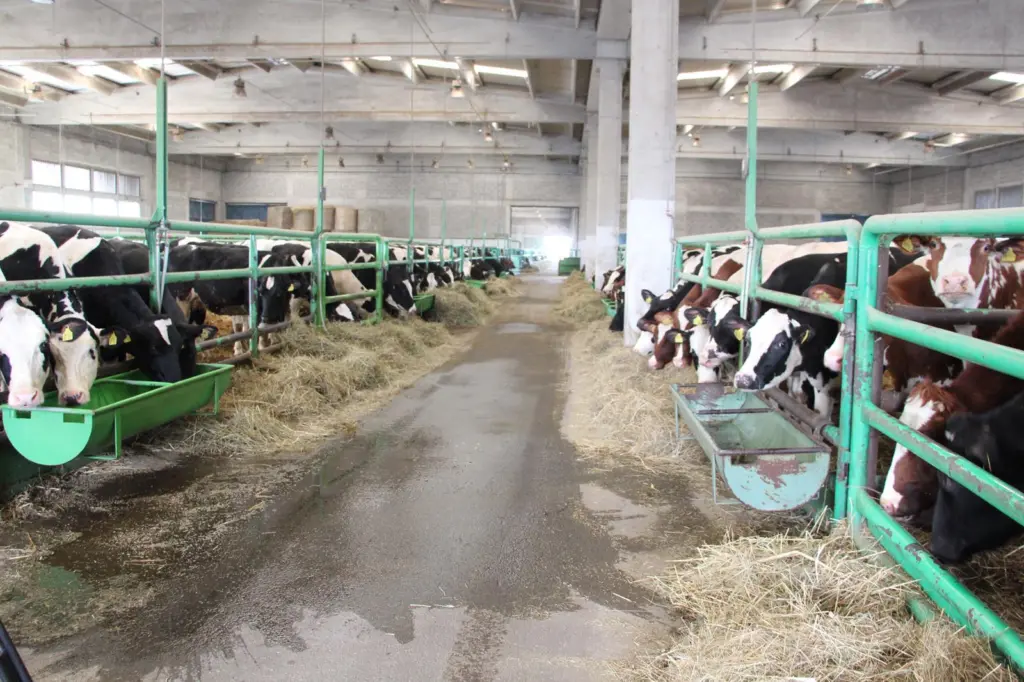
That’s no surprise, given that instead of handling inanimate objects, cereals and metals, port operators are dealing with living, breathing animals. Protecting the cargo is magnified; rather than ensuring that a commodity is protected from damage, the port operator must make sure that the animals are treated as comfortably and as humanely as possible. The slightest mistake or negligence doesn’t just result in damaged goods, it results in injury or even loss of life.
While livestock presents its own challenges, it’s still a cargo that is managed at ports around the world, particularly in Australia. Statistics from the Australian Livestock Exporters’ Council reported that there had been growth for three kinds of livestock export for the 2014/15 period: There was 22% increase in exported cattle from the previous 2013/14 year (1.38m cattle were exported), 12% increase of the number of goats (90,950) and 9% growth for the amount of sheep (2.18m).
Given the challenges, there are specific livestock terminals around the world which are dedicated to managing and looking after animals. Slovenia’s Port of Koper launched its livestock terminal back in May 1998 with a storage capacity for 1,300 heads of cattle. It boasts a number of facilities which have been designed to provide what it describes as “pleasant and calm transhipment and animal well-being during the time of rest”.
One of the plus points of the terminal is its location, which is separate from the remainder of the port and contains modern equipment and facilities that not only ensure good care of the livestock, but also maintain the correct veterinary-sanitary conditions. In addition, to make sure that cleanliness levels are kept at their peak, the terminal includes modern washing and disinfection plant for trucks, trailers and other pieces of equipment.
The provision of the right facilities and conditions allows a port to accomplish the mission of treating the animals as humanely and as comfortably as possible.
New terminal
The Port of Djibouti has taken its livestock handling obligations seriously, committing to creating a dedicated livestock port at Damerjog Terminal, due to open this year.
“The Djiboutian Government has decided to build a new terminal dedicated to the unloading and loading of cattle at Damerjog,” explains Houssein Ali Elmi, Port of Djibouti’s PR & communication co-ordinator. “This project involves the creation of a terminal for the unloading and loading of livestock (such as camelids, sheep, cattle) destined mainly for markets in the Gulf and Middle East in the vicinity of the Douda Quarantine Centre.”
Damerjog Terminal is located 18 km south-east of Djibouti city, and since the majority of these cattle come from neighbouring countries (such as Somalia and Ethiopia) and pass through the Douda quarantine centre, the opening of the terminal will prevent their transfer by truck and/or foot to the Port of Djibouti.
With a total investment of more than $70m, there is much here to ensure that the animals are looked after in both comfort and detail, including an animals’ collection area of 50 hectares, and an animal standing shed for treatment of injury or sickness. “The Terminal of Damerjog has a modern, fully equipped quarantine area and also equipped with veterinarians specialised in the field of cattle, storage equipment and a barn,” says Mr Houssein. “The length of the quay is 655 m long, and this port is capable of accommodating five livestock ships. Overall, the total annual capacity is 10 million head per year.”
A port can be a further step ahead if it develops a meticulously planned loading procedure for livestock. Taking into consideration every detail of the process, a sound procedure can ensure that the loading of livestock on to the vessel runs as smoothly as possible.
Pilbara Ports Authority’s the Port of Port Hedland provides an example of a solid loading procedure plan. The port has devised a list that all staff must work in conjunction with. The aspects featured in the procedure include the pre-loading process (including the right traffic management levels, and communications for contingencies such as an animal escaping), and wharf preparation (ie: making sure that all the necessary fences and equipment are in position).
Safety and security are important elements of the list. One example is the pre-loading inspection, in which a log must be kept to note cleaning, disinfection, insectocutors, and also the previous voyage. The section on tranquillisation concerns what should happen if an animal accidentally escapes during the boarding process. Only a vet or fully trained staff member is permitted to tranquillise the animal, while any incident of escape must be reported. In the section for safety and security, this details the kind of clothing worn and the right levels of training required by those present.
Meeting rules
Legislation has been put in place around the globe to ensure that the animals are treated as well as possible and that fatalities are either prevented or kept to an absolute minimum. In the UK, handling of livestock is governed by Regulation 1/2005. The rules cover a number of bases, including an overview of animals that cannot be transported, for example, unfit animals, very young animals or pregnant female animals that have reached the last stages of gestation. Other rules concern transporter requirements, including that ports must prove that the right procedures, staff and equipment are all in place to handle livestock and that appropriate training is provided for important elements such as planning, personnel safety, and emergency animal care.
In New Zealand, last year saw a new set of rules announced by the Ministry For Primary Industries. From August 25, 2016, this new development allowed the Ministry’s director general greater powers to obtain animal welfare reports which occurred both during the journey and then for 30 days after arrival time. The move was designed to provide more visibility with respect to the animals exported from New Zealand.
The Australian Standard For The Export of Livestock (ASEL), meanwhile, has established limits for mortality rates of animals during export. Basically, exporters must meet the statutory requirements both during the export process and after the animals have reached their destination. If an exporter reports that during the voyage, the mortality rate of the animals has exceeded the limits set, then this will lead to an investigation by the Department of Agriculture and could also result in regulatory action being taken.
As part of the livestock handling chain, ports have an important role to play in allowing shippers to meet their obligations under the existing regulations.
SMART AND SAFER SHIPS
Ports handling livestock not only have to attain excellent levels of animal welfare, they also have to cater to evolving designs of livestock carriers.
Last year, China-based Cosco Guangdong Shipyard completed its seventh livestock vessel for its client, Dutch shipping company, Vroon. The Gudali Express followed in the wake of other carriers such as the Galloway Express, the Gelbray Express and the Girolando Express to provide a safe and comfortable method of travel for the animals.
Meanwhile, Australian company Wellard is responsible for the world’s biggest purpose-built livestock carrier. Formerly the Becrux, today the carrier is known by the name of the Ocean Drover, and is designed to ferry numbers such as 75,000 sheep or 18,000 cattle. The livestock area alone is 24,000 square metres, and overall the vessel features nine decks.
The air circulation on board the vessel has 60 air changes per hour. For its fresh water production, 600 tonnes of fresh water are generated a day, courtesy of four reverse osmosis desalination plants.
Another vessel introduced by Wellard works on the same principle as the Ocean Drover, but has been designed with extra improved features.
The Ocean Shearer can take 20,000 cattle or 75,000 sheep and includes a number of design aspects that both build on and improve on the Ocean Drover, including double hull construction, a ventilation system that provides greater strength with less noise, and a bigger water generation system.
Related Articles
 CONTAINER & CARGO HANDLING
 CONTAINER & CARGO HANDLING
 BULK HANDLING