![PortStrategy[GreenPort]](https://www.portstrategy.com/wp-content/uploads/2026/09/PortStrategyGreenPort.svg)






Double vision
The need to boost productivity not only on the quayside but also in the yard is forcing the switch to twin- and quad-lift spreaders,reports Alex Hughes
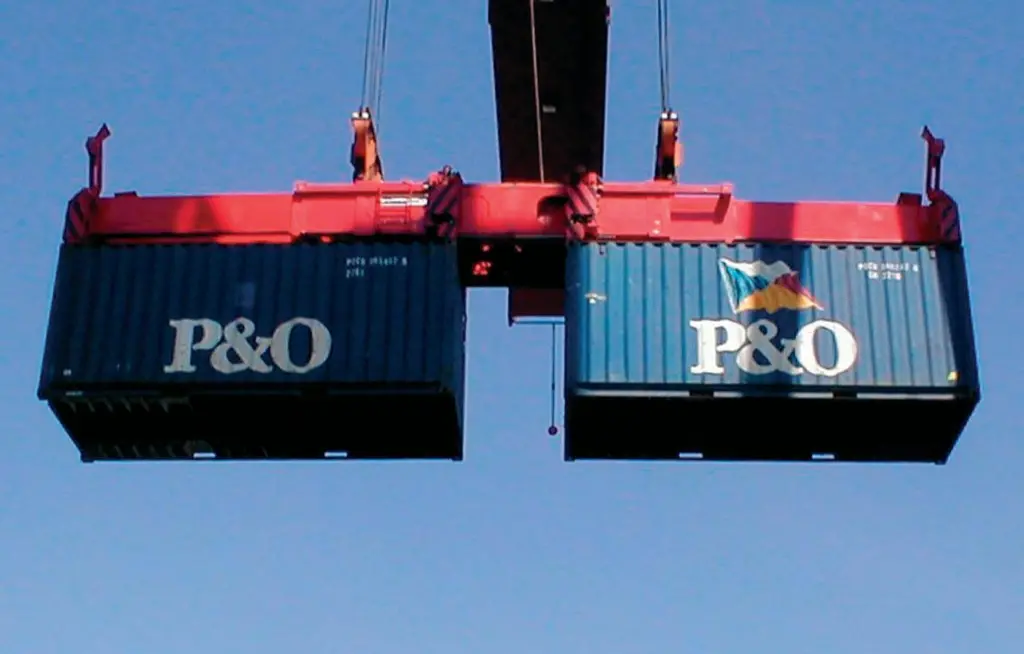
When twin-lift spreaders first debuted on the port equipment market, the argument of increased productivity was persuasive enough to convince many operators to make the switch. Today, Swedish spreader specialist Bromma calculates that the market for twin-lift spreaders is in the region of an impressive 700-800 units annually and rising. Terminals are increasingly adopting twin-lift in their yard operations, while new ship-to-shore gantry cranes are, almost without exception, delivered with twin-lift capability nowadays.
In fact, the twin-lift spreader has been so successful that the next stage in spreader development,the quadlift, is being welcomed with open arms.
Lars Fredin, Bromma’s vice president of sales and marketing, describes the market for twin-lifts:”Basically, all terminals with cranes that can handle a maximum weight of 50 tons under the spreader are suitable for use with twin-lift spreaders. However, there are a number of 40 ton-60 ton capacity cranes in operation globally whose owners still prefer to use the single-lift telescopic spreader.”
Bromma has also introduced its Tandem lift spreader family, which is composed of four distinct units: Tandem Fix 40, Tandem 45, T45 and Quattro. Each model offers a particular versatility and flexibility to handle various combinations of boxes. The most versatile is the T45 which basically is two ship-to-shore twin-lift spreaders. It can lift all possible permutations of container, ranging from one single 20′ up to two 45′ boxes. “We are definitely seeing a strong interest in Bromma Tandem due to the increased productivity possible with this spreader. Our R&D department quickly realised that, for our customers to buy into the Tandem concept,it had to be reliable,so that downtime could be minimised.
To date,those customers who have our Tandem spreaders in place are reporting productivity in the region of 55-60 containers moved per hour, which is a tremendous,” says Mr Fredin. He adds that most of Bromma’s research and development relates to productivity enhancement issues. As for return on investment, he says that achieving certain productivity targets is the key, with spreader productivity being a function of fault frequency and service duration.
However, references to “twin-lift” spreaders do not fully reflect the sophistication of this market segment.
In fact, there are three main types of twin-lift spreader, says Bob Greening of RAM Spreaders.The first of these,a fixed twin-lift handling system,is well established and used on both quayside gantry cranes and yard cranes. Each spreader is fitted with hydraulically retractable twist lock housings mounted on the main centre section.When the additional twist lock housings are deployed the spreaders can handle two 20ft containers.
Then there is CenterSpread, which is a separating twin-lift system. According to Mr Greening, this is now being specified by most major deep sea terminal operators that have suitable cranes. This provides the same function as the conventional twin-lift, but the operator can additionally adjust the space between two 20ft containers from 0 mm to 1,600 mm. Finally, there is the twin 40ft/45ft handling system, a fairly new concept which has not yet been fully developed or trialled by the various spreader manufacturers.
“Spreaders capable of handling more than one container are typically being acquired by high performance, high throughput terminals that already have suitable handling equipment in place,” says Mr Greening.
However, not all terminals have the right cranes to accommodate twin spreaders. Because of the additional spreader tare weight, it is possible that two twenties could have a combined weight of 65 tons, which would not necessarily be a suitable load for all cranes to handle safely. “That doesn’t mean that these terminals cannot have twin spreaders, since even those with lower capacity cranes occasionally use these to handle empty box traffic faster,”observes Mr Greening.
With regard to stability, while a theoretical maximum load does not present a problem in itself, higher eccentric loadings have to be taken into account by the crane manufacturer and the terminal. This is especially true in a case where a crane is upgraded from being fitted with a single-lift spreader to using a twin-lift spreader.Nevertheless,anti-sway devices are not strictly necessary to ensure that speed and stability can be maintained when hoisting two boxes, since this is usually within the design criteria of cranes now being produced with twin-lift capability in mind.
Meanwhile, support for quad-lift capability is gaining momentum. “Spreader manufacturers, including RAM, believe that there is sufficient demand in the market to support the development of a quadlift variant of the twin-lift spreader. Fortunately, crane designers are of the same mind, prompting them to look into producing quayside cranes with increased lifting capacity and performance to be able to accommodate this feature,”notes Mr Greening, adding that this has resulted in trial developments of various combinations of spreader configuration in several terminals around the world.
When asked if there are any technical limitations to the successful use of quad-lift units, he responds by pointing out that the higher wheel loads these would exert on quay rails does necessitate the implementation of enhanced civil works and this can,in itself, limit applications.”Quad-lift would definitely not be suitable for all existing quays and cranes,”he says.
“When trying to make a financial case for a terminal to adopt twin-lift capability, the ROI depends on the type of traffic being handled,particularly looking at the ratio of empty boxes to full ones,” says Mr Greening, adding that there are, in reality, a large number of factors that all have to be taken into consideration.
Asked as to how many terminals he thought would make the investment necessary to upgrade to spreaders capable of hoisting more than one container simultaneously, Mr Greening says that RAM has calculated that most major terminals handling megasized vessels would have to go down this path, otherwise they might lose traffic.
Related Articles
 CONTAINER & CARGO HANDLING
 CONTAINER & CARGO HANDLING
 BULK HANDLING