![PortStrategy[GreenPort]](https://www.portstrategy.com/wp-content/uploads/2026/09/PortStrategyGreenPort.svg)






Driving dredging
Early contractor Involvement is seen as essential in capital dredging, writes Martin Rushmere
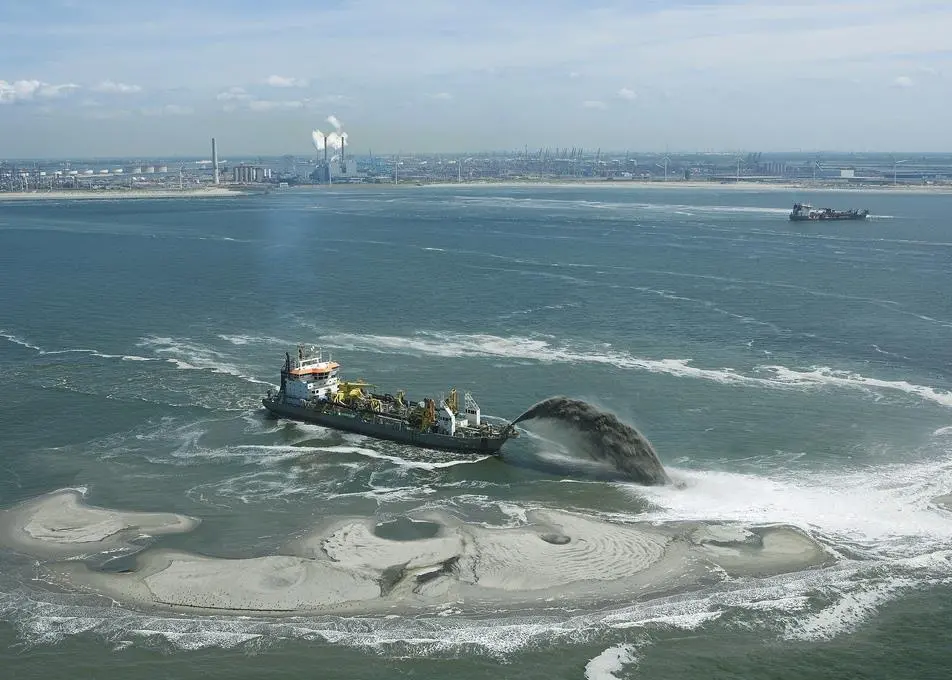
With remote guided underwater imaging equipment leading the way, capital dredging is becoming more of a known quantity for ports, contractors and consultants.
Lucien Halleux, chief executive of G-Tec, quantifies the effect. “You can cut operating costs by a factor of two or three by using the right modern technology.”
In the pursuit of better equipment and methods the industry has sometimes found it difficult to convince ports of the importance of involving contractors and, to a lesser extent, consultants, right from the beginning.
So much so that contractors have complained of being seen as an afterthought and then being blamed for unexpected costs and project delays.
So concerned have contractors become that the doctrine of ECI (Early Contractor Involvement) has become an official mantra of the International Association of Dredging Companies.
“This is especially important in the realm of ecological and environmental conservation,” says a spokesperson for the IADC. “The contractors very often know better than the ports what the latest methods and developments are in Green Dredging.”
Broken system
Yet, dredging should not consider itself a special case for contractor involvement. The IADC has listened to advice from Dean Kashiwagi, an engineering professor at Arizona State University, who studies performance and management systems. “The current delivery system is broken,” he told an IADC workshop, referring to the conventional worldwide system of tendering, contracting and consulting in engineering and construction.
He emphasised: “In the present system, project designers – who do not know how to scope and cost – come on board first. Then the contractors, who are the experts, are forced to be reactive instead of proactive. By telling the vendors what to do, taking the lowest price and negotiating it downwards, the situation worsens, prices increase and performance decreases. The job of the contractor is to “educate the client” and “the client must learn to let go of the controls”, which needs a radical change in thinking.
Ports and contractors have long stressed the importance of the various parties developing a relationship founded on trust. “You should not be looking for trust, but for transparency,” says Professor Kashiwagi. “When everything is transparent, trust is a non-issue.”
The Port of Melbourne reverberates around the dredging world as a model for the development of a sound environmental methodology coupled with technological advancement. The public outcry against supposed environmental destruction from a proposed dredging project led to a bond being formed between the port, the contractor (Boskalis), the government, the public and environmental activists. And it also led to the development of a cutter (ripperhead) fitted to a trailing suction dredger, the first of its kind.
Not that the process was quick or cheap. An environmental statement was produced after two years of investigation at a cost of $80m – for a port with a capacity of about 2m teu a year. Hard-rock dredging began in 2008 and 461,000 cubic metres were excavated in five and a half months.
The IADC points to the development of Khalifa port, built offshore to avoid damage to the coral reef, as a good example of early contractor involvement. “Because of this, the contractor was able to advise on the siting and practicalities of the project,” says the IADC spokesperson.
Maasvlakte 2 is also hailed as an outstanding feat of planning, innovation (especially the dredging vessel Vox Maxima) and co-operation.
Green aims
Meanwhile, contractors are keen to show their commitment to the environment through non-profit associations such as PIANC and Ecoshape, (based in Holland), with its slogan Building with Nature. Ecoshape has enlarged its focus from just Europe to set up a coastal ecosystem study and investigation in Singapore. In conjunction with the University of Singapore and other public research bodies an online Interactive Dredge Planning Tool for personal computers has been developed to analyse and predict the effects of erosion and dredging on beach areas.
Dredge plume dispersion, ecological input and ecological assessment are three of the modules that can be analysed.
The advances in computers and technology have made modelling, design and planning much easier. “Real-time investigation underwater is a routine part of the process,” says Mr Halleux, “whereas before it was done completely blind. Tolerances of 1 cm are now possible in structures, which was unthinkable 20 years ago.”
He says that client ports sometimes do not understand that there are still limitations on the type of equipment being used. “Acoustic imaging, sonar, echo sounding are big developments, but clients must realise it is comparable between looking at a map and a photo. Imaging solutions give you a clear picture, but you don’t get coordinates. A 3D echoscope gives less detail and resolution, but you get coordinates.
“Port authorities are aware of these systems but not of their limitations.”
Mr Halleux cautions against the temptation to use the systems in the wrong conditions, “just because they are there and available.”
Deep dive
He says divers will continue to be essential to the industry. “We are moving much more to automation in dealing with unexploded ordinance, still a problem in European ports, but otherwise divers are complementary to the process.”
Equipment costs are staying about the same, but the saving comes in time and effort in underwater investigation and design. “The most expensive site investigation is the one you don’t do.”
Mr Halleux notes that ports realise the value of using the right process but at the same time are being pushed by authorities to get the job done. “It takes years to get project approval, but then everyone wants it done immediately. “
The next 10 years will bring more pressure – and advances – in accuracy, reliability and dredging tolerances.
“But there is no point on insisting on the most exact measurements and latest techniques if it makes no difference. And you are never going to know 100% what the soil conditions are.”
Related Articles
 CONTAINER & CARGO HANDLING
 CONTAINER & CARGO HANDLING
 BULK HANDLING