![PortStrategy[GreenPort]](https://www.portstrategy.com/wp-content/uploads/2026/09/PortStrategyGreenPort.svg)






Efficiency and reliability drive developments
Drives have definitely become more efficient over the years, claims Parker SSD Drives’ Andrew Parker-Bates.
And one of the greatest boosts to energy efficiency, he notes, is the ability of the drive to absorb wasted braking energy – when lowering a load, or slowing down on a horizontal travel – and regenerate this back into the mains supply. Previously this would have been dissipated in the form of heat through ‘braking resistors’.
“Modern day drives are more reliable than their earlier counterparts. Partly as a result of the better availability of materials and components, but also through improved design, modelling and testing methods and techniques,” he says.
Indeed, drives such as Parker’s new AC30 series have been designed with reliability in mind and incorporate features such as enhanced conformal coating, a field-removable fan cassette, preventive maintenance functions and modular component design.
Drives will, therefore, typically be expected to last for at least 10-15 years, again thanks to improved design and material specification.
“Modern drive systems are designed to be almost fit-and-forget with minimal routine maintenance requirements,” he adds.
According to M.A.T. Malmedie Antriebstechnik’s Mr Lautwein, “The changeover to AC drives has been mirrored by developments in couplings, so there have been no technical bottlenecks.”
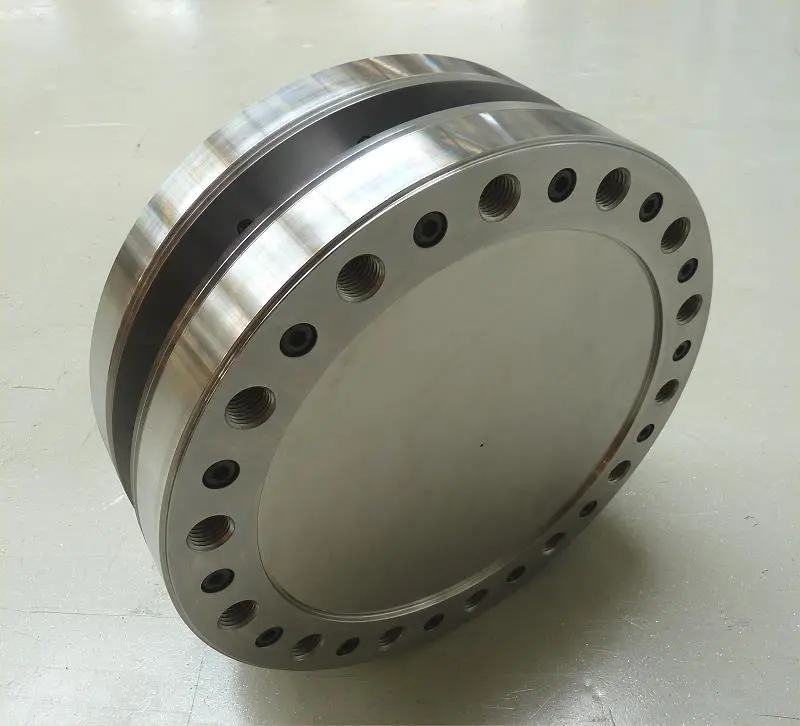
Nevertheless, he says that new developments are taking place across the whole drive train all the time. In the case of gear-couplings, today, these need re-lubrication approximately every two years and they also have the potential to leak unwanted grease. Innovations in this area are resulting in the development of fully encapsulated, non-leaking gear-couplings, incorporating a long-life grease filling.
“These types of coupling are maintenance free and have no need of a grease re-application,” he says. “Furthermore, if the upper section of the gear becomes worn, it can be replaced without having to strip out the entire coupling and there is no need to realign the whole drive.”
As to whether they will have a longer worker life depends entirely on the grade of material used to make them, he stresses, pointing out there is at least a 50%-70% difference in the life time of 42CrMoV quality steel compared with C45N steel.
As for how environmentally friendly these new couplings are, Mr Lautwein points out that, by leaking less grease, they are better than the parts they replace.
“If we consider all the couplings on a crane, an operator can easily save 10 kg of grease over a period of about five years. OK, it’s not that much, but at least it’s a step in the right direction.”
Although these types of couplings are initially more expensive, Mr Lautwein predicts a return on investment over two to three years of operation. He basis this on the elimination of the elastic component, less use of grease and faster replacement of geared parts result in significantly less crane down time, hence cheaper operating costs.
Related Articles
 CONTAINER & CARGO HANDLING
 CONTAINER & CARGO HANDLING
 BULK HANDLING