![PortStrategy[GreenPort]](https://www.portstrategy.com/wp-content/uploads/2026/09/PortStrategyGreenPort.svg)






FLTs
Fork lift trucks are being confined to an ever smaller pool of duties, operators confide in Alex Hughes
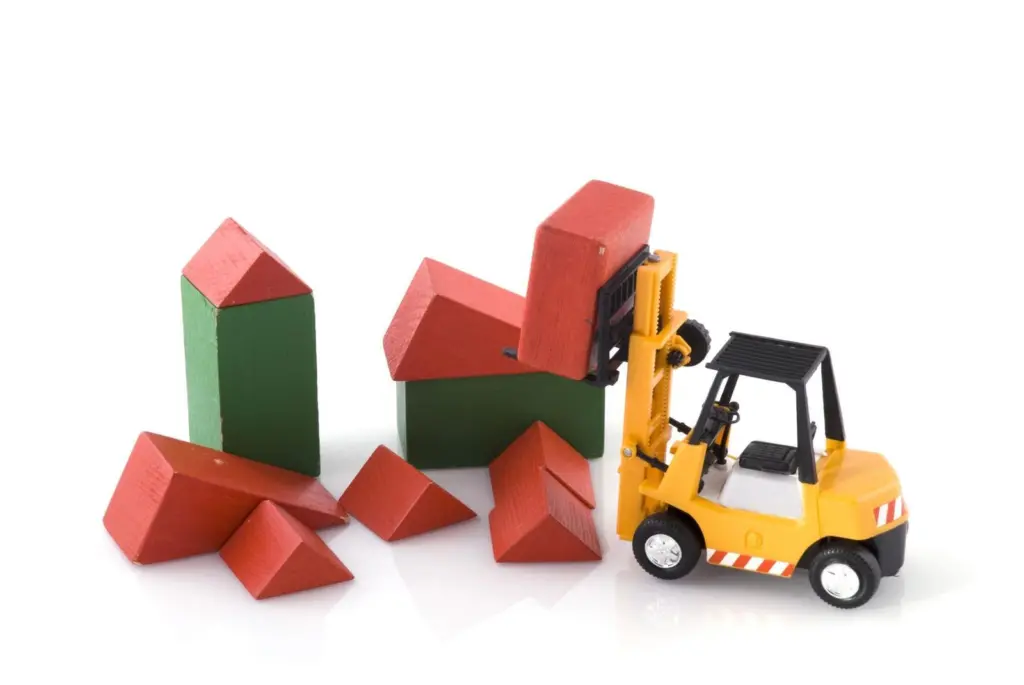
ICTSI’s Captain Andy Andrews is not a big fan of heavy duty FLT use in container terminals; reach stackers, he argues, despite costing more, do the job better.
“Reach stackers are considerably more versatile and that flexibility is worth paying for,” says the company’s regional manager for Europe and the Middle East.
“There are occasions, when containers fall over, for example, where a reach stacker will get you out of a lot of potential trouble. They can go places and do things that a heavy duty FLT simply cannot.”
This flexibility means that using FLTs equipped with overhead spreaders simply makes no sense in respect of empty container handling.
For Capt Andrews there are problems when using conventionally equipped FLTs to stack boxes, too.
“For an FLT to pick up an empty container, that box has got to be light and have pockets for the forks to go into. Why would you go to all that trouble when a reach stacker can do the same job and others besides?” he asks.
There used to be a role for FLTs working rail sidings, but even this has all but disappeared, since reach stackers, again, do the job better. As an example, as long as the weight being lifted is within tolerance, reach stackers can operate across two parallel rail tracks loading and unloading freight cars, a task which would be beyond the modest abilities of an FLT.
“It isn’t that manufacturers of FLTs have missed a trick and not invested in their development. FLT manufacturers also invariably build reach stackers, so have come to understand that the latter is the more versatile machine, while the former has a more limited role to play,” he says.
However, there are jobs that FLTs can do better, albeit those almost wholly confined to container freight station duties. Stuffing and stripping palletised cargo is where these machines nowadays earn their keep, he says.
The Port of Gothenburg’s media relations officer Eva Jonasson agrees, stressing that the role FLTs play in container terminal stacking yards is nowadays necessarily limited, but that they are highly effective when deployed on stuffing and stripping operations.
With this in mind, a clear distinction needs to be made between heavy duty FLTs and smaller machines deployed in container freight station when issuing tenders, argues Capt Andrews.
The latter, he suggests, given reasonable maintenance, seem to go on operating forever. Getting a clear picture of the whole life cost of operating them prior to purchase is therefore not of overwhelming importance. Heavy duty FLTs, in contrast, suffer much higher levels of wear and tear, so operators have to be very specific as to their requirements when going out to tender. Nevertheless, getting the appropriate information to make an informed choice is not always possible.
“It’s not easy to compare the operating costs of different machines from various manufacturers. It’s often a question of experience and having somebody on your team who knows where to find that information,” says Capt Andrews.
Ms Jonasson agrees that it is important to try and calculate life-time costs. However different drivers and diverse applications results in different degrees of wear and tear and also breakdowns, making comparisons difficult.
She believes that manufacturers are only ‘moderately helpful’ when asked for information regarding such costs. She points out that, in the tender documents, input regarding this area is requested, but feedback tends to be given in terms of ‘general costs’ relating to ‘normal operations’ for areas such as fuel and oil consumption, service and repair costs, spare parts, buy back price for the machine and so on.
“However, our experience is that figures presented are, in most cases, lower than those we actually get,” she says, adding that the Port of Gotherburg has found very real differences between life cycle costs of FLTs built by various companies.
“When we go out to tender for new FLTs, there are basically four areas that we look at. These are, in no particular order, drivers’ opinion, covering such things as visibility, ergonomics and manoeuvrability; technical issues, which can encompass service, availability, choice of engine, pumps, spare-parts and the training of workshop personnel; price; and local representation,” she explains.
For his part, Capt Andrews says that FLTs invariably work straight out of the box, but it does pay to make sure that a service agent is close by. If not, terminals have to identify vital spares and keep a good inventory of these. Nevertheless, he argues that, “FLT manufacturers recognise that providing good after sales service is the life blood of their business.”
Asked whether Gothenburg had bought FLTs that had not lived up to expectations, Ms Jonasson concedes that this had happened. The FLTs in question suffered from poor visibility when deployed on ro-ro duties and the port and the manufacturer therefore agreed to co-finance a partial rebuild, resulting in some improvement.
Additionally, in the opinion of the port, modern diagnostic systems generate many error codes, which means having to keep a lot of diagnostic tools to hand, too.
“Not all our workshop personnel is trained, or has the right background to deal with new electronic equipment. As a result, we are becoming more dependent on external help,” says Ms Jonasson.
On the other hand, she recognises there are some real benefits in respect of better statistics and diagnostics. Operating and downtime, error-codes, productivity and fuel consumption can all be monitored and analysed, helping to optimise operations and maintenance, which in turn helps a terminal build up a good knowledge base when looking for replacement equipment.
ICTSI’s Capt Andrews is definitely a fan of modern diagnostic systems, claiming they are making the task of maintaining FLTs much easier than before. Despite the increasing use of IT, even those terminals off the beaten track are able to cope, he suggests, pointing out that modern terminals are already stuffed pull of sophisticated equipment, so there absolutely has to be qualified people on the staff to make sure everything runs smoothly.
Related Articles
 CONTAINER & CARGO HANDLING
 CONTAINER & CARGO HANDLING
 BULK HANDLING