![PortStrategy[GreenPort]](https://www.portstrategy.com/wp-content/uploads/2026/09/PortStrategyGreenPort.svg)






Front and centre in project planning
Forward planning and good stakeholder buy-in both essential for successful project cargo handling, finds John Bensalhia
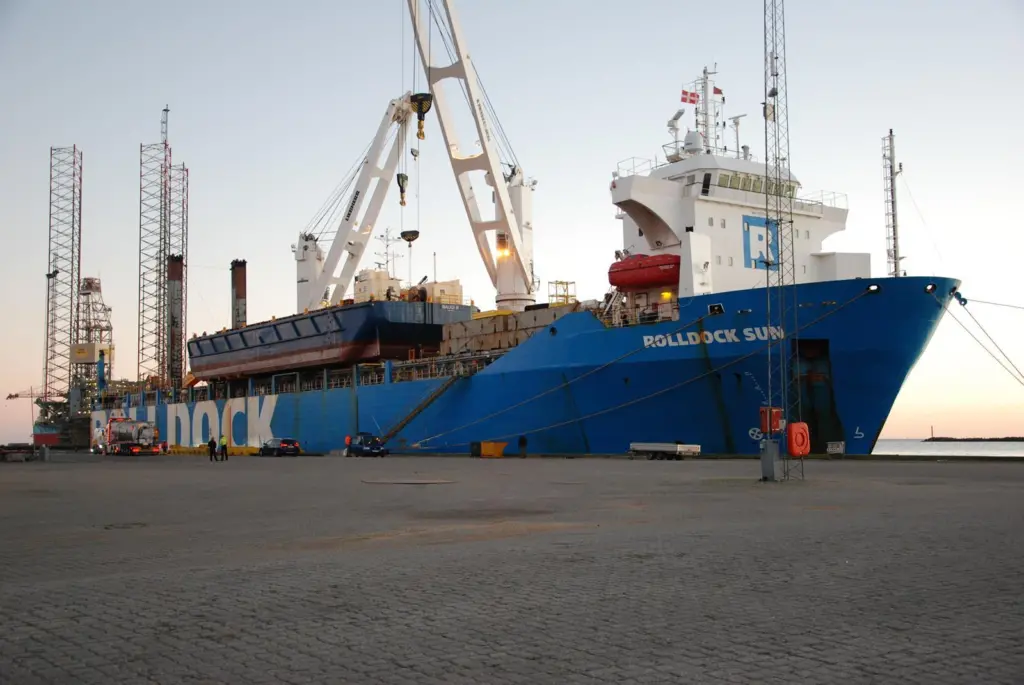
The scale and complexity of project cargo handling means that ports must be on top of their game to ensure a successful outcome. Those that make it can benefit greatly through increased year-end figures.
Because of the scale of project cargoes, port operators must organise the import or export process with absolute clarity. Being prepared is more than a motto and it all starts at the planning stage. Operators firstly need to understand the basics of project business and how it differs from other port activities, like bulk and container cargo – where ports normally have their focus.
Theis Gisselbæk, business developer at Grenaa Havn, notes: “Project cargo has a high focus/activity in a relatively short time frame, often with many stakeholders. To prevent increasing cost, risk and delay, planning is our key word.
“Therefore, we have implemented a pre-operational meeting prior to starting a project, where we gather all stakeholders in the project for final green light to continue. To support this, we have the day-to-day/operation-to-operation toolbox talk.”
Investment needs
During the process, a number of key aspects must be in place, as Port of New Orleans commercial manager Joseph Swartout explains. “Ensure there is sufficient draft: the ship transporting the project cargo must be able to call the respective terminal and cannot do so if the terminal is restricted or does not have the waterway to accept a laden vessel’s draft.” Mr Swartout adds that investment in shore cranes “allow for a broader range of vessels (including non-geared vessels) to transport the cargo”.
As well as investing in high capacity cranes, Mr Gisselbæk says that specially designed quays, storage area and project specific investments are necessary for a project cargo handling port. But as he also argues, it’s hard to build a solid business case for these investments as most projects come and go. “Therefore, the overall strategy of the port needs to involve the project segment if you want to focus on this business, so you can make sure your investments over years and decades support the needs of project cargo.”
Technology is also important. Mr Swartout says that all ships calling at the Port of New Orleans now have connectivity to AIS, which means tracking each vessel’s ETA has become more accurate than ever before – important for onward logistical for often unwieldly project cargoes. Simulations and AutoCad 2D and 3D drawings have also made it easier to identify risks and discuss operations prior to execution.
“Planning is the key,” says Mr Gisselbæk. “Together with this, advanced computer calculations have also helped to calculate more accurate lifts, lashings, steel and quay strengths, etc, preventing the need for a high safety factor and saving cost in the projects.”
For ports, the most challenging project cargo to handle is that without drawings/lashing points/centre of gravity diagrams, which should be provided by the logistics provider well before the vessel arrives at the origin port for loading of the cargo.
Furthermore, the unpredictable nature of weather conditions requires plenty of prior preparation and contingency times to add time to the schedule during adverse weather conditions. “Some projects are given a short window to deliver to site,” says Mr Swartout. “Weather is a major factor affecting a project’s arrival to the destination port, so project managers should always build in some additional time on top of their schedules for any weather delays.”
Outside help
The involvement of specialist heavy-lift forwarders can help to smooth handling processes, especially at ports either new to or nervous about the cargoes. Specialists such as Tuscor Lloyds have considerable experience and expertise in project cargo handling. Services include breakbulk cargo, container handling, and out-of-gauge cargo for those trickier oversized and overweight items. In the case of out-of-gauge cargo, Tuscor Lloyds source specialist freight equipment such as heavy-lift cranes. The company also offers professional packaging and crating, expert project handlers to closely monitor the shipments and make sure that the large sized cargo is as secure as possible.
ACI Cargo is another specialist company which assists ports with project cargo. Its clients include the Tunisian Port of Zarsis, the Port of Houston and the Port of Santa Marta. It has shipped items including a complete large size oil rig along with its parts, accessories and tools, and materials for constructing the Section Termoflores 3, a power generating plant that uses natural gas to run turbines to produce electricity.
To make the transportation of project cargo as easy and as efficient as possible, Mr Swartout says that ports should ensure that waterways are dredged properly, and that various transportation permits are easily attainable for shipper/consignee/logistics providers.
“It is important for ports to analyse their internal competences and equipment and link these to the local supporting functions,” adds Mr Gisselbæk. “So, you make sure that the full supply chain around the port is capable of executing a given project.
“Ports can make all kinds of investments (cranes, quay strengths, etc), but if the surrounding support functions, like trucking, infrastructure to and from the port, project mindset, etc, are not in place, I doubt you will succeed in this business.”
Safety first
Safety is also paramount for project cargo handling, says Mr Swartout: “Proper safety personnel must always be on hand. The company supervising the loading and discharge of the project cargo should hire a sufficient gang to ensure the labour is not overworked.”
He adds that a good safety protocol is required, since these types of cargoes can often weigh hundreds of tons each. And with their uniqueness comes a hefty price tag, so gangs should have sufficient experience and knowledge of handling similar cargo to save the port from sizeable liability claims from damage.
“Two projects are never the same, so it is impossible to make a standard and repeat it from project to project, like it is possible to do in other port businesses like bulk, ro-ro and container business,” adds Mr Gisselbæk. “Therefore, focus on safety in every project cargo operation is essential. Understanding project cargo is one step closer to higher safety, but continuous focus and lessons learned on safety are good tools to use.”
He adds that ship-to-ship project operations on open water are the most challenging from a safety and risk perspective.
Outside of operations, Mr Gisselbæk says that one of the most challenging factors in project cargo handling is the involvement of stakeholders who are either not interested in the project or don’t know the mechanisms necessary for project cargo operations. With engagement comes better relations, leading to smoother operations for the port and successful project cargo moves.
INVESTING IN PROJECT POTENTIAL
Some ports have already reaped rewards from project cargoes: The Port of Corpus Christi in Texas announced last June that a $50bn private investment was used to generate increased project cargo. The port recorded 345,811 tons of breakbulk cargoes in the year up to 2017, with investment reported for a further five docks by the end of 2018. Plans were also announced for a rail yard and the expansion of the port’s ship channel and the replacement of a cross-harbour bridge.
Earlier this year, DP World-operated Jebel Ali Port also announced plans to meet the projected increase in demand for breakbulk and project cargo.
Mohammed Al Muallem, chief executive and managing director, DP World (UAE region) said that ahead of Expo 2020 in Dubai, “the demand for breakbulk and special project cargo will rise sharply and as a premier global partner of the event we are ensuring that Jebel Ali Port fully fulfils its role as the premier gateway for Expo-bound cargo.
“At Jebel Ali, we offer an integrated port and logistics environment that includes purpose-built facilities to handle the increasing demand for breakbulk, project cargo, ro-ro and other general cargo. This includes a massive new multi-level vehicle storage facility to meet the needs of our customers.”
Related Articles
 CONTAINER & CARGO HANDLING
 CONTAINER & CARGO HANDLING
 BULK HANDLING