![PortStrategy[GreenPort]](https://www.portstrategy.com/wp-content/uploads/2026/09/PortStrategyGreenPort.svg)





Keeping its head
Valencia has bucked the downturn with a sophisticated IT system and varied cargo streams. Stevie Knight reports
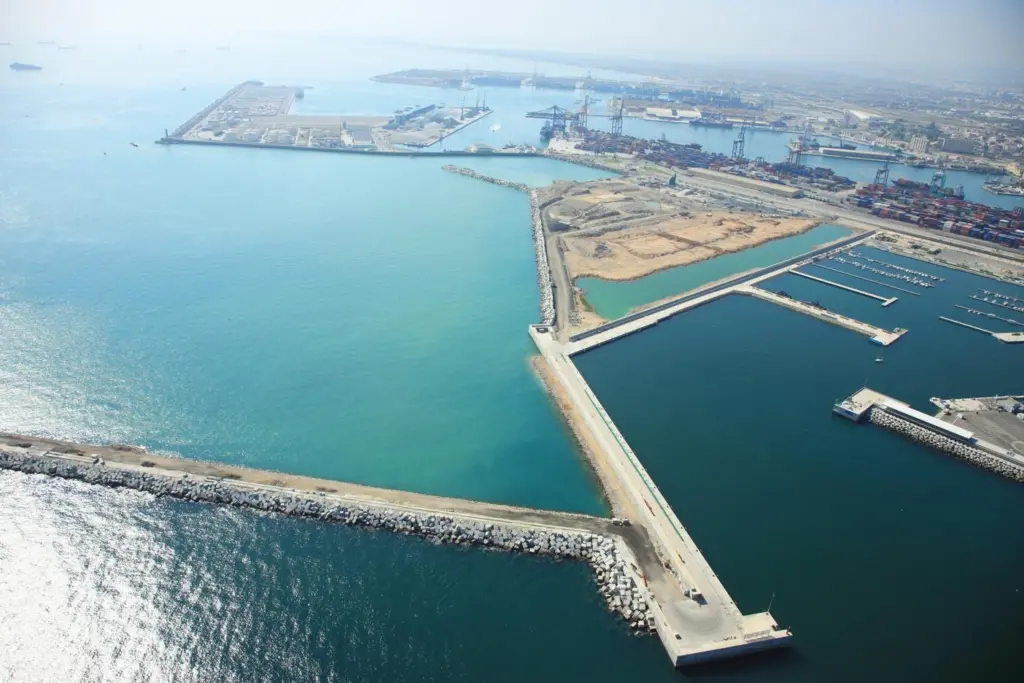
One of the most telling indicators of the world economic crisis has been the decrease in international trade flows. However, against this background, Valencia Port was the only Spanish operation to record increases in container traffic in 2009, with 3.7m teu.
Figures for the first quarter of 2010 would appear to show that the recovery in international trade is reasonably close thanks to a rise of 7.71% in container traffic compared with the same period last year, and an increase of 3.20% over the same period for 2009 in total goods traffic (13.8m tonnes).
In the context of the international port scenario – and the local market dip – this stands as a pretty good showing. However, Guillermo Massot of Arup points out that the container rise was at the expense of other transhipment ports, and he goes on to say that since transhipment is notoriously “volatile”, this edge can be lost as quickly as it has been gained.
Across the water in Nador, on the North African coastline, another beast of a transhipment port (part of €354m industrial and commercial port development) is beginning to grow; “part of the ambition of Morocco”, explains Mr Massot.
As with the TangerMed facilities, Nador benefits from Morocco’s apparent attempt to corner the market by capitalising on lower handling costs as far as transhipment is concerned. “This has had an impact on Valencia already, since the lines are intent on driving down stevedoring charges,” says Mr Massot.
However, to help Spain stay in the area and also help enable a modal shift away from Spain’s tendency to move cargo by road, Spanish port law is in the course of being modified to admit the lowering of port dues to keep the country’s transhipment traffic in the game.
Alongside this, there is the north extension of the port of Valencia, which will increase the port’s land surface area by 1.5m sq m, aiming to give Valencian logistics that extra edge with the deep sea container trade, doubling its current container handling capacity.
Further, as far as container traffic is concerned, Mr Massot points out that Valencia isn’t as dependent on transhipment as some other western med ports, such as Algeciras, because around half of its container throughput goes to import and export gateways, with direct links to north Africa itself.
Moreover, what Valencia already has is a very slick system with sophisticated IT. This itself provides significant cost reductions for Valencia’s logistics community. The online transactional portal is busily eliminating paper while a new “track and trace system” gives maximum visibility for import-export containers – including rail goods traffic.
Next year, trucks and containers will automatically be identified and recorded as they go through the terminal gates. Considerable improvements have also been made in the response times for official inspection services to check containerised goods.
Further, at the end of last year a new rail link came into play, integrated with the PLAZA logistics platform in Zaragoza. This added to developments in the logistics areas for the Sagunto and Valencia terminals.
But as is the case in Barcelona and Vado, intermodality and logistics are central issues – and one of the areas where Valencia hopes to keep its edge. The port is aware that one of its key objectives has to be to improve the connectivity of its hinterland in order to win traffic over from road haulage and get shipping a bigger slice of the cargo cake.
In accordance with the idea of making the shippers feel more comfortable with the whole process, Valencia, like Barcelona, has put in place a “Quality Mark” which guarantees the the totality of the port’s services delivered to the logistics chain as though they were provided by just one company, and establishes the right to financial compensation should any guarantee not be complied with.
Mr Massot explains that the port is keen on making its presence felt, especially where Valencia’s connectivity is concerned and this is the reason behind its high-profile participation in various international forums. Valencia’s aim is to keep up the pressure on transport improvements that would lead both into the Spanish domestic market as well as the heart of the continent behind it.
So, Mr Massot says, “quality of services and provision of infrastructure are in the fore of both Valencia and Barcelona Ports’ strategies to offset increasing competition from Northern Africa”. Only time will tell whether it is enough.
Related Articles
 CONTAINER & CARGO HANDLING
 CONTAINER & CARGO HANDLING
 BULK HANDLING