![PortStrategy[GreenPort]](https://www.portstrategy.com/wp-content/uploads/2026/09/PortStrategyGreenPort.svg)





Key factors
What’s on the ‘shopping list’ for developers looking for a port to serve their construction projects?
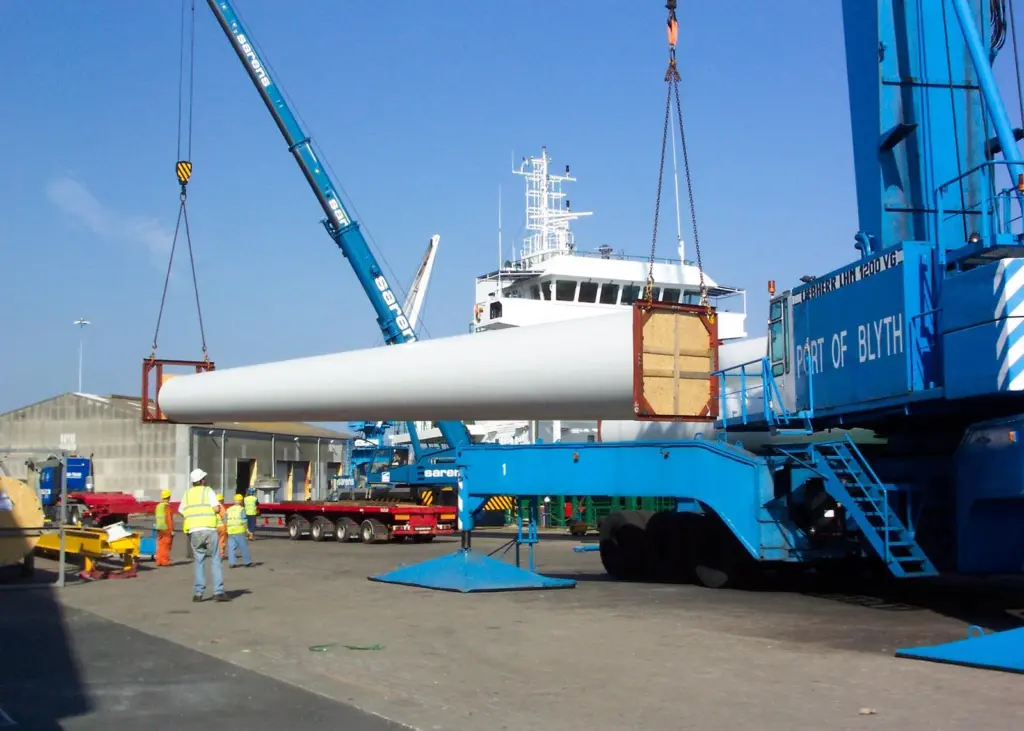
Richard Marks, business development director at Royal Haskoning, lists water depth without draft restriction – probably 10 metres; a reasonable length quay – 500 metres-750 metres; high load capacity quays – “and some are quoting ridiculous figures”; the ability to turn ships around; space – 20 hectares-25 hectares for starters, “and more than that would be even better”; and 24/7 access from both land and sea, with no noise restrictions.
“These are for working as a construction port; but for O&M, almost anyone can get some business.”
For example, Wells Harbour, a picturesque Norfolk location perhaps better known for its fish and chips, was chosen as the base for survey, crew and workboats supporting construction and future operation of the Sheringham Shoal offshore wind farm.
And that’s a key issue; while ports such as Hull, Bremerhaven or Esbjerg might be ready to grab the headlines for major developments, there are potentially rich pickings for many others.
“The fields are 30-year concessions, and the turbines probably last seven to eight years before they must be changed. Blades need changing, and regular maintenance is needed; so the developers are looking for ports to bringing in and load out turbines, and also for O&M combined, where they can focus on one office too.”
The technical challenges are changing as wind farms are built in deeper water, adds Mr Marks. The monopile works in up to 30 metres of water but beyond that developers have to consider platforms similar to those used in oil and gas production.
“The problem is, the oil and gas sector is producing a valuable product from a single well – but for wind turbines, a platform is needed for every one of them in deep water, and that gets expensive.”
Developers are looking for sites to manufacture the gravity bases required, and there is speculation that some of the former oil platform production sites – for example, on the Cromarty Firth, could be reactivated for the sector.
Another issue is distance. Close inshore, the workforce can be transported daily to and from the site by small catamarans. Further out, this becomes impractical and developers may have to decide between providing a small offshore accommodation platform or flying workers out – in which case, a helipad would be needed on top of a turbine and at the serving port.
“It is interesting what is going on,” says Mr Marks. “I think the developers are in control and they are working out their own plans – and they are keeping it all pretty secret.”
Related Articles
 CONTAINER & CARGO HANDLING
 CONTAINER & CARGO HANDLING
 BULK HANDLING