![PortStrategy[GreenPort]](https://www.portstrategy.com/wp-content/uploads/2026/09/PortStrategyGreenPort.svg)






Lifting coal volumes
While there are many positives to opting for a mobile harbour crane in comparison with a fixed system, there is the flip side of the coin to consider, as the Port of Tynes marine and technical director, Brian Reeve points out.
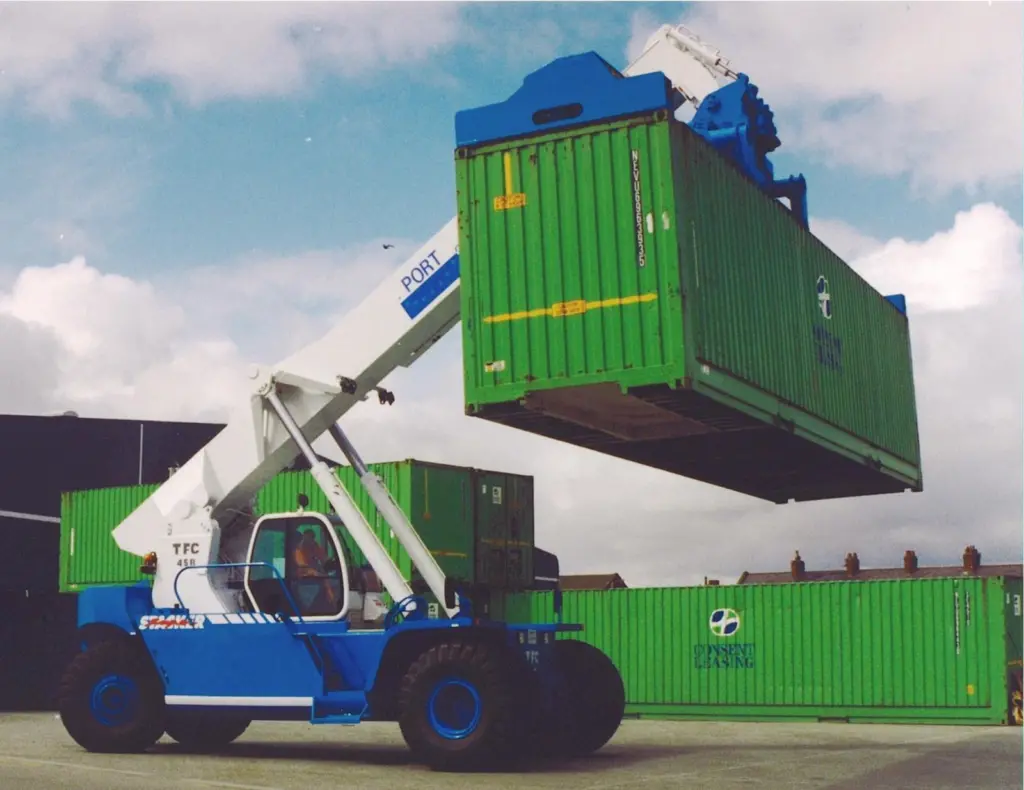
“A lot of companies, including us, were very much attracted by the mobile capability of these cranes and they are reasonably cost-effective – but they do need more care and maintenance,” he says. “You have more risks when operating in high winds with any slewing crane rather than gantry crane and your drivers must be able to deal with a certain element of sway. A slewing crane gives you ultimate versatility and flexibility but it can become a wrecking ball if you are not careful and you certainly need a more skilful driver to operate it.”
Ports must also consider bearing pressures on the quay, says Mr Reeve. “Most ports have suspended quays and you must be extremely careful in checking the loadings. These cranes are heavy and once they get on their support pads, they are exerting quite a force.
“In particular you have to take care when you have a number of cranes along a finite length of quay; obviously you have to be very careful about how you place them and operate them, to avoid collisions.”
Port of Tyne managing director Keith Wilson adds: “It is all common sense stuff once you know it; but sometimes people don’t apply the common sense approach. Really, you need to think through just how you are going to operate these cranes, and plan carefully while considering weights and outreach.”
The Port of Blyth has also gone for mobiles to handle its increasing volumes of coal imports and other bulks at its main bulk terminal, Battleship Wharf.
“We have five mobiles, including our two latest Liebherrs, a LHM 250 and LHM 400, and we use them for larger coal vessels up to 25,000-30,000 tonnes as well as for smaller vessels,” says Blyth’s chief executive, Martin Lawlor.
“If we had fixed gantry cranes, we would have to dedicate that equipment to a particular berth, or would not be able to change the order of them on a long run; but with the mobile cranes, we have the opportunity to mix and match. Ships are like buses – you might have a day or two with none, and then four or five come along at once. We have the flexibility to be able to move the cranes accordingly – even away from the quay to do coal stockpiling work.”
Related Articles
 CONTAINER & CARGO HANDLING
 CONTAINER & CARGO HANDLING
 BULK HANDLING