![PortStrategy[GreenPort]](https://www.portstrategy.com/wp-content/uploads/2026/09/PortStrategyGreenPort.svg)





Port of Oakland comes out fighting
“Vulnerable” US West Coast port proves that it can comeback from significant body blows in labour and operator losses. Martin Rushmere reports
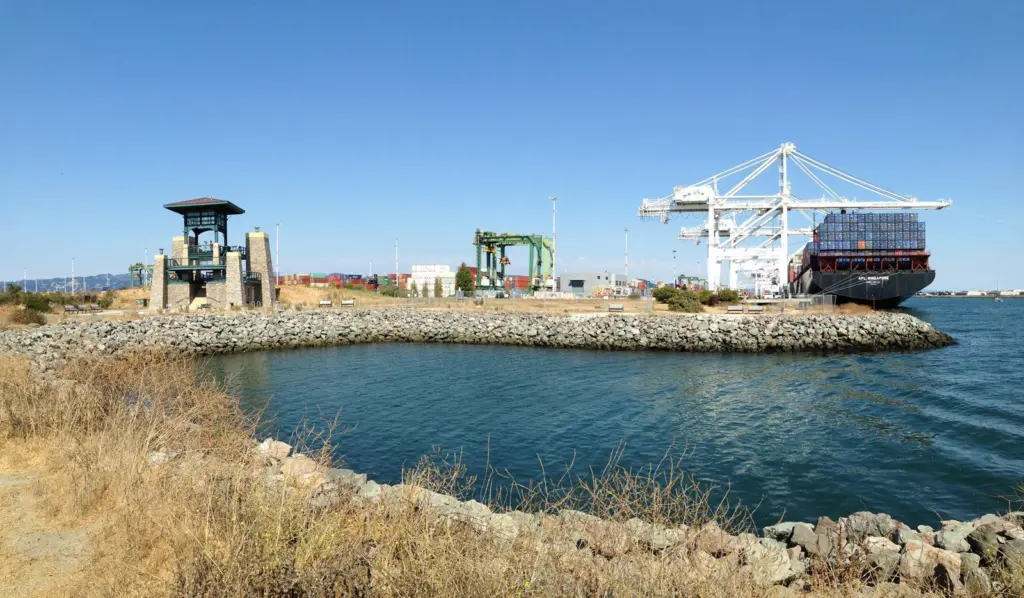
Analysts predicted an indefinite period of stagnation two years ago when Oakland was hit by the withdrawal of the joint venture between Ports America and MSC at the Outer Harbour Terminal.
Two years before that, the port had suffered from the tremors of anxiety over contract negotiations on the Western Seaboard with the ILWU. Conventional wisdom declared that while Long Beach/Los Angeles were ‘too big to fail’ and able to weather any financial blows, Oakland was vulnerable and could lose significant business.
Two factors lessened the impact – the union is totally united (‘an injury to one is an injury to all’) and its actions apply equally to all ports; coupled with the port’s administrative control of the international airport, which could offset the seaport’s financial problems. Still, the Outer Harbour loss came at a bad moment and reinforced pessimistic views that business volumes were going to be sluggish at best.
In May this year container import volumes were the highest in the port’s 90 years (76,000 teu) and overall volumes could be 3% higher than 2017.
Executive director Chris Lytle diplomatically credits everyone involved for the success – “all links in the supply chain came together to dig us out of the hole” – and although this is partly true, three strategic decisions probably count for even more.
At the forefront is the Efficiency Task Force, initiated by the port’s executives, consisting of tenants, shipping lines, the ILWU, suppliers, terminal operators, railway companies and representatives of the heavy vehicle drivers serving the port. This mirrors the 20-member task force at New York/New Jersey that has significantly improved vehicle delivery and turnaround times.
According to people involved with the early meetings, initial expectations were that there would be wariness and even suspicion. “The actual reaction was ‘Why hasn’t this happened before – this is just what we have been wanting’,” said one participant.
An immediate result of the meetings was the introduction of night gates for vehicles at the terminals, plus a limited appointment system.
Taking digital steps
Chris Lytle and maritime director John Driscoll have also been quick to recognise the benefits of digital technology, which suppliers have been clamouring for throughout the US. The port has adopted what it calls the Oakland Portal. Says the port: “This is thought to be the first digital collaboration platform which aggregates shipping information from every marine terminal in a harbour. The portal provides a universal view of the port by consolidating information from Oakland’s four active marine terminals, including data such as vessel schedules, cargo status and live camera views of port thoroughfares.”
A unified information system taking in all terminals has been a goal – verging on the equivalent of the unified field theory in physics – of all port administrations in the country, but has been held up by management doubts that proprietary and sensitive business and operating information can be hacked into. This obstacle has largely been overcome.
Some industry observers on the US West Coast see Oakland’s rapid introduction of the system as a triumph over the Southern California ports. “Los Angeles/Long Beach are four times bigger and each has four times the number of terminals,” says a consultant, “and their complications are that much greater. They might be seen as slow to get going, but they have wasted little time since.”
The departure of Ports America proved to be a longer-term benefit. Says port spokesman Mike Zampa: “All of the terminal’s business was retained in Oakland. It was redistributed to remaining terminals. Since then, all three remaining international terminals have invested heavily for the long-term in Oakland. The reason? Their business volume has increased and their financial positions have strengthened. That’s because supply and demand at the terminals are in equilibrium.”
A third strategic decision has been to develop a former army base into a logistics park, which has led to heavy demand from companies taking advantage of the efficiencies of being sited right at the port.
At the same time, Oakland has an inherent solid base in being the natural outlet for the huge volume of farming exports from California’s central valley. In fact, 85% of all the traffic going through the port is going from or to Northern California.
Related Articles
 CONTAINER & CARGO HANDLING
 CONTAINER & CARGO HANDLING
 BULK HANDLING