![PortStrategy[GreenPort]](https://www.portstrategy.com/wp-content/uploads/2026/09/PortStrategyGreenPort.svg)





Proactive link in the chain
Ports must first throw off their traditional ‘silo’ mentality to improve supply chain efficiency, as Felicity Landon explains
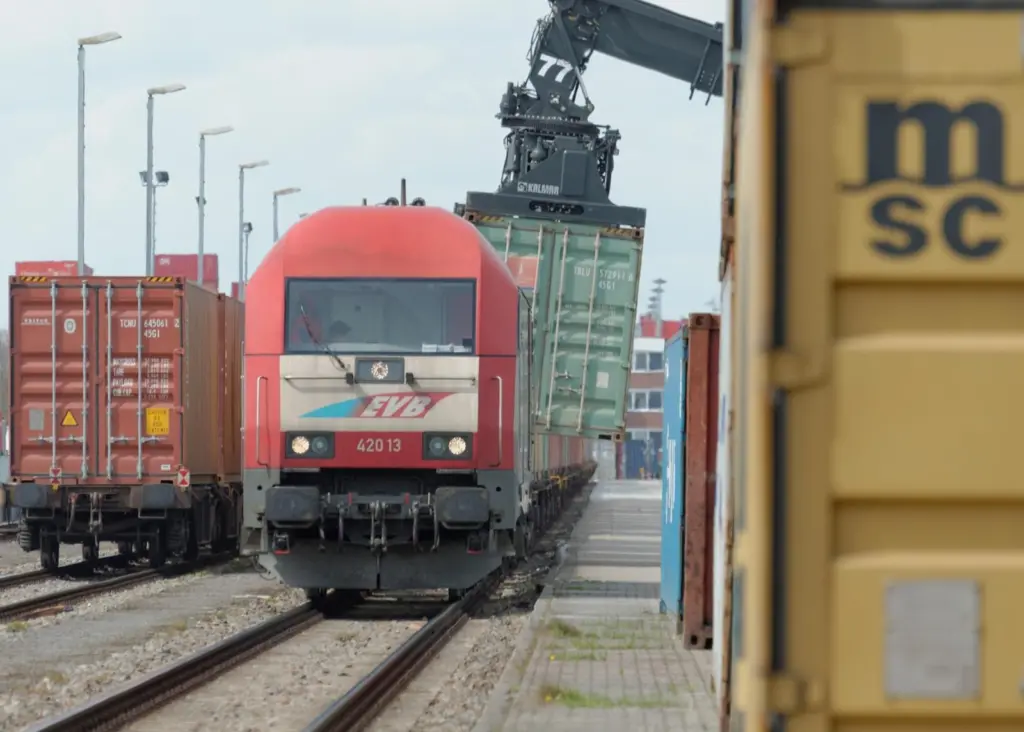
No man is an island – and no port is, either. Ports are increasingly recognising that their strengths and weaknesses depend on their position as one link in an efficient supply chain, and they are looking beyond their physical boundaries to make proactive changes.
“Modern supply chain thinking emphasises the importance of promoting efficiency along the entire chain,” says Doug Brindal, logistics manager at Fremantle Ports. “A port is a vital link in that chain, providing the interface between sea and landside functions. Both the efficiency and viability of the port is enhanced by a stronger supply chain.”
Fremantle Ports, as a government-owned trading enterprise, has a statutory responsibility to facilitate trade for the state of Western Australia, says Mr Brindal – and it has interpreted this to mean not only that it should maximise its own operating efficiency, but also that it has a responsibility to work with other supply chain participants to maximise chain efficiency.
“Over the past decade there has been a growing awareness in Fremantle and other Australian ports of the need to focus more on landside issues,” he says. “This was initially prompted by growing concern from surrounding communities about the impact of heavy vehicle movements to and from the port.”
He says the key challenges for Fremantle are protecting major transport arteries serving the port from further urban encroachment; developing rail services to take pressure off the road network; and continuously improving landside efficiency and supply chain coordination to promote Australia’s competitiveness.
Close links
The port works closely with industry and local communities, and standing consultative groups have been established with both industry and community. “The port also conducts in-depth surveys of stakeholder issues and opinions and leads studies of key issues to identify and evaluate initiatives,” says Mr Brindal.
He recently coordinated a truck productivity study and two industry workshops as part of efforts to ensure that port container traffic flows as smoothly as possible. “Managing the volumes of trucks on the road, the level of empty-running and the number of containers being handled per truck movement are all important strategies to ensure that the port can cope with increasing container volumes in the future,” he says.
Representatives from the port’s container terminals, empty container parks, rail sector, transport carriers and industry groups attended the workshops to discuss these issues and consider possible solutions.
“Many of these people had not experienced similar opportunities in the past and the feedback was very positive,” says Mr Brindal. “What we learned from those discussions will help us in recommending ways to achieve our goal of a smooth container traffic flow.”
What has Fremantle discovered from its cooperation strategy so far? Mr Brindal says: “To achieve success in this area, it has been necessary to overcome traditional ‘silo mentality’ amongst supply chain participants and to overcome confidentiality concerns. While this is a gradual process of changing industry culture, we have made significant steps forward in recent years. The port has had to establish itself as a neutral player in which other parties can have confidence that sensitive information will be carefully handled.”
Buddy system
The Port of Bilbao has adopted a clear strategy of proactively boosting volumes on key rail and maritime corridors. It is partnering with the Port of Tilbury in the IBUK Intermodal Corridor project, which is supported with a €7.3m Motorways of the Sea grant from the EC’s TEN-T agency. The IBUK project aims to reduce congestion between the Iberian Peninsula and the UK by shifting cargo away from trucks driving through western and southern Europe, primarily to rail and shortsea shipping.
The project includes the construction of a new rail logistics terminal at Pancorbo, 120 kms south of Bilbao. Next to the existing main rail line and at the junction of two motorways, this facility will be developed as a dryport serving Bilbao – hauliers will be encouraged to drop their containers there for onward transport by rail, for a lower-carbon solution that also avoids road congestion nearer the sea port.
The MoS funds are also supporting investment in new quayside equipment at Tilbury and the creation of the Intermodal Corridor Community System (ICCS), which will enable the two port community systems to work together and also extend the Bilbao PCS inland to the dryport.
“We have made it very clear from our point of view that we have to take steps in order to develop efficient corridors,” says Txaber Goiri, competitiveness manager at the Port of Bilbao. “That is why we got involved in the IBUK project. We think that in this maritime corridor it is possible to have more cargo – studies show how many tonnes are, let’s say, ‘avoiding’ the port and we should do something about that. Yes, we think ports should take action – we don’t think we are an island.”
The ICCS element of the project is essential, he adds: “So far, port community systems in general are mainly focused on the port community itself. We want to extend the services and offer them all along the supply chain, including into the hinterland. On top of the actual movement of goods, it is the connection between port community systems that is important.”
What has Bilbao learned from taking its proactive steps into the supply chain? “We think it will lead to increased business through the port,” says Mr Goiri. “For example, last year, because of our focus on intermodal corridors, we saw container traffic by rail increase by 20%.”
Hub role
Ian Roper, divisional director of supply chain solutions at Access Group, which designs and implements integrated business management software, says ports play a vital role as the hub within the supply chain. “At the epicentre of inland and sea transportation, they’re well placed to understand efficiency issues, considering their dealings with all the different parties involved,” he says. “By taking a proactive stance in systematising and integrating technologies and processes, they can improve the whole operation. Ports are in a perfect position to make this happen, which will only help to strengthen their competitive advantage as a result.”
And sometimes, it might help if ports were actually to talk to each other. Maritime consultant Richard Clarke says this applies where relatively small ports are now included in loops served by 6,000 or 8,000 teu ships.
Each individual terminal’s ship loading plan tends to be worked out to suit that terminal’s loading system, where the boxes are in the yard, and other operational preferences. “Something I have come across is that when you have a very big ship with not that many boxes going to one particular terminal, the ship planners put all those boxes into one hold. That means when that next port comes to unload the ship, they can only use one crane. They may be only offloading 300 boxes, but it takes a long time,” says Mr Clarke.
Shipping lines have then complained of slow service at that port, he says. “But if you can persuade all your ship planners to use two holds for that destination’s boxes, then the port can use two cranes and unload the ship twice as fast.”
Related Articles
 CONTAINER & CARGO HANDLING
 CONTAINER & CARGO HANDLING
 BULK HANDLING