![PortStrategy[GreenPort]](https://www.portstrategy.com/wp-content/uploads/2026/09/PortStrategyGreenPort.svg)





Protecting quay interests
Would you buy the cheapest container crane with all the features taken off? Probably not.So why are fenders so often seen as a last-minute, bolt-on extra? Felicity Landon reports
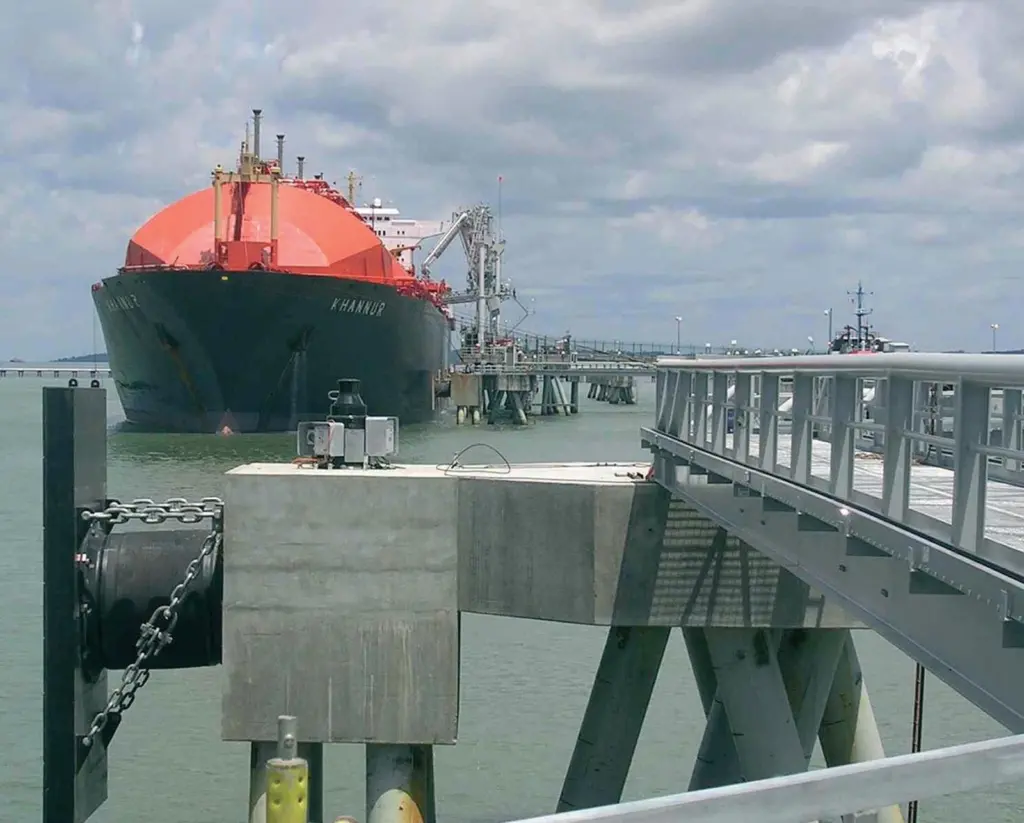
If a fender works well, you don’t know it is there – and perhaps that is why too many people treat fendering as more of an accessory with little thought for the safety-critical role it plays.
Mike Harrison, marketing director of Trelleborg Marine Systems, agrees.”Getting it right is important, but getting it wrong is quite easy,” he says. “You wouldn’t buy the cheapest container crane for your new quay development; a fender is just as important to the operations. A fender might sit there day after day with nothing to do but the day something hits it and it disintegrates, then you have a real problem on your hands.”
Ports should look into the life expectancy of the product and its efficiency.They should also be aware of what fenders do and what purpose they serve, and the fact that they do a huge amount for the operational efficiency and safety of the port, says Mr Harrison.
Today, a lot of berths are potentially unsafe or borderline unsafe, he adds, and the implications for ports in terms of delays, damage and massive insurance claims are significant – particularly as shipping lines are becoming ever more aware of the issue, he warns.
Take a recent incident in Eastern Europe where a vessel’s side was split open on old fenders; the claim is currently running at $50m, when it would have cost perhaps $200,000 to install new fenders on the berth. However, those promoting the importance of good quality, fit-for-purpose fenders are battling against price pressures, lack of understanding, poor maintenance regimes and cheap, inadequate copy products.
“The desire to cut costs has become greater than ever,” says Mr Harrison. And in choosing fenders for new port developments, there is a huge gap in understanding and “an awful lot of assumptions”, he adds.
To start with, who is defining “safe”? A consultant might define the operating specs for fenders but these can be full of loopholes or interpreted in different ways, he says. Along comes the contractor, who needs to supply the lowest cost product within the specification. “If the specification is open to interpretation that could result in a substantially lower and less strong system than intended.”
The British standard BS 6349 is one of the bestknown in the world, but Mr Harrison points out:”One of the first paragraphs of this says you should only use this code of practice if you have the experience and qualifications to do so. If somebody takes a quick look at it and doesn’t really know berth structures and writes specifications around it, then you have risk.
“You wouldn’t find a contractor being able to specify a crane or crane rails on the quay.The port will have a very firm say on what goes in there, probably even doing it directly. But fenders? They are just a piece of furniture, just bolt it on anyway. The contractor is doing his job and the consultant is doing his job – but we end up with not the best job.”
This is frequently where the copy products come in, with a price tag perhaps 30% lower but failing to comply with international guidelines and made of cheap materials; he says Trelleborg has tested many of these copy products “and they tend to break by the second cycle of compression testing”.
Once installed, fenders don’t get a lot of maintenance during their life, he says. “People don’t check them terribly often.They need a running repair, so they do a temporary repair which has the interesting habit of becoming permanent.The fender might be too far from the quay or have a part missing or not hold the ship far enough away from the quay. And a lot of damage can be caused as a result.”
Mr Harrison says he is a firm believer that “if it can go wrong, it will go wrong”. But quite apart from the more dramatic accidents, the correct design of fender at the start can reduce costs for ports in other ways, he says.
“You will get ships in and out quickly and achieve better productivity. A berth with broken fenders means a ship takes longer to berth and is unstable on the berth.That hits the port’s pockets.
“For example, a containership needs a firm type of fender to provide a stable face so that containers can be lifted on and off quickly by three or four cranes working the ship simultaneously. If the ship is wobbling because the fender isn’t stable, it is more difficult to handle. Bottlenecks in the logistics chain, congestion, etc. can soon build up.”
Related Articles
 CONTAINER & CARGO HANDLING
 CONTAINER & CARGO HANDLING
 BULK HANDLING