![PortStrategy[GreenPort]](https://www.portstrategy.com/wp-content/uploads/2026/09/PortStrategyGreenPort.svg)





Rapid turnaround in cable replacement
Alex Hughes reports on the development of an ultra-rapid cable replacement system at Algeciras.
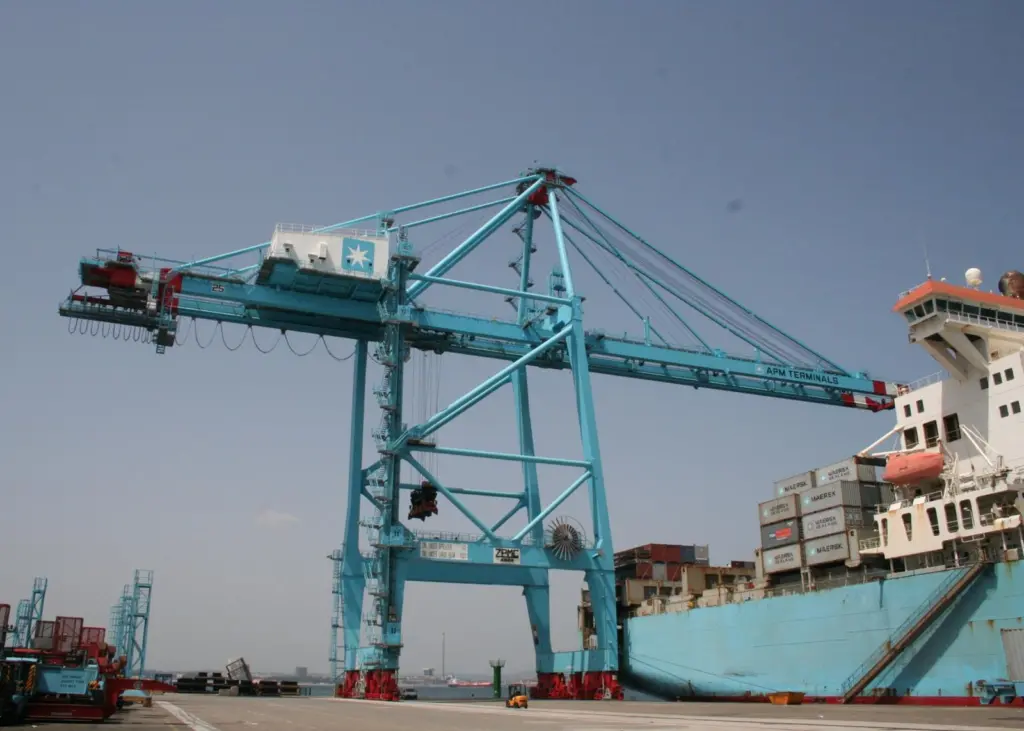
One of the biggest headaches faced by busy container terminals is having to take a crane out of service for up to 24 hours because a hoist cable snaps and needs replacing.
APM Terminals in Algeciras believed this to be unacceptable in the modern operating environment and developed a system allowing cables to be replaced even with the boom in the up position and with other cranes continuing to work the vessel.
Presently, hoist cables on quayside gantry cranes should not remain in frontline service for more than 1,600 hours, says Francisco Amores, technical manager of APM Terminals’ Algeciras container handling facility. He points out that this is the maximum lifespan, although some cables have to be taken out of service earlier because of breakage and/or safety reasons. However, all cables suffer from some degree of wear and tear.
“On average, cables last for around 1,400 hours,” he says.
Standard industry practice means that it can take up to 24 hours to replace one of these cables, although this figure can vary considerably, depending on the availability of tools and the ability of the onsite maintenance team.”
At Algeciras, however, two hoist wire ropes can now be replaced in four and a half hours. “When we looked into ways of speeding up cable replacement times, our focus had primarily to be on safety, while also taking into account efficiency,” says Mr Amores.
The dramatic cut in cable replacement time has been achieved through a project run jointly by the terminal and the University of Cadiz. Initially, the aim was to standardise replacement times for hoist wire ropes on the two types of cranes used in the terminal; those incorporating the older rope-towed trolley (RTT) and the machinery-on-trolley (MOT) units.
“The MOT cranes obviously have an advantage when the hoist rope needs replacing, since they can do this with the boom in the up position. This is of great benefit, since cable replacement can take place even while other cranes on the quay continue loading and discharging containers on the vessel. In contrast, with RTT cranes, you had to wait for operations on the vessel to cease before starting the replacement of hoist ropes,” says Mr Amores.
The remit given to Cadiz University was therefore to look into the creation of a system that allowed the hoist rope on RTT cranes to be replaced even when the boom was in the up position.
“To achieve this, we identified the various problems associated with changing the cable on an RTT and resolved them. The system, which APM Terminals has patented, allows us to change a two-hoist rope on an RTT crane in just four and a half hours. This gives us a huge advantage in terms of time and operational efficiency, since we do not have to wait until the end of vessel operations to start changing the cable. Overall, the crane can re-enter operations after just six hours of down time.”
Asked what APM Terminals intends to do with the patent, Mr Amores says it is currently a question of maintaining the rights to this system, although no direct marketing of it was necessarily planned. He says he is unaware of any other terminal that has introduced such time savings.
Clearly, there is an operational advantage to be had in a terminal telling the market it can quickly replace hoist cables; shipping lines generally prefer to call at terminals where crane availability is guaranteed. APM Terminals has already approved the system for use in Port Said in Egypt as well as at Algeciras, and Mr Amores says others have shown interest.
“The financial benefits that we achieve with faster turnarounds are passed on to our customers, as we can now manage cable replacement with minimal impact on vessel operations,” he says.
However, Mr Amores says that terminals need to look beyond faster replacement time for cables and instead concentrate on trying to prevent premature breakage.
“In many cases, the solution is not just an improvement to the design of the crane’s hoist cable system; instead, there need to be improvements to operating procedures and also to vessel cell guide maintenance and design,” he says.
One of the biggest headaches faced by busy container terminals is having to take a crane out of service for up to 24 hours because a hoist cable snaps and needs replacing. APM Terminals in Algeciras believed this to be unacceptable in the modern operating environment and developed a new system allowing cables to be replaced even with the boom in the up position and with other cranes continuing to work the vessel.
Presently, hoist cables on quayside gantry cranes should not remain in front line service for more than 1,600 hours, says Francisco Amores, Technical Manager of APM Terminals’ Algeciras container handling facility. He points out that this is the maximum lifespan, although some cables have to be taken out of service earlier because of breakage and/or safety reasons.
However, all cable suffer from some degree of wear and tear. “On average, cables last for around 1,400 hours,” he says.
Standard industry practice means that it can take up to 24 hours to replace one of these cables, although this figure can vary considerable depending on the availability of tools and the ability of the on site maintenance team. At Algeciras, however, twohoist wire ropes can now be replaced in 4½hours.
“When we looked into ways of speeding up cable replacement times, our focus had primarily to be on safety, whilst also taking into account efficiency,” says Mr Amores.
The dramatic cuts in cable replacement times have been achieved thanks to a project put together by the terminal and staff from the University of Cadiz. Initially, the aim was to standardise replacement times for hoist wire ropes on the two types of cranes used in the terminal: those incorporating the older rope-towed trolley (RTT) and the machinery-on-trolley (MOT) units.
“The MOT cranes obviously have an advantage when the hoist rope needs replacing, since they can do this with the boom in the up position. This is of great benefit, since cable replacement can take place even while other cranes on the quay continue loading and discharging containers on the vessel. In contrast, with RTT cranes, you had to wait for operations on the vessel to cease before starting the replacement of hoist ropes,” Mr Amores explains.
The remit given to Cadiz University was therefore to look into the possibility of creating a system that allowed the hoist rope on RTT cranes to be replaced even when the boom was in the up position.
“To achieve this, we identified the various problems associated with changing the cable on an RTT and resolved them. The system, which APM Terminals has patented, allows us to change a two-hoist rope on an RTT crane in just 4½hours. This gives us a huge advantage in terms of time and operational efficiency, since we do not have to wait until the end of vessel operations to start changing the cable. Overall, the crane can re-enter operations after just six hours of down time.”
Asked what APM Terminals intended to do with the patent, Mr Amores said it was currently a question of maintaining the rights to this system, although no direct marketing of it was necessarily planned. Asked whether anything similar exists in the market place, he says that he is unaware of any other terminal yet having introduced such time savings.
Clearly, there is an operational advantage to be had in a terminal letting the market know it can quickly replace hoist cables: shipping lines generally prefer to call at terminals where crane availability is guaranteed. APM Terminals has already approved the system to for use in Port Said, in Egypt, and also at Algeciras, while Mr Amores reveals others have shown interest.
“The financial benefits that we achieve with faster turn arounds are passed onto our customers, as we can now manage cable replacement with minimal impact on vessel operations,” he states.
Quizzed about other areas of cable management that he might like to see improved, Mr Amores says that terminals need to look beyond faster replacement time for cables and instead concentrate on trying to prevent premature breakage.
“In many cases, the solution is not just an improvement to the design of the crane’s hoist cable system; instead, there need to be improvements to operating procedures and also to vessel cell guide maintenance and design,” he suggests.
Related Articles
 CONTAINER & CARGO HANDLING
 CONTAINER & CARGO HANDLING
 BULK HANDLING