![PortStrategy[GreenPort]](https://www.portstrategy.com/wp-content/uploads/2026/09/PortStrategyGreenPort.svg)





Remote breakthrough could catch on fast
The two Maasvlakte 2 terminal orders show that the remote control of STS cranes has made its breakthrough, according to ABB. The company expects other terminals and terminal operators to follow.
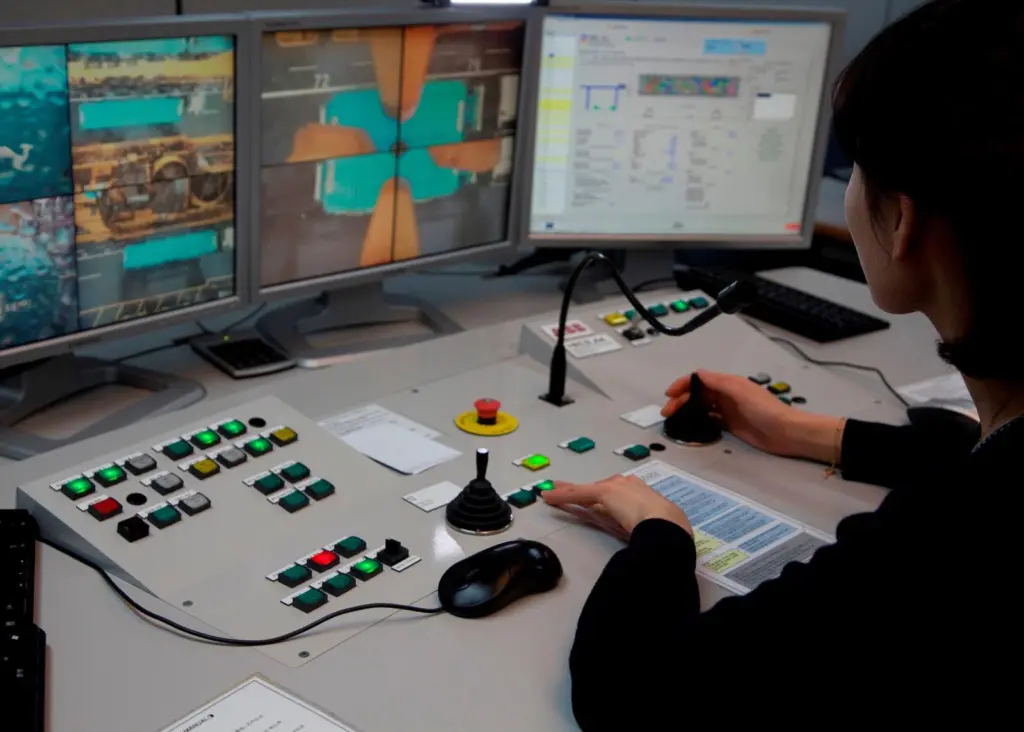
“The first step towards remotely controlled cranes was the introduction of RC stacking cranes,” says a spokesman. “Since then, the technology has been further developed to enable the remote control of STS cranes as well.”
ABB has delivered nearly 400 remotely controlled stacking cranes. Its first remotely controlled STS crane has been in commercial operation since December 2010 in Panama – where ABB worked in close cooperation with Manzanillo International Terminal to develop the RC technology for STS cranes.
“The whole solution for RC cranes is based on proven technology. The only change is that the crane operator is moved from the cabin to a control room. Thus, the control room is connected to the crane instead of the cabin.”
This automation makes the crane operations smoother and reduces the need for maintenance, especially on the spreader and headblock, says ABB. “Automation and smoother operations also reduce damage to goods being moved – for example, caused by hard landings.”
The company says proven technology, components and systems developed specifically for crane application make the system reliable – and the total cost will be reduced by leaving the cabin off the crane.
“With a crane operator on board, crane acceleration and deceleration rates are limited. With no operator on board, the crane can run faster and ramp times can be shorter. This enables significant shorter cycle times to unload an entire ship’s worth of cargo.”
Moving crane operators away from the crane, working at heights of over 50 metres, to a control room in the terminal building will improve working ergonomics and help reduce stress on the operator’s back and neck, adds ABB. “Operators supervise the crane motion via onboard cameras; often the camera views are more comprehensive than the views available from inside the crane cabin. Combined with access to control information provided by the automation system, these help to improve overall operator performance.
Related Articles
 CONTAINER & CARGO HANDLING
 CONTAINER & CARGO HANDLING
 BULK HANDLING