![PortStrategy[GreenPort]](https://www.portstrategy.com/wp-content/uploads/2026/09/PortStrategyGreenPort.svg)






Rob van Hove
Despite financial turmoil around the world, Ports of Auckland has not initiated a major equipment outsourcing programme, preferring to make better use of in-house staff.
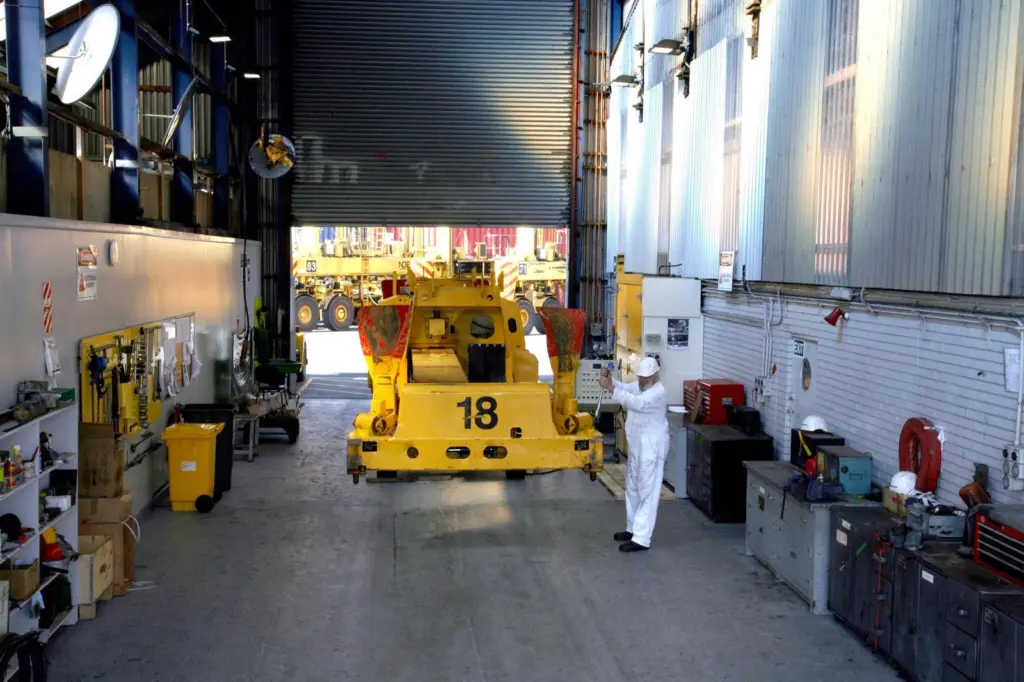
While it does outsource some of its maintenance requirements, explains John Miller, operations engineer, this includes maintenance of forklifts and other pieces of equipment that are commonly used in other industrial locations or businesses, so the service providers have economy of scale and can therefore offer highly competitive pricing.
“Often the product sales agents have a service department and we take the opportunity to allow them to also do on-site servicing, especially through the warranty period,” Mr Miller says.
Kept in house is maintenance of the ship-to-shore cranes and straddle carriers, where there are no equivalent experienced service providers within the Auckland metropolitan area.
“You also have to bear in mind that, for this equipment, we have to retain a breakdown service on-site regardless and these employees can be directed to undertake regular maintenance when they are not dealing with breakdowns.”
When Mr Miller is asked whether third party providers can offer cheaper prices or even better quality of service than in house technicians, he points out that the aim should always be for a terminal’s own in-house staff to provide the best service and cost effectiveness. Furthermore, full-time employees should be cheaper than hourly contractors. However, he stresses, this of course depends on how good a terminal is at managing its staff.
“Another point is that third-party suppliers are good for peak-load work, when you may not have the capacity in your permanent staff,” says Mr Miller.
While many service providers believe that the current credit crunch will increase possibilities for them to pick up more outsourced maintenance contracts, Mr Miller is not so sure. He argues that Auckland is less likely to use outside service providers and would rather increase the use of in-house staff.
“It is invariably cheaper to do maintenance in-house if you can do it efficiently and the set-up costs are not too great,” he says. “We have found cases where outsourcing does work out cheaper and so have awarded such contract; conversely, third party providers have also worked out more expensive in other cases, so we have kept work in house. You have to look at maintenance on a case-by-case basis.”
Related Articles
 CONTAINER & CARGO HANDLING
 CONTAINER & CARGO HANDLING
 BULK HANDLING