![PortStrategy[GreenPort]](https://www.portstrategy.com/wp-content/uploads/2026/09/PortStrategyGreenPort.svg)






Rolling stock
ICTSI’s Adriatic hub is taking to the rails to bring its handling expertise to central Europe, finds Carly Fields
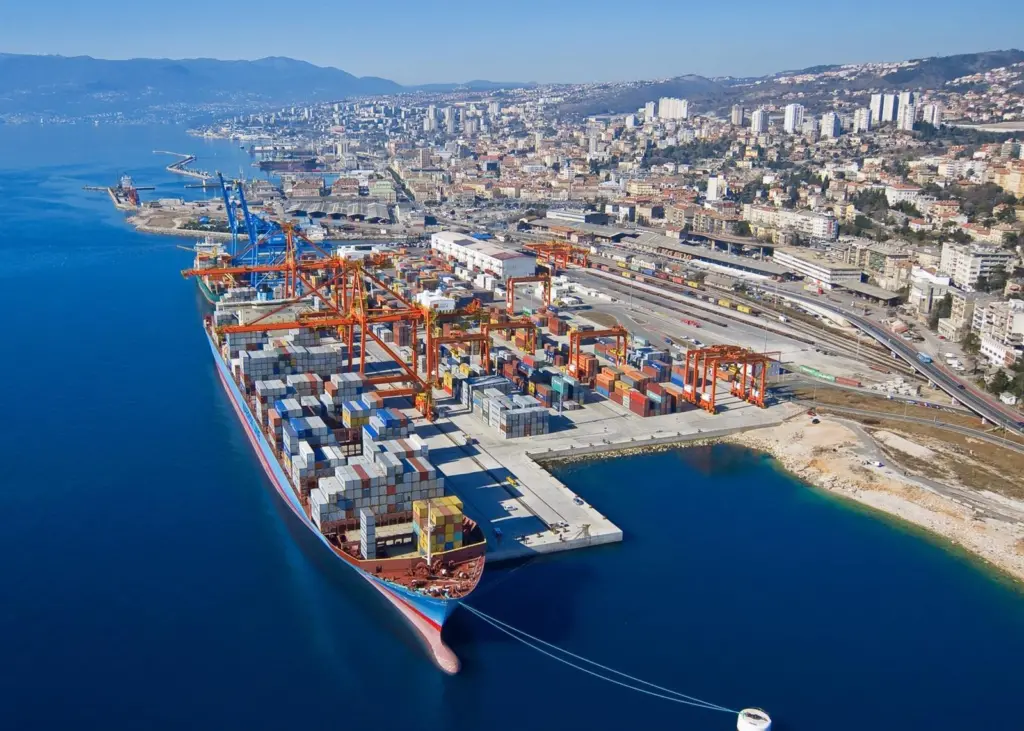
When the concession for the container handling facility in Rijeka, Croatia was awarded to ICTSI in 2011 there were high hopes that the terminal would one day compete with the traditional North European ports for cargoes.
Two years on and that dream edged closer to reality with Croatia’s entrance to the European Union in 2013. Two years on again, and AGCT is wholly focussed on rail improvements to give it that all important connection to those hotly contested central European markets.
Ognjen Ružić, operations manager at the terminal, tells Port Strategy: “We have established a good position and are now constantly trying to get into central European markets. Our first priority here is the rail service. We are trying to co-ordinate and mitigate but rail is ultimately in the government’s hands.”
On paper, however, the rail market is deregulated and the recent launch of a new regular service to Budapest is a hopeful sign of things to come.
“This should be a weekly departure and arrival and this will open opportunities for others,” confirms Mr Ružić. “We have free rail capacity and we are building an intermodal yard with four rail tracks which will be finished by the end of the third quarter.”
Sebastiano Cerneka, deputy regional IT head Europe and Middle East at ICTSI, agrees that rail is the “key to our success”. “We have been going beyond borders to create relationships with rail operators. We really see that there is an increased focus from rail and we are hoping that when the first train runs that others will follow.”
Space to expand
With a yard at 50% utilisation and berth capacity of 18%, the terminal has room to grow. And when the rail links are in place, AGCT hopes to make a significant commercial impact.
The terminal already counts 2M and O3 among its alliance callers and has seen a 10% improvement in volumes year-on-year from 2013 to 2014. This year looks to bring further improvements, with figures from the first quarter 20% better than the corresponding period last year. Mr Ružić says the terminal would be “satisfied” with 200,000 teu for 2015, which would be 33% increase on 2014.
In April, AGCT serviced the largest vessel to call in Croatia when 2M’s 10,000 teu Gerda Maersk berthed. The previous record was held by CMA CGM’s Cendrillon, an 8,500 teu ship which made its maiden call at Berth 2 of AGCT in May 2014. The 2M alliance connects Rijeka and the Far East through a 15-ship deployment with average capacities of 9,600 teu to 11,300 teu. This service includes calls to three north Adriatic ports, Koper, Trieste and Rijeka once a week – with Rijeka as the destination on Thursdays.
An O3 service also links Rijeka to the Far East, deploying 10 containerships with an average capacity of 5,700 teu.
While AGCT is used to the alliances and enjoys the reliability of direct calls from a planning and operational standpoint, feeders, it says, are another story.
“It would be a perfect day to have one vessel per day, but we don’t live in an ideal world. Sometimes it is an easy week and sometimes it isn’t,” says Mr Ružić.
Close concerns
In terms of competition, he points out that the terminal is closer than North European ports to those attractive central European, southern Germany, Austrian, and Polish markets.
“We want to position ourselves and become real competition to cargo flow to benefit customers. Short term, we could be a safety valve for North European ports, but long term we are equipped for additional volumes.
“We have good people and staff and a Collective Bargaining Agreement in place valid until 2016. The new vessels and services are here, the capacity is here, the equipment is here, and staff are engaged – now we just need that link with the hinterland to really experience the growth that we are striving for.”
Related Articles
 CONTAINER & CARGO HANDLING
 CONTAINER & CARGO HANDLING
 BULK HANDLING