![PortStrategy[GreenPort]](https://www.portstrategy.com/wp-content/uploads/2026/09/PortStrategyGreenPort.svg)






Seaside shuffle
Are extended container dwell times beyond a terminals control? Felicity Landon finds out
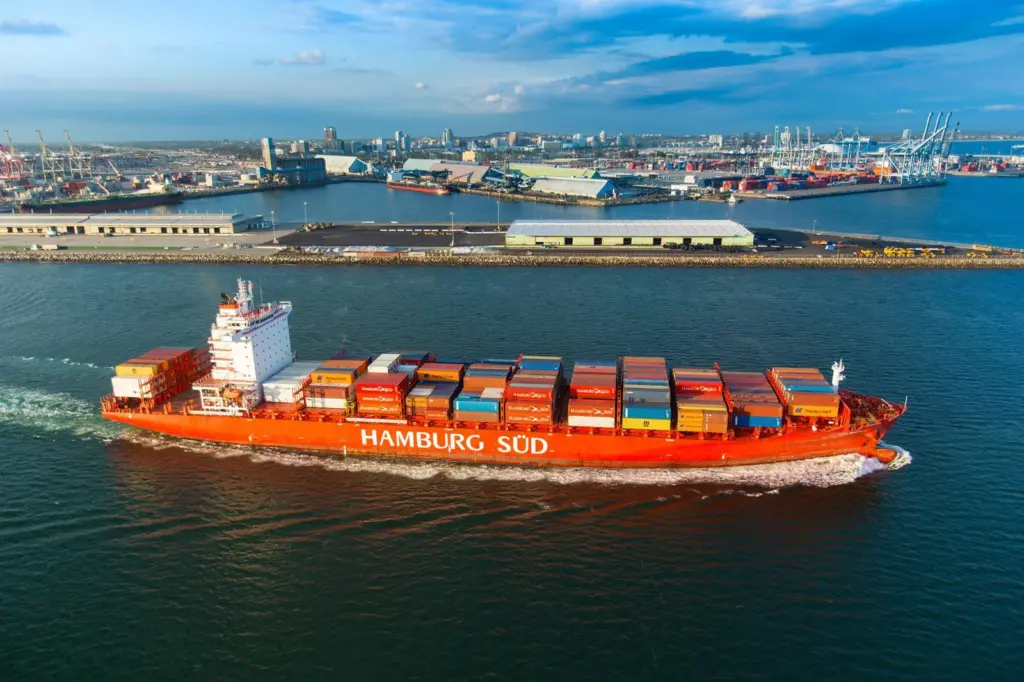
There is indeed such a thing as too many containers. It’s a familiar story – containers that outstay their welcome, taking up space at the terminal and basically getting in the way when it comes to container pick-up and delivery operations.
As the Pacific Merchant Shipping Association (PMSA) puts it: “Dwell time is an indicator of how efficiently the ports are operating and how quickly the containers are flowing through the terminals.”
The PMSA has recently embarked on a project to measure and analyse dwell time at all 12 container terminals in San Pedro Bay, publishing data monthly which it hopes will provide ‘data-driven solutions for improved supply chain efficiency’.
John McLaurin, president of PMSA, says: “Shorter average dwell times contribute to more efficiency throughout the supply chain. If containers are not picked up in a timely fashion, they become difficult to access and are stacked on top of one another, resulting in them being moved around and reshuffled more often, slowing down terminal operations.”
The PMSA’s report for November showed a decrease in the overall dwell times at the ports surveyed but, to put that in context, that was in comparison with the post-Hanjin peak of September/October, when so many ports had Hanjin boxes stacked up and not going anywhere.
So, whose problem is it, why does it happen, and what can be done about it?
Shippers’ choices
Michael Christensen, senior executive lead, supply chain optimisation at the Port of Long Beach (POLB), says the main driver behind longer dwell times is the cargo owner’s decision not to move cargo off the docks. “Perhaps their warehouses or distribution centres inland are full. Perhaps there is no demand for that particular cargo presently and they don’t want to put it into the inland supply chain yet. Some shippers have cargo sitting on the dock because of customs clearance or payment issues – but that is a small minority of the high dwell time cargo. Typically, it is a result of a conscious decision by the cargo owner.”
The mega container ship isn’t helping, either. As one terminal operator points out, fewer calls by larger ships means more boxes being unloaded at once for a retailer – but the retailer doesn’t necessarily want them all immediately inland, but rather a steady flow of containers. It can be cost-effective to pay the dwell time rather than pay for alternative arrangements if storage facilities are full.
Shipping lines also have a part in this, as Mr Christensen points out. “Certain ocean carriers, when negotiating rates – particularly with large volume cargo owners – include a certain number of additional free days on dock in the contract. That automatically stacks things against efficient movement; the terminal makes the demurrage charge against that cargo but the shipping line just absorbs it.”
This is a sticky issue for ports and terminals. Is the customer always right? “That is the key question we are asking ourselves in the industry, and it can’t be answered,” he says.
“We face competing interests. The people who pay the bills like having the flexibility and having more dwell time. The people operating the ocean carriers are trying to entice cargo owners by offering more [free] dwell time. The terminals that load and unload the vessels don’t like it – and we as a port authority are aligned with the terminals on this issue.”
Groundswell of concern
Mr Christensen welcomes the PMSA study as ‘a great first step in the right direction’. “One of the challenges that we have is a significant lack of real data,” he says. “Most of what we deal with is anecdotal, so we will hear from a terminal operator that they have a certain segment of their containerised cargo that sits on their terminal for 30 days. With real data coming from the PMSA’s own terminal members, we can now get a much more accurate view of overall dwell time within the San Pedro Bay.”
Collecting this data is hard work, he points out, and there has been no impetus to do this before because the terminal operators don’t get any more revenue or business as a result and because the longer dwell times are typically driven by cargo owners.
“The cargo owners are ultimately the customers. There has been a reluctance to poke them in the eye, so to speak, and say you are not retrieving your cargo quickly enough.”
So what’s changed? Mr Christensen says there is a groundswell of concern about port efficiency and delays which has risen above other concerns.
“However, I would say it is a good first step because data of this type is only valuable if it indicates trends. Then we would understand what is driving the trend either up or down and could start making good use of that information.”
An early surprise of the study, he says, is that there are typically 3%-6% of containers over five days’ dwell time. “It is still enough to cause some problems but nowhere near the 15%-20% we had heard anecdotally from some people.”
Flexible free time
About a year ago, POLB put forward a ‘flexible free time proposal’, which effectively reduced free dwell time from four to three standard days, but based on the number of shifts worked in each terminal. However, there was a ‘massive push-back’ from cargo owners and terminal operators, says Mr Christensen.
That plan is now on the backburner and the port authority has been focusing on bringing together stakeholders at working groups to make everyone aware of the effect and impact of their behaviour. “They know in fairly direct terms that we would like them to work this out to avoid the sledgehammer approach, whether at port level or local, regional or state legislation.”
POLB’s ideas list also includes tariffs, non-monetary incentives, recognition of best practice performance and perhaps certification to differentiate the players doing a good job.
There is general consensus in the industry that things have to improve, says Mr Christensen, and this extends to pressure at governmental level ‘not to allow degradation of service like we have seen in the past’.
“Poor service in the supply chain affects every one of those involved, and the end consumer too. Also, terminals are so interlinked these days – and we anticipate that this will become even more significant under the new ocean alliance structure, with so much ability for alliances to use multiple terminals. If one terminal starts getting congested, they switch to another, so the congestion issue can move among terminals and through a port very quickly.”
He believes that data flow and exchange are vital. “Each part of the supply chain has very sophisticated data systems for managing their own operations but there is extraordinarily reluctance to share that between silos. Breaking this down and exchanging data will have two effects. It will allow all the downstream supply chain stakeholders to have access to information and gain much better visibility, to better plan their part of the supply chain. And it will generate performance metrics, shining a light on this.”
That would highlight poor performance and, as the supply chain makes decisions about routings and ports of entry based on real data, we could expect all the players to seek to become more efficient, he says.
REASONS FOR OVERSTAYING MANY AND VARIED
If you take any snapshot in time, there could be a variety of reasons why some containers hang around for longer, says Dean Davison, consulting and commercial advisory services general manager at Inchcape Shipping Services.
“Different customers are going to have varying supply chains and the type of cargo itself will make a difference – some goods have a longer shelf life. So, if there was an independent assessment done of different ports, operators and processes, you would have to make sure you were comparing apples with apples.
“Yes, I think it is important to know what the trends are but I can’t see what good can come from (for example) naming and shaming customers.”
Another issue, he says, is that supply chains today are far more about reliability than speed – and dwell time is a ‘speed issue’.
He agrees that communication between all parties is crucial. “It comes down to the quality of your planning and the information you have got – if you know a box is going out at a certain time, you would make sure it isn’t at the bottom of the heap. However, you can have fantastic IT and brilliant systems and people, but you do still have to physically do the move – and if you have no control over when the box goes out, then you can’t optimise that.”
Terminals are now very much part of the inventory and supply chain process, he points out. “Where and when is the demand for the goods? When do they need to be on the shelf? Distribution and warehousing are crucial factors over which the terminal has no control.”
Related Articles
 CONTAINER & CARGO HANDLING
 CONTAINER & CARGO HANDLING
 BULK HANDLING