![PortStrategy[GreenPort]](https://www.portstrategy.com/wp-content/uploads/2026/09/PortStrategyGreenPort.svg)





Selective outsourcing
” The importance of good maintenance cannot be over-emphasised, ” says KS Won, president of Portek Indonesia. The company is part of Portek Group, and maintains a total of 28 quay cranes, 40 RTGs and four MHCs across the whole Indonesian archipelago.
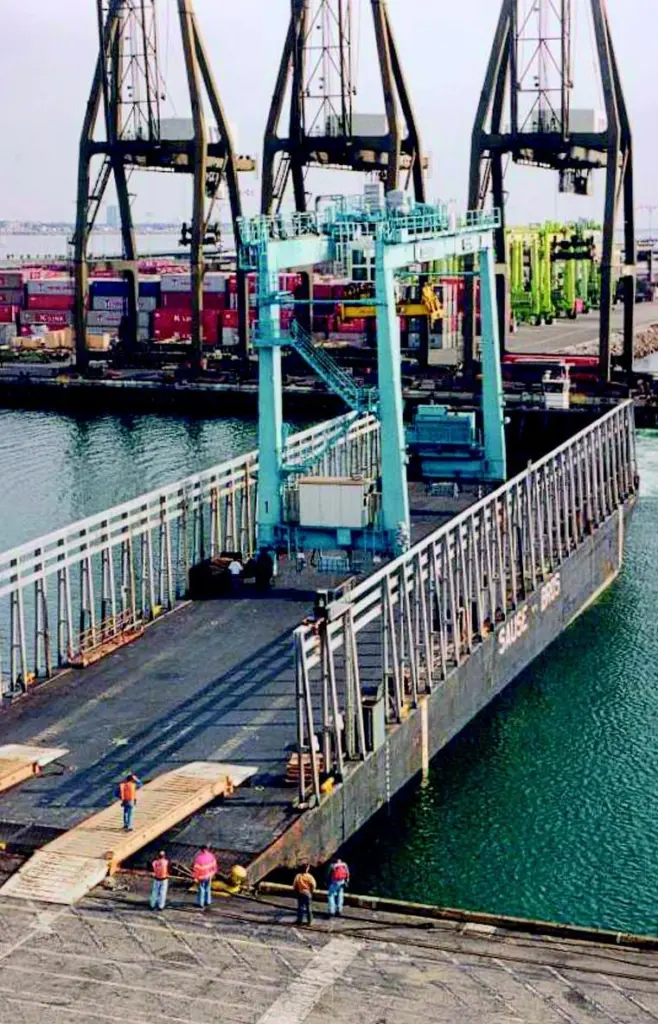
“Port operators these days expect uninterrupted operations with a very high degree of equipment utilisation. Disruption to regular operations not only means cost in terms of loss of income but a greater damage to the port operators when containership owners start migrating to competing neighbouring ports in today’s highly competitive port industry.”
Containership owners are wising up to protect their own operations by demanding their terminals structure contracts to achieve the required level of performance in container handling with each call of their vessels. Failing this, some forms of penalty are imposed on terminal operators.
To ensure good service, terminal operators are paying more attention to the onerous task of equipment maintenance as a critical part of operations. “Some port operators used to believe that equipment upkeep was a cost centre, and it was an easy corner to cut to save on operating expense, ” Won comments. “But this mindset has changed. Competition and demands for higher level of service makes equipment uptime a key competitive strategy to keep and maintain happy shipping customers, and port operators now view maintenance as an essential investment.”
Maintenance services have evolved from simple manpower-only maintenance contracts to the complete outsourcing programme from the terminal operators of all-inclusive packages which include 24/7 maintenance services, onsite fully trained manpower, site consignment of components and parts, and a guaranteed equipment availability. Full service maintenance programmes allow the port operator to have a fixed cost component in maintenance and most critically, they allow the ports to enjoy a certain level of scale of economy in terms of parts purchases.
Maintenance teams that are involved in a large fleet of equipment will also ensure that critical experiences and knowledge are applied across that fleet to improve on the equipment performance of the port operators. Port operators gain expertise without going through the learning curve on their own.
MISGUIDED ARGUMENT Won points out another change in recent years.
Instead of opting for full service maintenance contracts, terminal operators are outsourcing manpower and consumables only. In doing so, clients hope to reduce their maintenance costs, yet ensuring a high level of equipment availability. While on the surface this seems like the best of both worlds, Won thinks that the argument is misguided. “Full service maintenance allows port operators to have a predictable annual cost and no hassle when it comes to maintenance. The outside party has every reason to do a good job and undertake initiatives to strive for zero-percent equipment breakdown.
“But by outsourcing selectively, this incentive is removed. Port operators are now responsible for spares and parts. In the event the operator does not have a required part in stock, the outside party can sell the part and profit from the sale. This inevitably creates some conflicts of interest between supplier and client. If both parties don’t have the parts in stock, repair costs can easily escalate for the terminal operator.”
PS
Related Articles
 CONTAINER & CARGO HANDLING
 CONTAINER & CARGO HANDLING
 BULK HANDLING