![PortStrategy[GreenPort]](https://www.portstrategy.com/wp-content/uploads/2026/09/PortStrategyGreenPort.svg)






SIde 1
Not all ports have specialist grain discharge berths as space often predicates against permanently positioning a grain unloader on a berth, since it prevents it being used for other commodities.
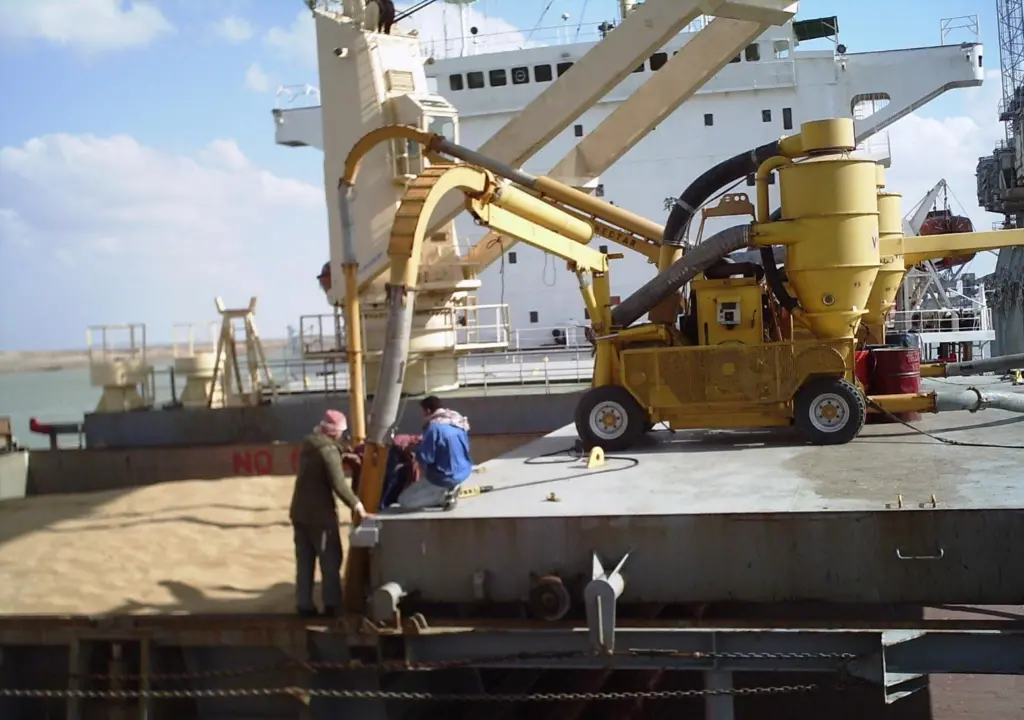
Other ports simply don’t have sufficient grain traffic to justify the necessary investment in such fixed assets.
In some emerging markets in the Middle East, Africa and the Americas, ports overcome this problem by having specialist operators come in to discharge specific consignments.
Flexible discharge company Nectar Group claims to be one of few companies in this sector that actually has a global reach. According to marketing managing Guy Wilkes, enquiries come from a variety of sources, including clients at the destination port, international traders and aid agencies.
To be able to satisfy its clients’ demands, Nectar Group has a pool of equipment strategically located across the globe, which is constantly being added to. This consists of pneumatic unloaders, grabs, conveyors and bagging machines. Under normal circumstances, this can be positioned to receive a consignment within four to six weeks of initial contact being made.
“If we already have equipment positioned in a particular country, Nectar will consider virtually any size of consignment, however small. Nevertheless, we recommend clients to ship larger tonnages, if the contracts required us to re-position staff and handling equipment into a particular area,” says Mr Wilkes.
In general, consignments vary between 5,000 tons and 50,000 tons, although larger tonnages could also be accommodated.
While there is often local competition for contracts, Nectar offers some impressive guarantees to ensure it remains competitive. With demurrage costs possibly amounting to $30,000 a day, the company has built its reputation on guaranteeing discharge rates. Few local operators can match that type of promise.
“We invariably meet the agreed targets, so don’t normally have problems. The key is ensuring that our equipment works when needed. To this end, we always send spare parts and components along with our equipment to the discharge ports,” he explains.
Related Articles
 CONTAINER & CARGO HANDLING
 CONTAINER & CARGO HANDLING
 BULK HANDLING