![PortStrategy[GreenPort]](https://www.portstrategy.com/wp-content/uploads/2026/09/PortStrategyGreenPort.svg)






Singapore shifts its transhipment stage
On the other side of the world to the Caribbean, the port of Singapore is advancing development plans to secure its future as a major transhipment hub.
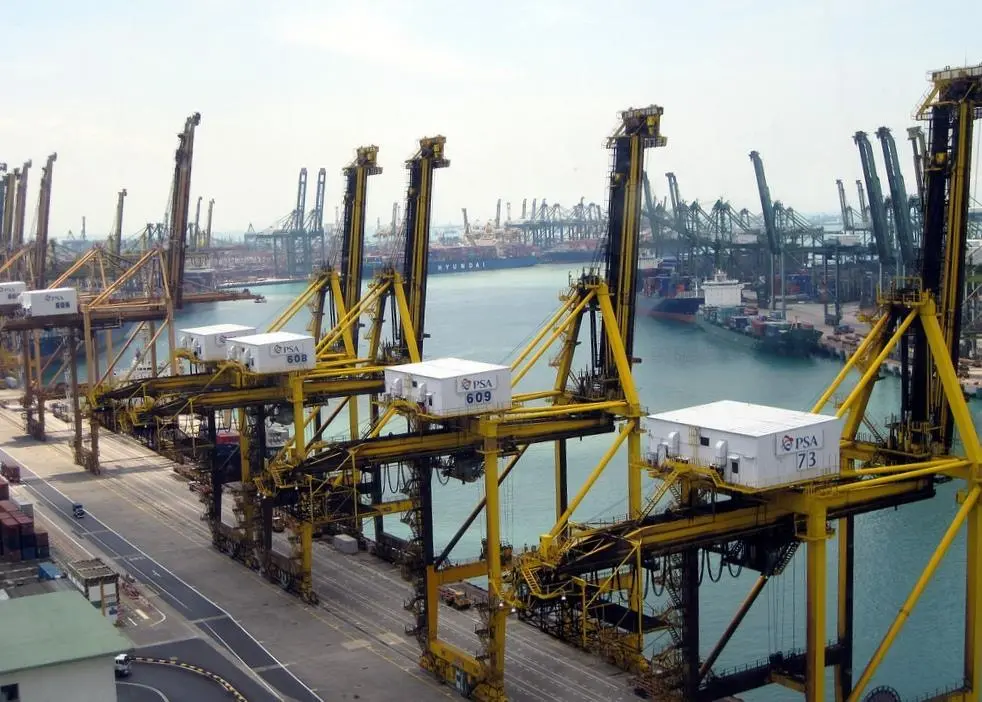
Transport minister Lui Tuck Yew has unveiled plans to build a giant new port in the western industrial hub of Tuas, with capability to handle up to 65m teu per annum — nearly double the current capacity of 35 teu. Tuas offers sheltered deep water and proximity to Singapore’s major industrial areas.
The plan is to consolidate all container port activities in Tuas in the long term, with the first set of berths expected to be operational in about ten years. The city terminals at Tanjong Pagar, Keppel and Brani, plus those at Pasir Panjang will eventually be merged at Tuas. Port leases at Tanjong Pagar, Keppel and Brani will end in 2027.
Operations will become more efficient, eliminating much inter-terminal trucking of boxes between the current five container terminals at Tanjong Pagar, Keppel, Brani, Pasir Panjang Terminal 1 and Pasir Panjang Terminal 2.
The ‘clean slate’ at Tuas will also allow the deployment of improved technology throughout the container operation.
A flow-on benefit of the Tuas development will be the freeing up of prime land currently occupied by city terminals for redevelopment.
The long-term view being taken by Singapore was foreshadowed in a plan outlined by the Government’s Economic Strategies Committee in 2010.
However Singapore is not holding back on medium-term planning in its existing facilities, while still keeping an eye on the long-term plan to move to Tuas.
Currently, PSA Singapore Terminals is investing US$2.84bn to develop Phases 3 and 4 of its Pasir Panjang facility. About 85% of the land reclamation for these two phases has been completed and Singapore is on track to complete the remaining works by 2014.
This will entail 15 new berths, with nearly 6,000m of quay length and up to 18m draft, an automated container yard with proprietary intelligent planning and operation systems, and unmanned, rail-mounted gantry cranes.
Target completion date is 2020.
PSA International Group chief executive Tan Chong Meng said it was vital the port planned for the necessary capacity and capability to meet future growth of global trade and the long-term needs of customers.
PSA is the world’s largest container transhipment hub and handles close to 30m teu annually.
Related Articles
 CONTAINER & CARGO HANDLING
 CONTAINER & CARGO HANDLING
 BULK HANDLING