![PortStrategy[GreenPort]](https://www.portstrategy.com/wp-content/uploads/2026/09/PortStrategyGreenPort.svg)





Shore power mandatory for terminal
A planned cruise and ferry terminal at a Spanish port must allow docked ships to connect to shoreside power, have photovoltaic solar panels on all roofs and decks and operate using measures to cut emissions and use sustainable energy.
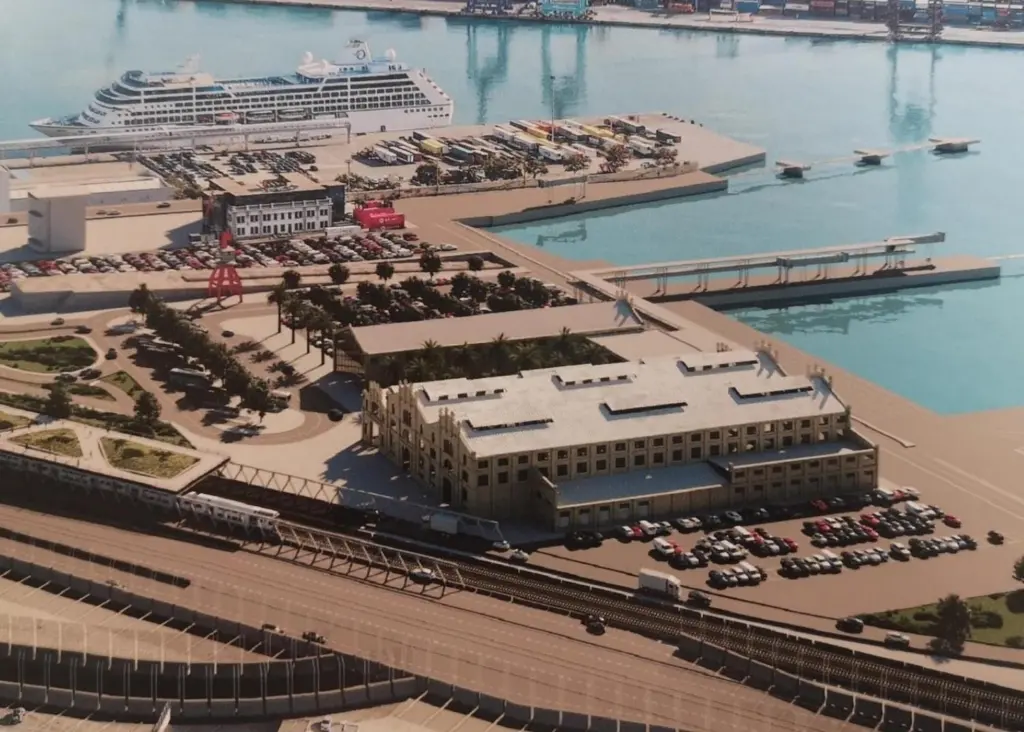
The Port Authority of Valencia (PAV) has put out to tender the administrative concession for the construction and operation of the new passenger terminal at the Port of Valencia, stipulating that all berths must be equipped with a power supply network for ships.
“As stated in the specifications, all berths must be equipped with a power supply network to the docked ships; and all roofs and roofs of existing buildings must be designed for the installation of photovoltaic solar panels,” said PAV, which trades under the name Valenciaport.
The terminal will be used to serve cruise traffic, regular lines with the Balearic Islands and Algeria as well as ro-ro traffic. It will have at least four berths and must be able to accommodate two cruise ships and two ferries on the same day. The terminal infrastructure will be located in an area approximately 100,000m2, located between the Poniente Pier and the Espigón del Turia Pier.
Bidders for the 35-year concession, extendable up to a maximum of 50 years, must submit an environmental plan including commitment to adopt an ecological and sustainable management system, participation in joint initiatives promoted by the PAV as well as an environmental impact assessment study. Bidders must also submit a Corporate Social Responsibility (CSR) plan.
PAV will look for various environmental initiatives, including measures to reduce equivalent CO2 emissions and/or energy consumption in machinery, equipment and facilities of the terminal; renewable energy use; use of electrical equipment; and utilisation of alternative fuels not derived from petroleum.
Related Articles
 PORT & TERMINAL NEWS
 CRUISE GREENPORT
 CRUISE GREENPORT