![PortStrategy[GreenPort]](https://www.portstrategy.com/wp-content/uploads/2026/09/PortStrategyGreenPort.svg)




Crane safety should not be optional
A project to establish a minimum safety specification for quayside container cranes is being launched by TT Club, the Port Equipment Manufacturers Association (PEMA) and ICHCA International – and the message is that critical safety features should be standard and not optional.
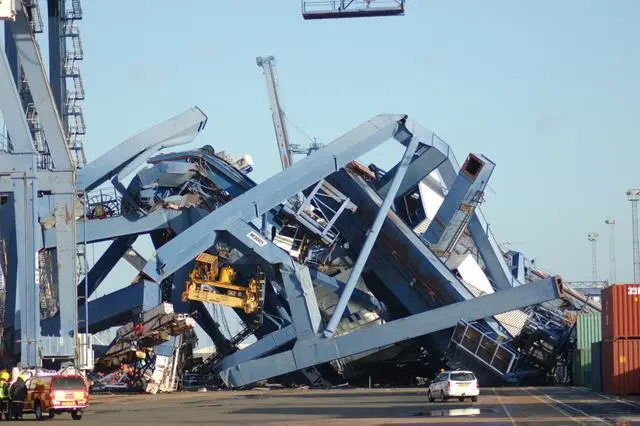
PEMA president, Ottonel Popesco, adds that this may include issues such as boom anti-collision sensors, appropriate interlocking and gate locks between the crane cabin and boom, safe stairway inclines and handrail heights, gantry drive and braking systems, storm brakes, storm pins and tie-downs.
In announcing the project Laurence Jones TT Club’s director of global risk assessment said, “There are many features available for the design of quay container cranes which can dramatically improve safety, reducing exposure to injury, damage and disruption costs.” He reiterates the point that these need to be within the standards set for tenders, and not additional extras.
John Strang, chairman of ICHCA International, added his backing to the project: “Inevitably, crane procurement is price sensitive and requires significant budget… However, buyers will not always be familiar with the most effective safety technologies.” He said that the process of specification is complex and says that “there should be a standard safe baseline provided in every tender to ensure the industry has the safest cranes possible.”
But the remit may not stop there. Mr Strang went on to say: “This issue is not restricted to quay container cranes; it is equally relevant for other cranes and other terminal equipment. Our long term aim is to establish international and national baseline safety standards for all terminal equipment.”
Related Articles
 EQUIPMENT
 CONTAINER & CARGO HANDLING
 CONTAINER & CARGO HANDLING