![PortStrategy[GreenPort]](https://www.portstrategy.com/wp-content/uploads/2026/09/PortStrategyGreenPort.svg)





Doing it for themselves
The Port of Dover has had its own dredger for some time. Nigel Stokes, assistant harbour master, explains that the David Church, which carries out both suction and grab dredging, is in use hoovering up the silt that gets deposited in the harbour all year round, non-stop.
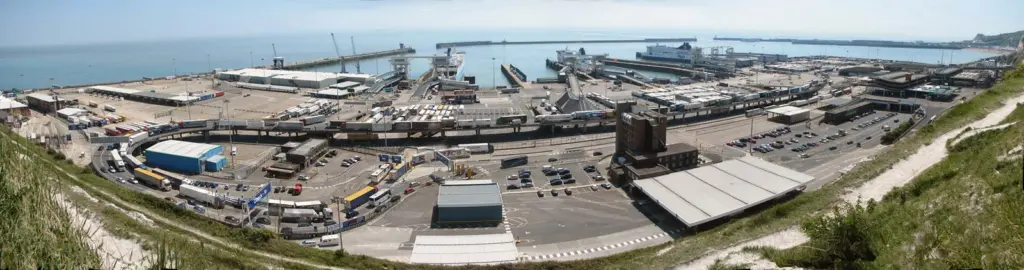
The dredging work is crucial he tells
Port Strategy:
‘Without it, parts of the port would come to a grinding halt. It is an ongoing battle here against the silt, we have to keep on top of it by a constant programme – we could hire our dredger out for years at a time, but we simply can’t do without it.’ However, he admits that for a port looking at acquiring their own dredger, it may not be particularly easy getting started, because dredgers are expensive items with a three or four year lead in, and the dredger crews are highly specialised. On top of this is the new technology, plus a gamut of regulations – especially those that deal with where the mud ends up.
Certainly, legislation has become an increasingly high hurdle – especially within the European Union and the US. However, there is some relief as a recent change to the new EU Waste Framework Directive stopped the classification of dredged material as uniformly ‘waste’ – which leaves the door open to reusing around 90% of this, on things like the UK’s Wallasea project where it was used to rebuild seawalls and create wetlands.
Despite this, the changing goal-posts of local as well as wider legislation can cause problems, especially in the US. According to Constantijn Dolmans of the International Association of Dredging Companies, “despite their size”, US rules “aren’t always effective”. In places like California, the necessary permits are time-limited: if legislation changes, the ports are left with a whole new set of hoops to jump through.
Likewise, legislation is often playing catch-up in developing countries – and there is a fine balance. For example, the All India Port and Dock Workers’ Federation noted one of the costs driving up Indian dredging works has been the issuing of new guidelines, while in Africa the Waterfront Ministry of Lagos has recently redefined dredging activities, reiterating that environmental impact assessments (EIA) are now compulsory for anyone wishing to continue dredging for building materials – the state governor going as far as begging banks and other financial institutions to request proper business plans including EIA reports and approval letters from the ministry before financing any further projects.
Meanwhile, it seems that even Dover port’s regular dredging schedule may now need a little help – especially with the arrival of the deep draft cruise liners, which demand a berthing depth of 10 metres and a channel depth of at least eight metres. So, the port is looking at an extra layer of spring cleaning, just to keep it all under control. ‘Some years ago we called in the Pearl River. We may be looking at doing it again, because the build-up rate has now become so demanding,’ says Mr Stokes.
Related Articles
 EQUIPMENT
 CONTAINER & CARGO HANDLING
 CONTAINER & CARGO HANDLING