![PortStrategy[GreenPort]](https://www.portstrategy.com/wp-content/uploads/2026/09/PortStrategyGreenPort.svg)

DREDGING PROGRESS AT SOUTH AFRICAS NEW DEEPWATER PORT
Dredging for South Africa’ s new Coega deepwater port in the Eastern Cape is progressing for completion by the end of the year. The project – on Algoa Bay at the mouth of the Coega River – is designed to act as a catalyst for regional economic development. The new port and its adjacent Industrial Development Zone, 20km east of Port Elizabeth is described as South Africa’ s largest infrastructural development scheme for a decade.
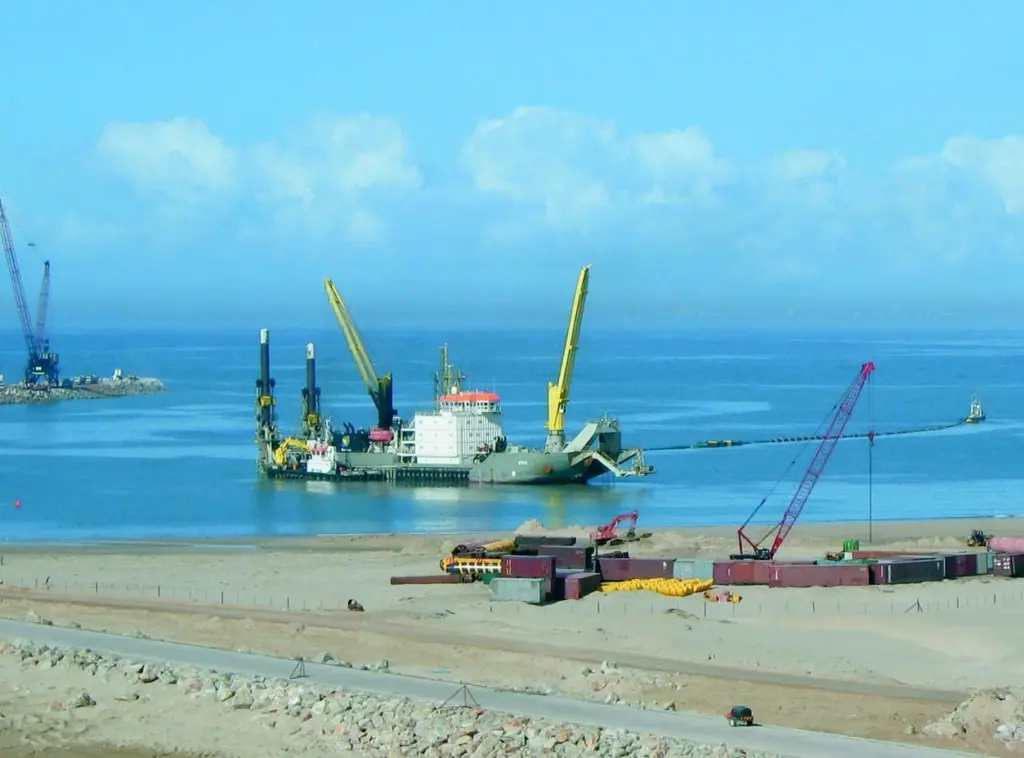
Coega is due to open for operations in 2005 to serve Panamax bulkers and large container ships. The port will consist of two main breakwaters and five berths: two for containers, two for drybulk/breakbulk and one for bulk liquid cargoes. One of the spurs for this project is the need for more container berths as the container facilities at Port Elizabeth, Durban and Cape Town approach capacity. Future plans for Coega include major facilities for the metals industry including a large aluminium smelter.
The National Ports Authority of South Africa awarded two main contracts for Coega port. The principal contract was awarded to Ngqura Harbour Consortium, with Hochtief as lead contractor. This consortium is responsible for all civil works, including the construction of breakwaters and quay walls. The main dredging contract was awarded to Jan de Nul, with a subcontract (for all cutter suction dredging works) placed with Boskalis International.
Harry Hesseling, Boskalis’ regional manager for Africa, says: “We have mobilised the URSA, one of the world’s most powerful cutter suction dredgers, for the Coega works. The URSA was selected for her unusually wide weather envelope.
We will be starting up in the South African autumn and working throughout the winter season. This area is notorious for bad weather and heavy swells and we need equipment that will minimise weather downtime.”
Jan de Nul is responsible for dredging the new port’s entrance channel to -18 metres, together with a section of the turning basin to be dredged to -16 metres. Boskalis’ big cutter dredger is required to dredge into the existing beach to form the main harbour basin from the landside. URSA will also dredge through the bund when the quay walls are completed. No reclamation is required. Jan de Nul’s hopper dredger FILIPO BRUNILESCHI is now preparing a dumping pit for URSA’s works.
The total volume to be dredged for Coega port amounts to 11.5 million cu metres of which 6.5 million cu metres will be undertaken by URSA. The cutter suction dredger will create the water depth required by the trailer to complete its 35-week dredging programme. URSA’s dredging assignment will span 26 weeks and all dredging will be completed by December. URSA commenced work during May following a dredging assignment in the Iranian port of Assaluyeh.
Related Articles
 CONTAINER & CARGO HANDLING
 CONTAINER & CARGO HANDLING
 EQUIPMENT