![PortStrategy[GreenPort]](https://www.portstrategy.com/wp-content/uploads/2026/09/PortStrategyGreenPort.svg)





Electrifying big trucks
Hyster says it’s poised to take the next giant leap forward in port equipment as it begins testing high capacity lift trucks with electric motors.
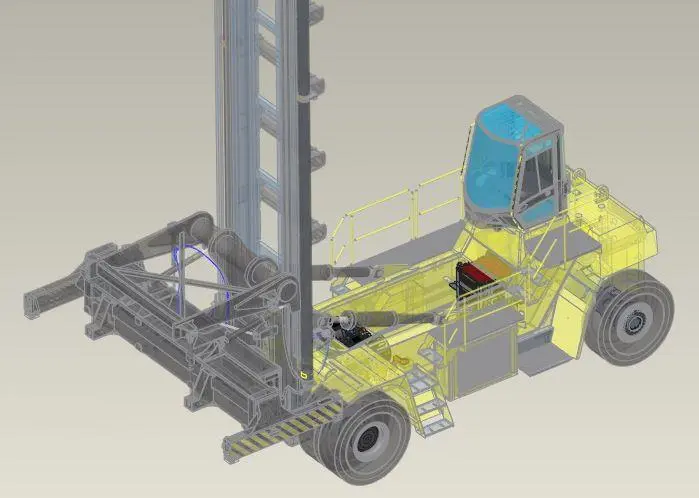
It’s currently undertaking a project to electrify a Hyster laden container handler, which it said takes the industry a step closer to electrification, producing zero emissions while achieving comparable full shift performance.
“The Hyster brand is synonymous with heavy duty trucks, so we are the natural candidate to champion this new generation of large electric trucks,” said Brett Schemerhorn, President Big Trucks, Americas, Hyster.
“Using a modular approach and innovative technology, applications will soon have maximum flexibility when selecting trucks to provide the best zero emissions solution for their needs.”
This modular approach to the design allows for flexibility in the onboard power source.
Mr Schemerhorn said that initial introductions are likely to be based on lithium-ion batteries. But through Hyster’s relationship with Nuvera Fuel Cells, it expects to be able to implement hydrogen fuel cells in the next phase.
Hydrogen fuel cells, he said, will allow for rapid refueling, increased productivity and longer run time between refills.
Previously, Hyster pioneered profitable low emissions with Tier 4 / Stage IV diesel engines on its Big Truck range.
“As with Tier 4 / Stage IV, when applying electric motors to Big Trucks, it is all about achieving a balance between the vertical movement of the load and the power take-off in combination with the traction,” said Jan Willem van den Brand, Director Big Truck Product Strategy & Solutions, Hyster.
To drive efficiency and manage costs, the new electric trucks will be built to match the needs of the specific application.
With electric motors, there are additional duty cycle variables to consider,” said Mr van den Brand. “Hours of operation and number of moves, power costs (Hydrogen vs Electricity) and infrastructure set up costs, such as considerations of time and cost for charging or refueling, must all be considered.”
Related Articles
 CONTAINER & CARGO HANDLING
 CONTAINER & CARGO HANDLING
 EQUIPMENT